Water emergency? Our commercial crews respond 24/7.
Home / Emergency Water Damage
Emergency Water Damage
- 24/7 Response
- Extraction
- Structural Drying
- Restoration
What happens when you call
24/7 dispatch
Call any hour. Crews mobilize for commercial losses, including nights and weekends.
Extraction & drying
Standing water removed, then structural drying with monitored moisture readings.
Insurance-ready records
Readings, photos and scope notes documented for your carrier from day one.
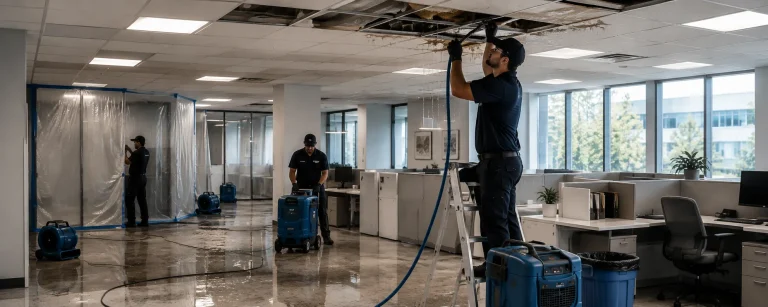
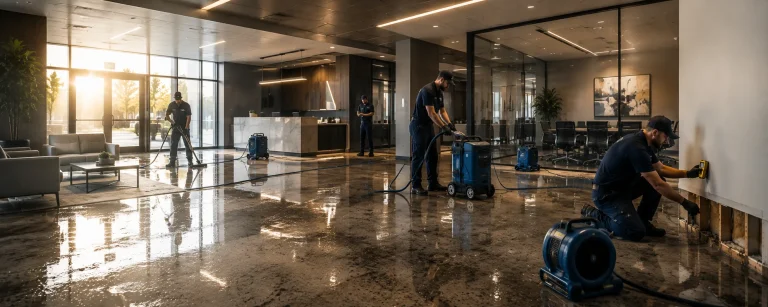
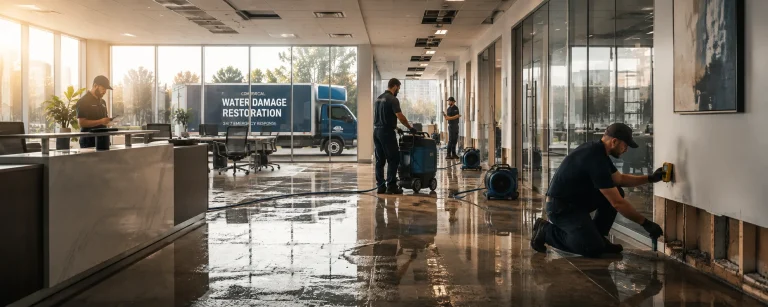
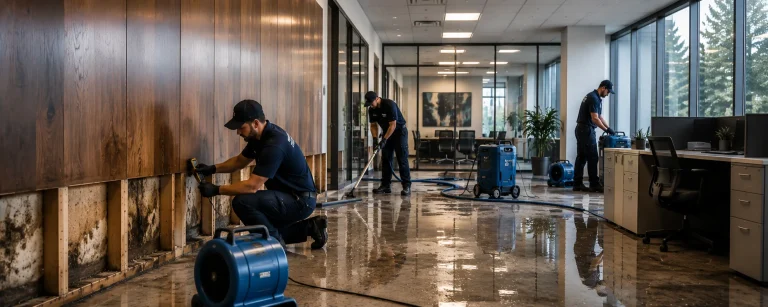
Emergency water damage is rarely just a maintenance issue. For commercial properties, it becomes an operational, financial, insurance, safety, and business continuity event within minutes. A burst pipe, failed sprinkler system, roof leak during a storm, sewer backup, mechanical equipment failure, or major flood can disrupt tenants, damage valuable assets, interrupt revenue, and create complex decisions that affect multiple stakeholders simultaneously.
Every commercial property also responds differently because every decision-maker views an emergency through a different lens. Building owners may focus on protecting long-term asset value. Property managers often prioritize tenant communication and coordinating vendors. Facility managers concentrate on stabilizing building systems and restoring operations. Asset managers evaluate financial exposure, reserve planning, and investment performance. Insurance professionals focus on documenting the loss, verifying coverage, and managing claims efficiently.
Understanding these different perspectives often leads to faster, more organized emergency response.
Why Every Minute Matters
Commercial water damage continues to spread until the source is controlled and drying begins.
Water can move through:
- Wall cavities
- Ceiling assemblies
- Floor systems
- Electrical chases
- Elevator shafts
- Mechanical rooms
- Tenant improvements
- Storage areas
- Common corridors
- Below-grade spaces
What begins as a localized plumbing failure can quickly affect multiple tenants, building systems, or occupied floors. Early mitigation frequently reduces restoration costs while helping businesses resume operations sooner.
The Building Owner’s Perspective
Building owners generally evaluate emergencies from a long-term investment standpoint.
Their priorities often include:
— Protecting overall property value
— Preserving the building envelope
— Limiting long-term structural deterioration
— Avoiding future liability
— Maintaining occupancy
— Protecting lease income
— Managing capital expenditures
— Preserving marketability
Owners frequently ask broader questions than simply, “How much water entered the building?” They often want to understand why the failure occurred, how future incidents can be prevented, and what improvements should be incorporated during restoration.
Emergency response becomes part of long-term asset preservation rather than simply cleaning up water.
The Property Manager’s Perspective
Property managers often become the central point of communication during a water emergency.
Responsibilities may include:
- Coordinating restoration vendors
- Communicating with tenants
- Managing after-hours emergencies
- Documenting building conditions
- Scheduling repairs
- Coordinating contractors
- Working with ownership
- Assisting insurance adjusters
- Tracking project progress
- Restoring tenant confidence
Property managers balance technical restoration with customer service. Keeping tenants informed while minimizing disruption is often just as important as the physical cleanup itself.
The Facility Manager’s Perspective
Facility managers typically focus on restoring building operations safely and efficiently.
Primary concerns often include:
- Electrical safety
- HVAC performance
- Mechanical equipment
- Fire protection systems
- Elevator operation
- Access control
- Utility restoration
- Occupant safety
- Moisture control
- Operational continuity
Rather than viewing the event strictly as water damage, facility managers often evaluate how every affected building system interacts with the others. Their objective is restoring reliable building performance while reducing operational risk.
The Asset Manager’s Perspective
Asset managers often evaluate emergencies from a portfolio and financial performance perspective.
Typical considerations include:
— Business interruption costs
— Insurance deductibles
— Reserve funding
— Deferred maintenance
— Capital improvement schedules
— Return on investment
— Occupancy impacts
— Lease obligations
— Long-term lifecycle costs
— Portfolio risk management
For large ownership groups, one emergency becomes part of a broader strategy involving multiple properties and long-term investment decisions.
The Tenant’s Perspective
Commercial tenants experience water damage differently than ownership teams.
Common concerns include:
- Employee safety
- Business interruption
- Inventory protection
- Equipment damage
- Customer access
- Technology systems
- Product loss
- Temporary relocation
- Operational downtime
- Lease obligations
For many businesses, every hour of downtime affects revenue, customer relationships, and employee productivity. Quick communication and organized restoration help reduce uncertainty during recovery.
Insurance and Documentation
Insurance plays a significant role in many commercial water damage events.
Documentation often includes:
- Photographs
- Moisture readings
- Damage mapping
- Equipment logs
- Emergency response timelines
- Material inventories
- Contractor reports
- Repair estimates
- Cause of loss documentation
- Restoration progress updates
- Thorough documentation may support claim accuracy while creating a detailed record of the emergency response process.
Insurance professionals, adjusters, consultants, and restoration contractors often work together to determine the extent of damage, evaluate covered losses, and coordinate the recovery process.
Emergency Response Priorities
Although every situation is unique, most commercial water emergencies follow similar priorities.
Immediate actions often include:
- Stopping the source of water
- Protecting occupants
- Securing affected areas
- Beginning water extraction
- Identifying hidden moisture
- Stabilizing building materials
- Protecting critical equipment
- Documenting damages
- Coordinating restoration
- Planning reconstruction
Avoid:
✕ Waiting several days before beginning drying
✕ Assuming visible water is the only damage
✕ Ignoring moisture behind walls or under flooring
✕ Restarting building systems before inspection
Early intervention frequently limits secondary damage and shortens the overall recovery timeline.
Looking Beyond the Emergency
Many organizations use water damage events as an opportunity to strengthen future preparedness.
After restoration, owners and managers may evaluate:
— Aging plumbing infrastructure
— Roof condition
— Waterproofing systems
— Building envelope performance
— Drainage improvements
— Emergency vendor relationships
— Preventive maintenance schedules
— Building monitoring technology
— Insurance coverage
— Disaster response planning
Rather than viewing an emergency as a single isolated event, many commercial property teams use the experience to improve resilience and reduce the likelihood of future losses.
A Coordinated Approach to Commercial Water Damage
Successful emergency water damage response requires more than removing standing water. It involves coordinating owners, property managers, facility managers, tenants, restoration professionals, engineers, insurance representatives, contractors, and other stakeholders who each bring different priorities to the recovery process. By combining rapid mitigation, thorough documentation, effective communication, professional drying, and long-term planning, commercial properties can reduce business interruption, protect valuable assets, support insurance recovery, and strengthen the overall performance of the building long after the immediate emergency has ended.
Water Emergency?
Our commercial response team is available 24/7 for water extraction, structural drying and restoration.
Our Services
Talk To A Specialist
Need help with a water loss right now?
Call our commercial team for extraction, drying and restoration planning built around your building and your operations.