
When water enters a commercial building, the immediate damage is only part of the problem. What happens next—mitigation, repair, or restoration—can determine how quickly the property reopens, how much of the building can be saved, and whether hidden damage becomes a larger problem. These three stages serve different purposes, from stopping active water damage to repairing building systems and ultimately restoring the commercial property to full operation.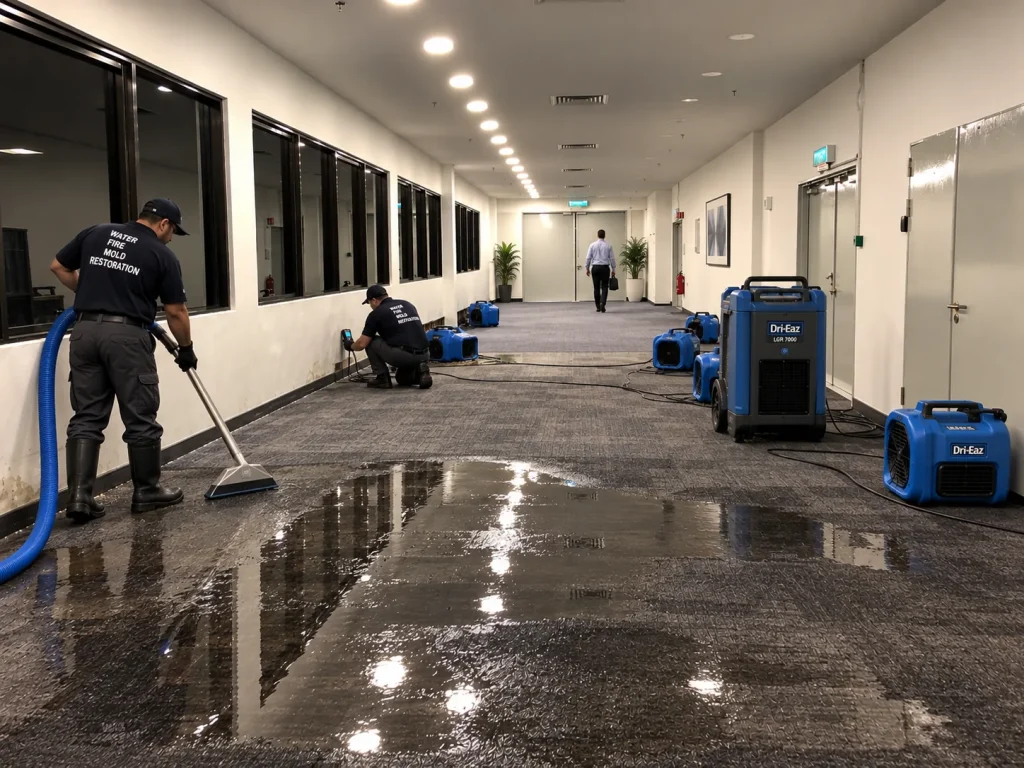
For building owners, property managers, facility managers, and general contractors, understanding those differences is critical. The right response is not simply about drying a building—it is about protecting structural components, coordinating trades, preserving valuable improvements, reducing downtime, and preventing a manageable water loss from becoming an expensive long-term disruption.
Commercial Water Damage Restoration in Nevada
Commercial properties across Nevada face very different water-loss conditions depending on elevation, building type, and climate. Las Vegas properties often deal with plumbing failures, mechanical-system leaks, roof drainage problems, and sudden interior flooding, while northern Nevada buildings encounter freezing conditions and snow-related moisture events. Mitigation focuses on controlling the immediate loss, but repair may involve drywall, flooring, electrical systems, HVAC equipment, roofing, and other building components. Complete commercial restoration coordinates those individual repairs into one recovery process.
Reno Commercial Water Damage and Reconstruction
Reno commercial buildings operate where freezing temperatures, snow accumulation, rapid weather changes, and seasonal runoff can complicate water intrusion. A broken pipe or roof leak may begin as a localized mitigation project but expose damaged insulation, ceilings, electrical components, or interior finishes that require reconstruction. Commercial properties undergoing substantial repairs may also use the opportunity to coordinate planned tenant improvements rather than rebuilding an outdated space exactly as it existed. The distinction between mitigation, repair, and restoration becomes especially important when several building systems are affected at once.
Incline Village and Lake Tahoe Commercial Restoration
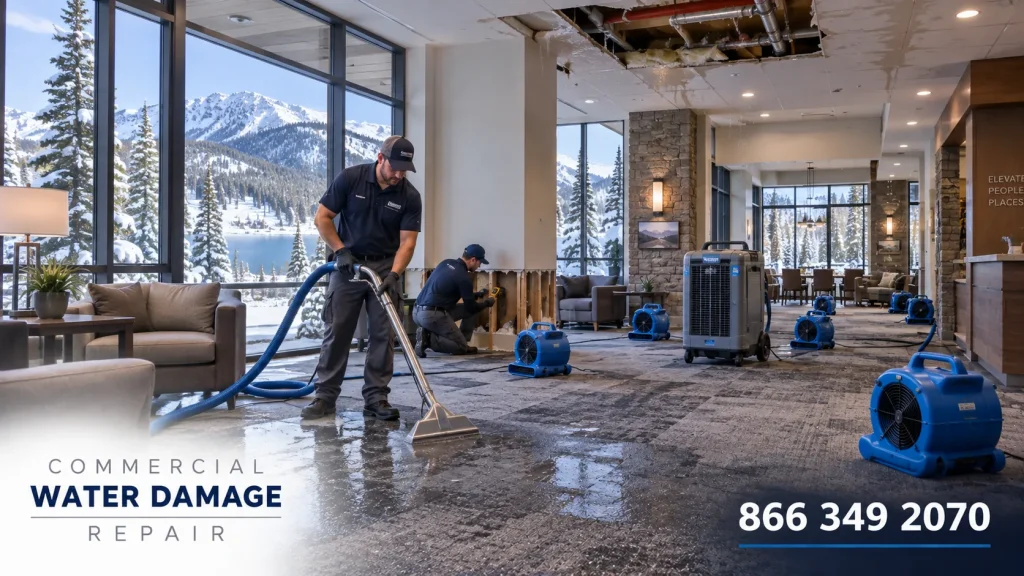
Commercial water damage around Incline Village and Lake Tahoe has a distinctly mountain-property component. Snow accumulation, freeze-thaw cycles, seasonal occupancy, mechanical rooms, frozen plumbing, roof drainage, and lower-level water intrusion can all influence the scope of a loss. Hotels, restaurants, retail properties, condominium facilities, and other commercial buildings may also have limited windows for disruptive reconstruction. Restoration planning therefore has to consider both the damaged materials and how quickly critical areas of the property can safely return to operation.
Las Vegas Commercial Water Damage Mitigation
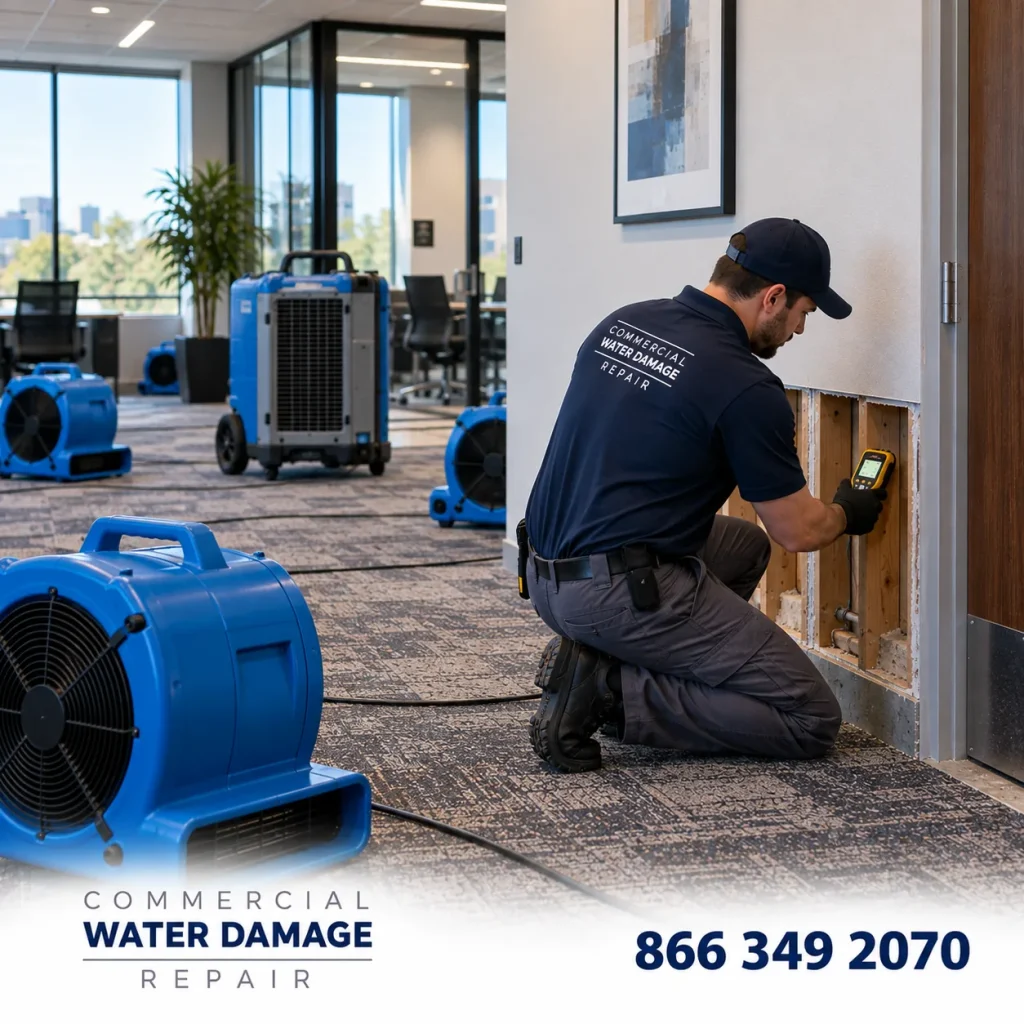
In Las Vegas, a major commercial water loss does not require a major storm. Failed supply lines, water heaters, plumbing systems, mechanical equipment, fire-suppression systems, and roof drainage can release substantial amounts of water inside a building. Rapid mitigation helps limit migration into wall cavities, flooring systems, tenant spaces, electrical areas, and adjacent operating areas. Once the building is stabilized, permanent repair and reconstruction can address the components damaged during the original event.
Commercial Water Damage Restoration Across California
California commercial restoration can involve everything from urban office buildings and retail centers to warehouses, hotels, medical facilities, and mixed-use properties. The cause of water intrusion may involve plumbing, roofing, exterior walls, storefront systems, mechanical equipment, or drainage rather than one obvious failure point. Identifying that source is important because drying the interior without correcting the underlying building problem can lead to another loss. Commercial restoration connects emergency mitigation with the trade-specific repairs needed to return the property to service.
San Francisco Bay Area Commercial Water Damage
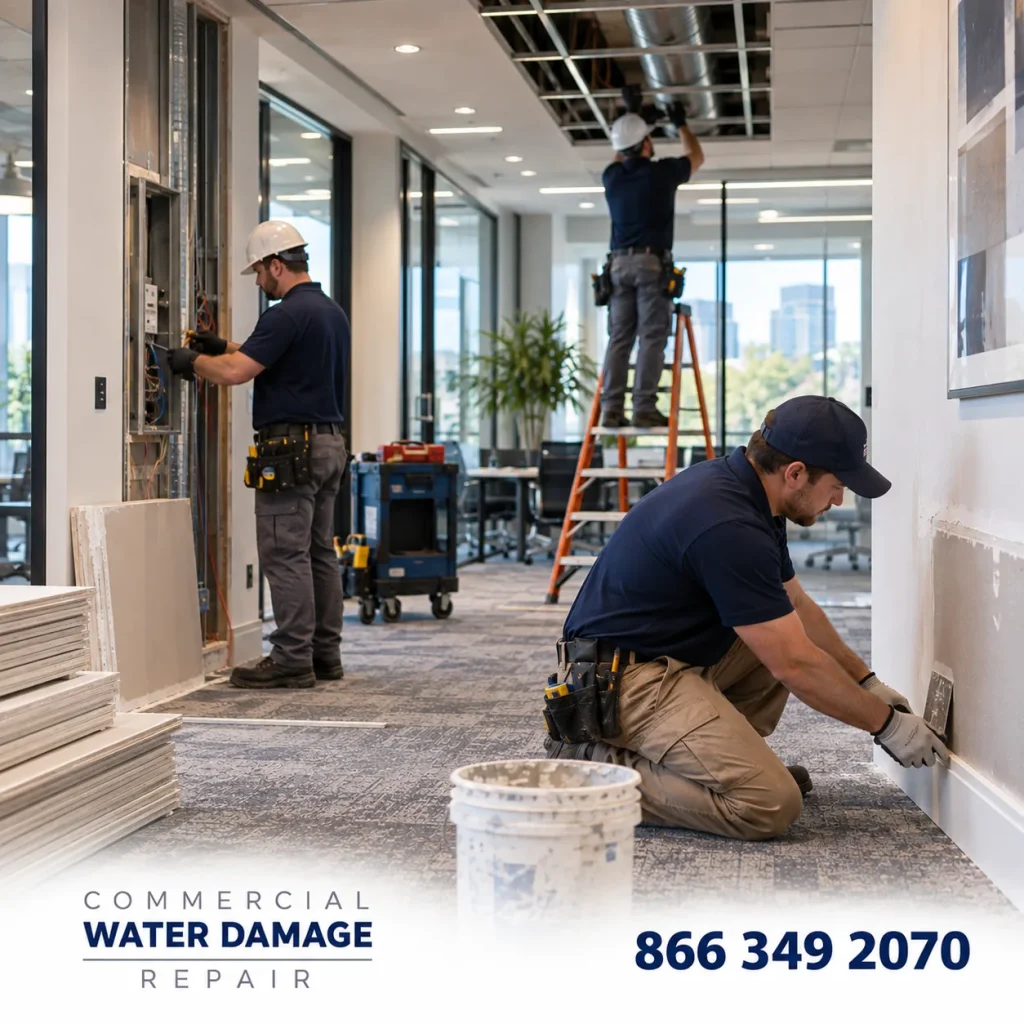
Bay Area commercial buildings frequently combine expensive interior improvements with complicated exterior and mechanical systems. Water can migrate through multi-story properties, ceiling plenums, shared walls, flooring assemblies, electrical pathways, and neighboring tenant spaces before the full extent of damage becomes visible. Older buildings may also expose existing conditions once demolition begins. For property managers and general contractors, restoration can therefore become a coordinated building project rather than a simple extraction and drying assignment.
Sacramento Commercial Water Damage Repair
Sacramento‘s mix of offices, retail properties, warehouses, industrial facilities, healthcare buildings, and multifamily developments creates a wide range of commercial water-loss scenarios. Plumbing failures, roof drainage, mechanical equipment, sprinkler systems, and exterior water intrusion can affect multiple construction assemblies during the same event. Mitigation controls the immediate damage. Repair restores individual components, while full restoration coordinates those repairs with the larger objective of returning the property to normal operation.
Los Angeles Commercial Water Damage and Building Systems
Los Angeles commercial properties often contain interconnected tenant improvements, glazing, electrical systems, HVAC equipment, plumbing, ceilings, flooring, and specialty finishes. Water entering one portion of the building can therefore create repair requirements well beyond the visible wet area. A storefront leak may affect interior flooring, while a plumbing failure above a tenant can reach ceilings, lighting, walls, and electrical components below. Commercial restoration is most effective when the building is evaluated as a collection of connected systems rather than isolated damaged materials.
San Diego Commercial Property Restoration
San Diego commercial water damage can involve plumbing failures, roof leaks, exterior envelope problems, mechanical systems, and moisture entering around windows or commercial glazing. Coastal exposure also makes identifying the actual intrusion pathway important before interior finishes are reconstructed. Emergency mitigation handles standing water and moisture stabilization, while the repair phase addresses the damaged construction. Restoration brings those phases together so the building does not simply look repaired while the original source remains unresolved.
Oregon Commercial Water Damage Restoration
Commercial restoration in Oregon frequently requires careful attention to roofs, exterior walls, windows, drainage systems, and recurring moisture pathways. Persistent wet weather can make an exterior defect appear to be an isolated interior leak when water is actually traveling through several layers of the building envelope. Mitigation may dry the affected interior, but repair must address the pathway that allowed water inside. This source-first approach becomes particularly important for offices, retail buildings, warehouses, multifamily properties, and older commercial structures.
Portland Commercial Water Damage and Building Envelope Repair
Portland‘s wet climate makes the boundary between water mitigation and building-envelope repair particularly important. Roof membranes, flashing, sealants, glazing transitions, wall assemblies, and drainage systems can all contribute to recurring commercial moisture problems. Drying damaged ceilings or walls solves only part of the problem when the exterior entry point remains active. A complete restoration project connects moisture investigation, mitigation, exterior repair, interior reconstruction, and final building recovery.
Washington Commercial Water Damage Restoration
Washington commercial properties can experience prolonged moisture exposure from roof leaks, drainage failures, exterior-envelope defects, plumbing systems, and mechanical equipment. Because water may move behind walls or above ceilings before becoming visible, the area requiring mitigation can extend beyond the original stain or flooded room. Permanent repair should address both damaged materials and the system responsible for the loss. Restoration provides the larger framework for coordinating those activities across the property.
Seattle Commercial Water Damage and Moisture Intrusion
Seattle commercial buildings operate in an environment where repeated rain can expose small weaknesses in roofing, glazing, sealants, exterior walls, and drainage systems. A leak that appears minor during one weather event can become a recurring restoration problem if only the interior damage is repaired. Moisture mapping and investigation can help determine how far water traveled before reconstruction begins. For larger buildings, resolving the exterior source may require coordination among restoration contractors, roofers, glazing contractors, facility managers, and other commercial trades.
Salt Lake City Commercial Water Damage Restoration
Salt Lake City commercial properties encounter another combination of conditions: winter freezing, snow accumulation, seasonal thawing, plumbing failures, roof drainage, and mechanical-system problems. A frozen or damaged pipe can affect several floors or tenant spaces, while snow-related roof intrusion may travel considerable distances before appearing inside. Emergency mitigation limits the immediate damage, but restoration may continue through roofing, plumbing, electrical, HVAC, interior reconstruction, and tenant-space repairs. The larger the property, the more important coordination between those phases becomes.
What Is Commercial Water Mitigation?
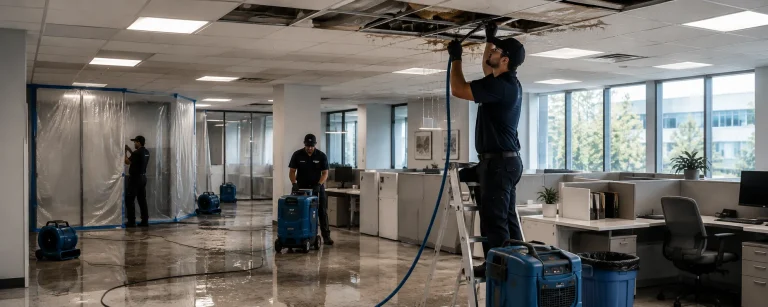
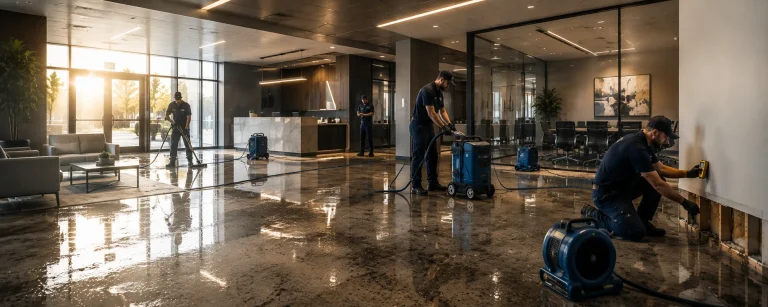
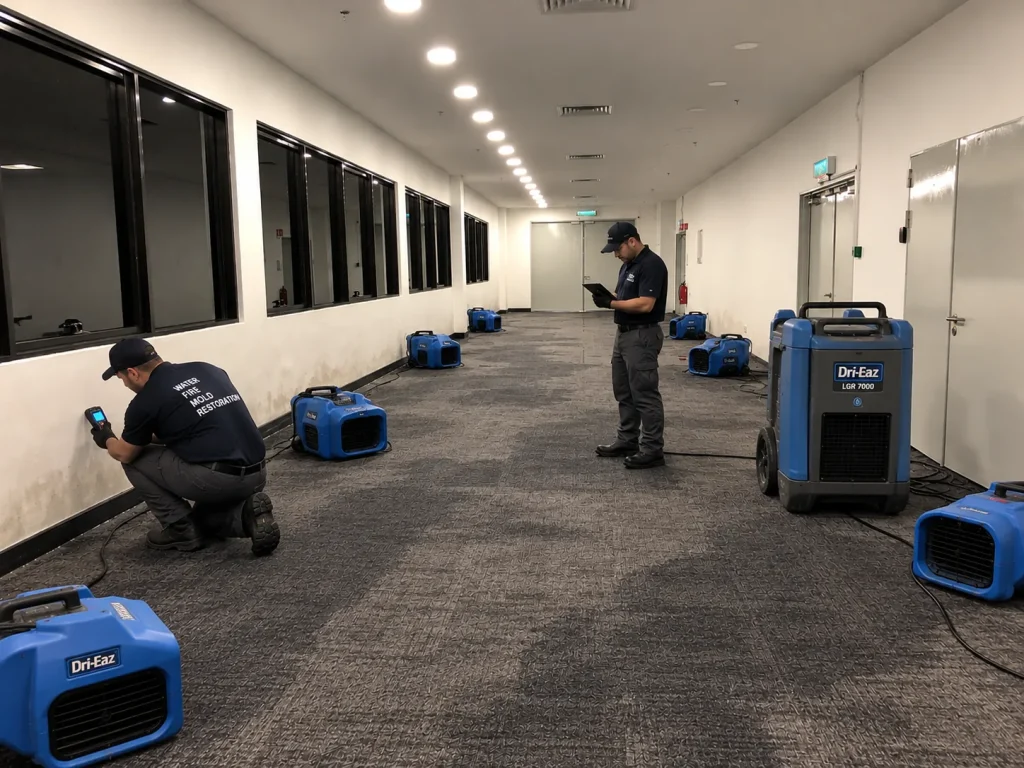
Mitigation is the emergency response phase.
Its purpose is to stop additional damage from occurring.
Typical mitigation services include:
- Emergency water extraction
- Structural drying
- Industrial dehumidification
- Moisture mapping
- Temporary demolition when necessary
- Sanitizing affected areas
- Mold prevention
- Stabilizing the building
Mitigation begins within hours of the loss and focuses on protecting the structure before permanent repairs begin.
What Is Commercial Water Damage Repair?
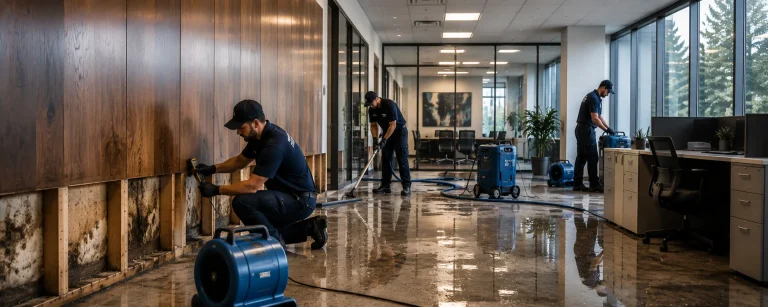
Repair refers to restoring damaged building components after the structure has been dried and stabilized.
Repair work often includes:
- Drywall replacement
- Metal stud framing
- Ceiling systems
- Commercial flooring
- Interior finishes
- Doors and hardware
- Millwork
- Paint
- Insulation
The objective is returning the property to its previous operating condition.
What Is Commercial Water Damage Restoration?
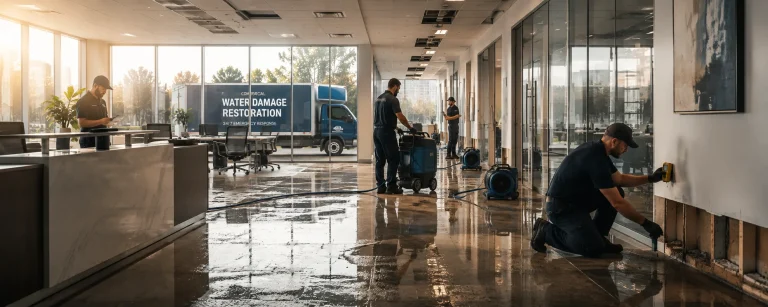
Restoration is the complete process.
It includes both mitigation and repair while managing the project from initial emergency response through final completion.
Restoration commonly includes:
- Emergency response
- Water extraction
- Structural drying
- Moisture monitoring
- Demolition
- Repairs
- Reconstruction
- Final cleaning
- Insurance documentation
- Project management
For most commercial buildings, restoration represents the entire lifecycle of recovering from a water loss.
Which Service Do You Need?
If water is actively damaging the building, mitigation should begin immediately.
If the building has already been dried but permanent work remains, repair is typically the next step.
If you’re looking for one contractor to manage the project from emergency response through reconstruction, restoration is generally the best solution.
Commercial Properties We Serve
- Office Buildings
- Retail Centers
- Shopping Malls
- Industrial Facilities
- Warehouses
- Manufacturing Plants
- Hotels
- Hospitals
- Schools
- Government Buildings
- Multi-Family Communities
- Mixed-Use Developments
Why Commercial Water Damage Chooses a Complete Restoration Approach
Commercial water losses often involve business interruption, tenant coordination, insurance requirements, and complex building systems. Our team manages every phase of the project—from emergency mitigation and water extraction to repairs and full restoration—helping commercial properties return to normal operations as quickly and safely as possible.