Water emergency? Our commercial crews respond 24/7.
Home / Commercial HVAC and Mechanical Water Damage
Commercial HVAC and Mechanical Water Damage
- 24/7 Response
- Extraction
- Structural Drying
- Restoration
What happens when you call
24/7 dispatch
Call any hour. Crews mobilize for commercial losses, including nights and weekends.
Extraction & drying
Standing water removed, then structural drying with monitored moisture readings.
Insurance-ready records
Readings, photos and scope notes documented for your carrier from day one.
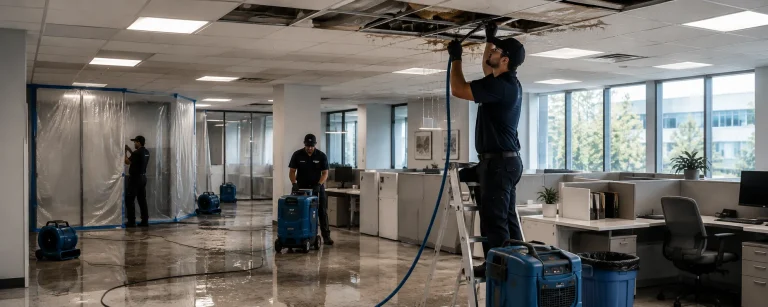
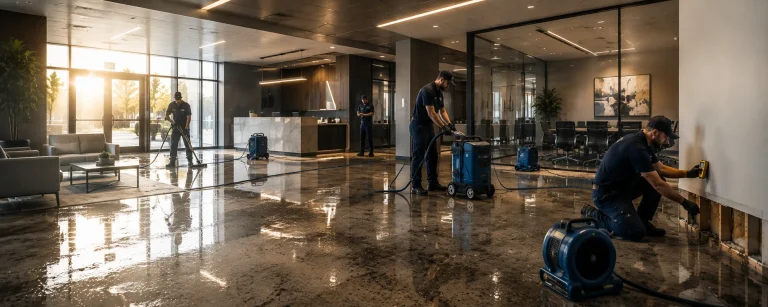
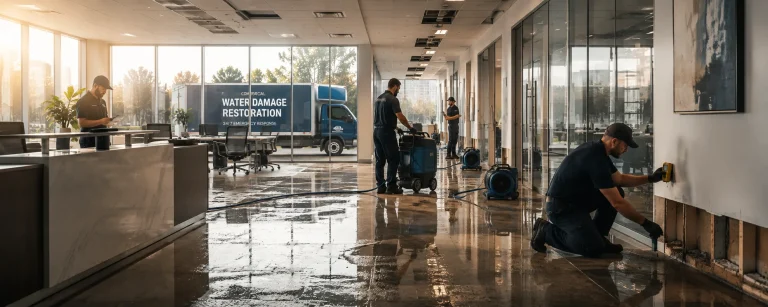
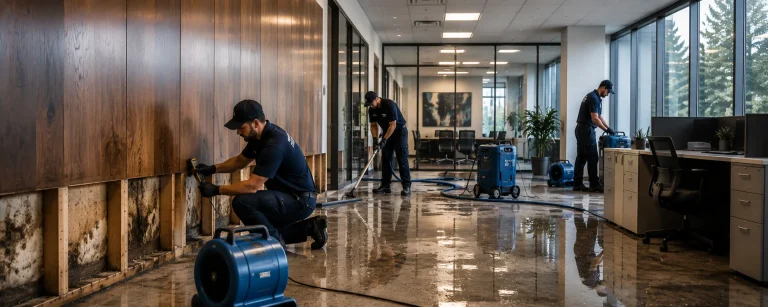
Commercial HVAC and Mechanical Water Damage Is About More Than a Leaking Unit
Mechanical failures often release water quietly, for a long time, before anyone notices.
Beyond a wet mechanical room floor, water from an air handler, chilled water line, or boiler may travel through shafts and floor assemblies into tenant spaces far from the equipment. Every decision made during recovery can influence downtime, equipment replacement cost, and whether the same failure repeats next season.
Commercial Water Damage provides educational resources that help building owners, facility managers, chief engineers, property managers, and mechanical contractors better understand HVAC and mechanical water damage and the planning required to trace, dry, and repair the affected areas.
Mechanical Failures Present Unique Recovery Challenges
Unlike a burst supply line, a mechanical leak is often discovered downstream of its source.
- Mechanical and equipment rooms
- Rooftop units and roof penetrations
- Vertical shafts and chases
- Above-ceiling spaces in tenant areas
- Electrical rooms adjacent to mechanical spaces
- Elevator machine rooms
- Basement and sub-grade utility areas
- Occupied spaces several floors below the equipment
Finding the source is frequently the first task, before any drying begins.
Common Causes of HVAC and Mechanical Water Damage
Commercial mechanical systems fail in recognizable ways.
- Condensate pan overflows and clogged drain lines
- Air handler and fan coil unit failures
- Chilled water piping leaks and failed fittings
- Boiler and hot water system failures
- Cooling tower overflow and basin leaks
- Humidifier and steam line failures
- Pump seal and expansion tank failures
- Frozen coils and freeze-related pipe breaks
- Failed valves, gaskets, and flex connectors
- Rooftop unit curb and flashing leaks
Identifying the mechanism matters, because seasonal failures return with the season.
Water Can Travel Far From the Mechanical Room
Mechanical water follows the building’s structure, not the floor plan.
- Pipe chases and vertical shafts
- Above-ceiling plenums and duct runs
- Floor assemblies and slab penetrations
- Wall cavities adjacent to risers
- Insulation on chilled water and steam lines
- Electrical conduit and cable trays
- Elevator shafts and pits
- Tenant spaces on lower floors
Hidden moisture should be traced back to the source before repairs are closed up.
Protecting Equipment and Building Operations
Most of these losses occur while the building is running and cannot simply shut down.
- Safe isolation and shutdown of affected equipment
- Temporary heating or cooling where required
- Protection of electrical equipment near the loss
- Containment in occupied tenant areas
- Coordination with tenants on access and timing
- Protection of adjacent equipment and controls
- Managing humidity while systems are offline
- Phased restoration of mechanical service
Keeping conditioned air available to tenants is often a parallel priority to drying.
Building Systems Require Additional Consideration
A mechanical water loss rarely affects only the mechanical system.
- Building automation and control systems
- Electrical panels, switchgear, and transformers
- Elevator equipment and controls
- Fire alarm and life safety devices
- Data and communications rooms
- Emergency power systems
- Insulation and fireproofing near piping
- Equipment warranties affected by water exposure
Evaluating these early helps a building avoid a second failure during restart.
Coordinating Repairs With Mechanical Contractors
These projects require restoration and mechanical trades to work in sequence.
- Building ownership and property management
- Chief engineers and facility staff
- Mechanical and plumbing contractors
- Restoration professionals
- Electrical contractors where equipment was affected
- Controls and automation vendors
- Insurance representatives
- Affected tenants and their vendors
Organized sequencing prevents drying work from being undone by later mechanical repairs.
Questions Facility Managers Should Ask
Every mechanical loss carries a different risk of recurrence.
- What failed, and has the cause been corrected or only isolated?
- How long was water released before discovery?
- How far did water travel from the equipment?
- Has moisture in shafts and above ceilings been evaluated?
- Which electrical and control equipment was exposed?
- What documentation will be provided for the claim?
- Can tenants remain in place during drying and repairs?
- What is required before equipment is returned to service?
- What monitoring would catch this earlier next time?
These discussions often prevent the same failure from repeating.
HVAC Water Damage Recovery Happens in Phases
Mechanical projects generally progress through several connected stages.
- Source identification and isolation
- Emergency water extraction
- Moisture mapping along travel paths
- Structural drying and verification
- Equipment assessment and cleaning
- Mechanical repairs and component replacement
- Interior repairs and reconstruction
- System restart and final inspections
Each phase supports both a dry building and a reliable mechanical system.
Looking Beyond the Immediate Repair
Many owners use a mechanical loss to add the monitoring that would have caught it.
- Condensate pan float switches and overflow cutoffs
- Water sensors in mechanical and equipment rooms
- Scheduled drain line cleaning
- Preventive maintenance on pumps, valves, and connectors
- Freeze protection and seasonal startup checks
- Building automation alarms for leak conditions
- Rooftop unit and curb inspections
- Updated mechanical drawings and shutoff mapping
Detection at the equipment is almost always cheaper than drying the floors below it.
Why Commercial Water Damage Focuses on HVAC and Mechanical Water Damage
Mechanical losses require a specialized approach because the damage usually appears far from the failure, and because the equipment itself must be restored alongside the building.
Commercial Water Damage provides educational resources that help building owners, facility managers, chief engineers, developers, and mechanical contractors better understand water mitigation, extraction, restoration, repair planning, and insurance coordination and the planning required to restore both the building and its mechanical systems.
Whether addressing a condensate overflow above a single tenant suite or coordinating recovery after a chilled water line failure that reached several floors, informed planning helps reduce downtime, protect equipment, and support a faster, more organized recovery.
Water Emergency?
Our commercial response team is available 24/7 for water extraction, structural drying and restoration.
Our Services
Talk To A Specialist
Need help with a water loss right now?
Call our commercial team for extraction, drying and restoration planning built around your building and your operations.