Water emergency? Our commercial crews respond 24/7.
Home / Water Sources / Water Sources
Where Commercial Water Damage Comes From
- 24/7 Response
- Extraction
- Structural Drying
- Restoration
What happens when you call
24/7 dispatch
Call any hour. Crews mobilize for commercial losses, including nights and weekends.
Extraction & drying
Standing water removed, then structural drying with monitored moisture readings.
Insurance-ready records
Readings, photos and scope notes documented for your carrier from day one.
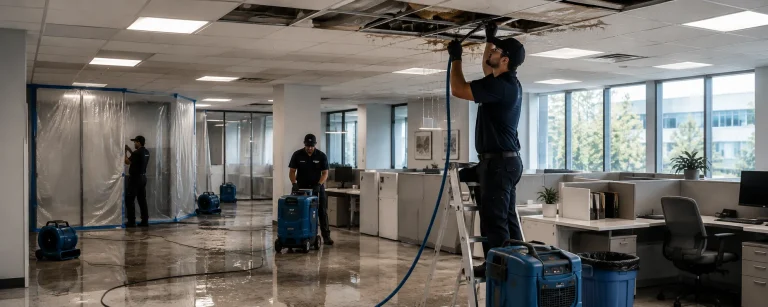
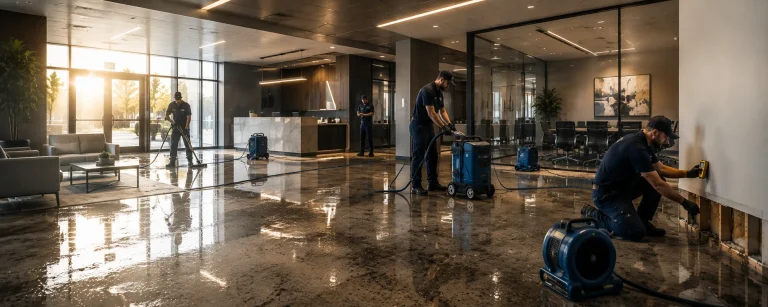
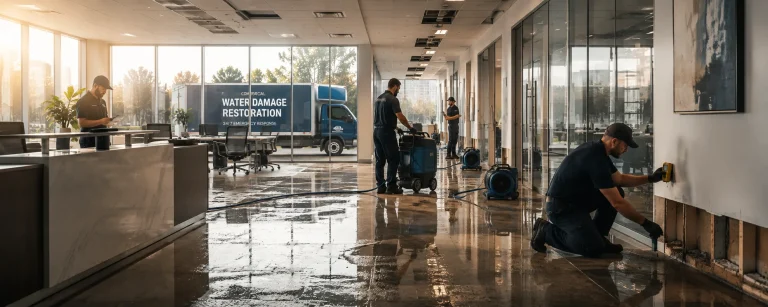
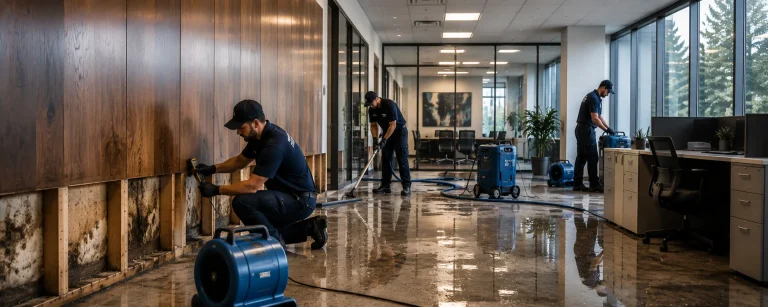
Most commercial water damage is described by where it appeared: a stained ceiling, a wet corridor, a flooded suite. Where it came from is a different question, and it is the one that determines how far the water traveled, what it damaged on the way, and what has to happen before the building can operate normally again.
The twelve sources below account for the large majority of commercial water losses. Each behaves differently. A sprinkler discharge delivers a large volume in minutes and stops when a valve is closed. A condensate line drips quietly for a week. A sewer backup introduces contamination that changes the entire response. Foundation intrusion returns every time it rains until the cause is addressed.
Understanding the source early shapes the right response, and it usually explains the damage that has not been found yet.
Pressurized Water Systems
These systems hold water under pressure at all times, so a failure continues until someone isolates it. They produce the largest volumes and travel the farthest through a building.
- Domestic Water Line Breaks — supply lines, risers and flexible connectors under constant pressure
- Fire Sprinkler Discharges — high volume, sudden onset, and a life-safety system to restore
- Chilled Water Systems — large closed loops serving air handlers and process equipment
Mechanical and Equipment Sources
Water that starts at equipment tends to begin in mechanical spaces and above ceilings, close to electrical and control systems.
- HVAC Condensate Failures — blocked lines, corroded drain pans and defeated float switches
- Cooling Tower Leaks — basins, sumps and the piping that feeds them
- Equipment Failures — water heaters, boilers, process equipment and appliances
Drainage and Contaminated Water
When the water leaving a building cannot get out, it comes back in. These losses carry contamination, which changes what can be cleaned and what has to be removed.
- Sewer Backups — blocked or surcharged drains pushing contaminated water into occupied space
- Plumbing Fixture Overflows — toilets, sinks and floor drains that surcharge
Building Envelope and Structure
Envelope sources are weather-driven and repetitive. They rarely stop on their own, and they tend to be discovered only after the assembly behind the finish has been wet for some time.
- Commercial Roof Leaks — seams, flashing, drains and rooftop penetrations
- Window and Curtain Wall Leaks — glazing joints, gaskets and sealant failures
- Expansion Joint Failures — roof, deck and structural joints that open with movement
- Foundation Water Intrusion — below-grade walls, slabs and hydrostatic pressure
Why the Source Changes the Response
Two losses of the same size can require completely different work depending on where the water came from.
- Volume and duration. A sudden discharge soaks a wide area quickly; a slow leak saturates a smaller area thoroughly and is usually discovered much later.
- Water quality. Clean supply water, condensate, chilled water and sewage are not handled the same way, and the difference decides what can be dried and what has to be removed.
- Pathway. Water from a roof travels down through assemblies; water from a slab travels up through them. Investigation follows the pathway, not the stain.
- Recurrence. Envelope and drainage sources come back with the next storm unless the cause is corrected, so interior repairs are sequenced after the source is resolved.
- Systems affected. Equipment-related sources sit close to electrical, controls and mechanical infrastructure, which brings other trades into the recovery.
What to Do While the Source Is Still Unclear
In the first hour the source is often uncertain, and the priorities are the same regardless:
- Stop the flow if a valve, switch or shutoff will do it
- Keep people away from standing water near electrical equipment
- Photograph conditions before anything is moved or removed
- Protect or relocate contents in the pathway
- Note the time water was discovered and when it was stopped
- Call for extraction before the affected area grows
Identifying the source can then proceed with evidence rather than assumption, and the restoration scope can follow what the water actually did.
Water Emergency?
Our commercial response team is available 24/7 for water extraction, structural drying and restoration.
Our Services
Talk To A Specialist
Need help with a water loss right now?
Call our commercial team for extraction, drying and restoration planning built around your building and your operations.