
Water emergency? Our commercial crews respond 24/7.
Home / Multifamily Water Damage Repair
Multifamily Water Damage Repair
- 24/7 Response
- Extraction
- Structural Drying
- Restoration
What happens when you call
24/7 dispatch
Call any hour. Crews mobilize for commercial losses, including nights and weekends.
Extraction & drying
Standing water removed, then structural drying with monitored moisture readings.
Insurance-ready records
Readings, photos and scope notes documented for your carrier from day one.
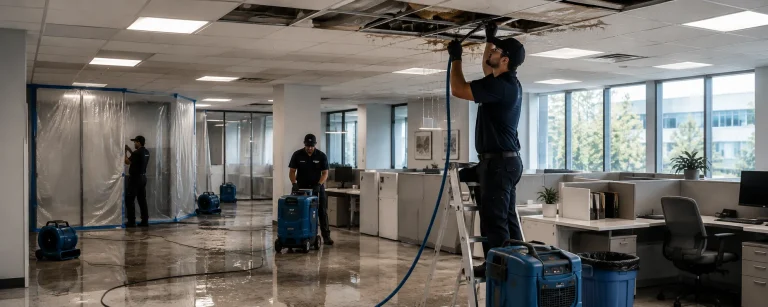
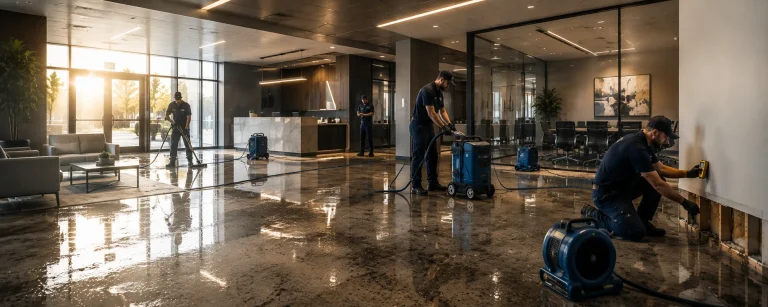
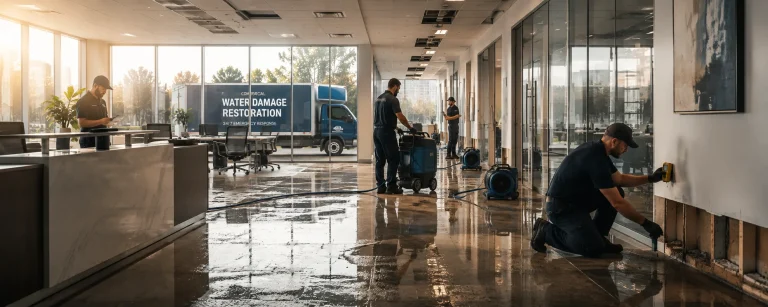
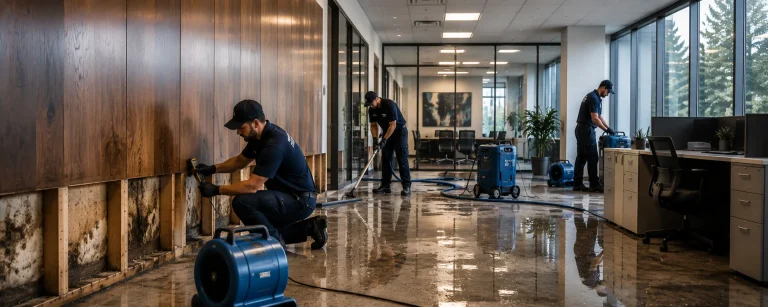
Multifamily Water Damage Repair Is About More Than One Wet Unit
Water damage in an apartment or condominium building rarely stays in the unit where it started.
Beyond damaged flooring or drywall, water may affect units below and beside the source, shared corridors, common amenities, parking structures, and the habitability obligations an owner carries. Every decision made during recovery can influence resident retention, occupancy, and the size of the eventual claim.
Commercial Water Damage provides educational resources that help apartment owners, community managers, regional property managers, condominium boards, and multifamily contractors better understand multifamily water damage repair and the planning required to restore occupied residential buildings.
Apartment and Condominium Properties Present Unique Recovery Challenges
Multifamily buildings stack private homes on top of shared infrastructure.
- Occupied residential units
- Units directly below and beside the loss
- Shared corridors and stairwells
- Lobbies and leasing offices
- Amenity spaces such as fitness and community rooms
- Laundry rooms and utility closets
- Parking structures and storage areas
- Mechanical and riser rooms
Each space carries different access rights, notice requirements, and repair priorities.
Common Causes of Multifamily Water Damage
Residential systems repeated across dozens of units create recurring failure points.
- Supply line and angle stop failures
- Water heater failures and ruptured tanks
- Washing machine hose failures
- Toilet overflows and drain line backups
- Fire sprinkler activation and freeze events
- HVAC condensate and air handler overflows
- Roof, balcony, and building envelope leaks
- Dishwasher and refrigerator line failures
- Storm-related water intrusion
- Aging plumbing risers in older properties
Because units repeat vertically, one failure often produces losses on several floors at once.
Water Can Affect More Than the Unit Where It Started
The reported unit is usually the starting point of the investigation, not its boundary.
- Ceiling assemblies in units below
- Party walls between adjoining units
- Corridor flooring and subfloor
- Stairwells and elevator shafts
- Electrical panels and low-voltage pathways
- Insulation and fire-rated assemblies
- Parking garage ceilings beneath occupied floors
- Structural framing and floor assemblies
Hidden moisture should be evaluated in adjacent units before repairs are closed up.
Protecting Residents and Occupancy
Multifamily recovery happens in people’s homes, which changes how the work is planned.
- Proper notice and scheduled access to occupied units
- Temporary relocation when units are not habitable
- Protection and inventory of resident belongings
- Accommodation for pets and accessibility needs
- Clear, repeated communication with affected residents
- Noise limits and reasonable work hours
- Secure containment in shared corridors
- Phased return of units to occupancy
Respecting residents during the process often protects both retention and reputation.
Ownership Structures Require Additional Consideration
Who pays for what is frequently the slowest part of a multifamily loss.
- Association versus unit owner responsibility
- Master policy and unit owner policy coordination
- Governing documents and bylaws
- Rental versus owner-occupied units
- Landlord obligations for habitability
- Resident contents and renter policies
- Deductible allocation across parties
- Documentation required by each insurer
Clarifying responsibility early helps prevent repairs from stalling between parties.
Coordinating Repairs Across Units and Stakeholders
A single loss can involve many decision makers with different interests.
- Ownership and asset management
- Community and regional property managers
- Condominium boards and association management
- Individual unit owners and residents
- Restoration professionals and general contractors
- Insurance representatives for multiple policies
- Maintenance and engineering staff
- Legal and compliance advisors when required
Organized communication keeps residents informed while decisions move forward.
Questions Property Managers Should Ask
Every community has different occupancy pressures and governing rules.
- How many units are affected, including those adjacent to the source?
- Are any units uninhabitable, and what relocation is required?
- Has hidden moisture in neighboring units been evaluated?
- Which policy responds to which portion of the damage?
- What notice must residents receive before access?
- What documentation will be provided for each claim?
- How will common areas remain safe and usable?
- When can units realistically return to occupancy?
- How will residents receive progress updates?
These discussions reduce disputes later and shorten the overall timeline.
Multifamily Water Damage Recovery Happens in Phases
Residential projects generally progress through several connected stages.
- Emergency water extraction
- Damage mitigation and containment
- Moisture mapping across affected units
- Structural drying and verification
- Contents handling and storage
- Repairs and interior reconstruction
- Unit-by-unit finish work
- Final inspections and return to occupancy
Each phase supports a safe and organized return of homes to residents.
Looking Beyond the Immediate Repair
Many owners use a water loss to reduce the frequency of the next one.
- Supply line and angle stop replacement programs
- Water heater replacement schedules
- Leak detection devices in units and risers
- Washing machine hose requirements in leases
- Roof, balcony, and envelope inspections
- Preventive plumbing maintenance
- Emergency response planning for on-site staff
- Updated building and unit documentation
A proactive approach can meaningfully reduce both claim frequency and resident turnover.
Why Commercial Water Damage Focuses on Multifamily Water Damage Repair
Multifamily properties require a specialized approach because they combine private residences, shared infrastructure, layered insurance, and habitability obligations.
Commercial Water Damage provides educational resources that help apartment owners, community managers, condominium boards, developers, and multifamily contractors better understand water mitigation, extraction, restoration, repair planning, and insurance coordination and the planning required to return residents to their homes safely.
Whether addressing a single supply line failure in one apartment or coordinating repairs across a stack of units after a riser break, informed planning helps reduce downtime, protect residents, and support a faster, more organized recovery.
Water Emergency?
Our commercial response team is available 24/7 for water extraction, structural drying and restoration.
Our Services
Talk To A Specialist
Need help with a water loss right now?
Call our commercial team for extraction, drying and restoration planning built around your building and your operations.