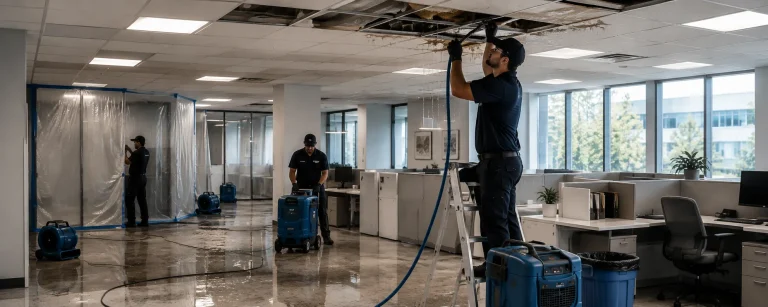
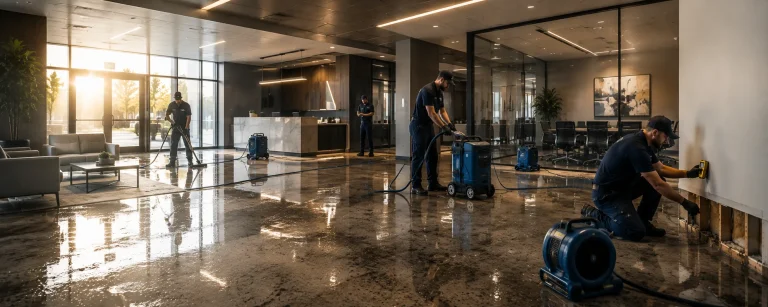
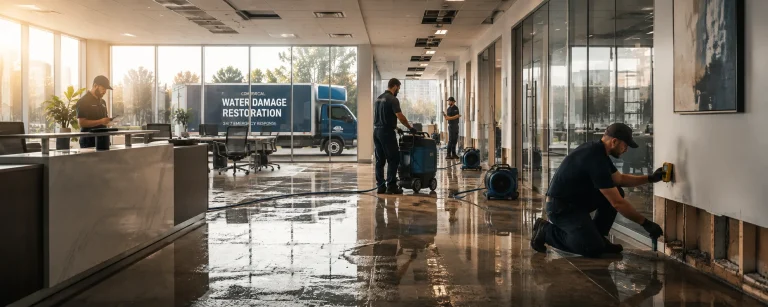
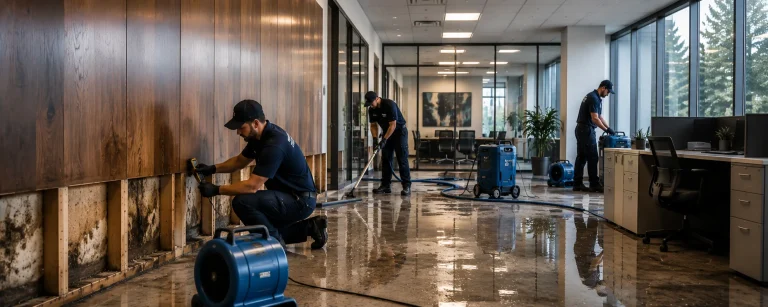
A burst pipe is one of the most common causes of commercial water damage and one of the fastest-moving building emergencies. A single pipe failure can release hundreds or even thousands of gallons of water in a short period, affecting offices, tenant spaces, warehouses, hospitals, hotels, schools, manufacturing facilities, and retail centers. While the immediate priority is stopping the flow of water, the broader objective is protecting people, preserving building systems, minimizing business interruption, and restoring normal operations as efficiently as possible.
Commercial burst pipe response extends far beyond repairing plumbing. It often involves emergency mitigation, water extraction, structural drying, insurance documentation, building system evaluations, tenant communication, and reconstruction planning. Every decision made during the first few hours can influence repair costs, recovery timelines, and long-term property performance.
Why Commercial Pipes Burst
Pipe failures can occur for many different reasons throughout the life of a commercial building.
Common causes include:
- Freezing temperatures
- Aging plumbing infrastructure
- Corrosion
- Excessive water pressure
- Mechanical damage
- Construction accidents
- Joint or fitting failures
- Expansion and contraction
- Defective plumbing materials
- Equipment malfunctions
- Poor maintenance
- Accidental impacts
Avoid:
✕ Ignoring small plumbing leaks
✕ Delaying repairs after pipe corrosion is discovered
✕ Restarting water systems before the damaged area is inspected
Understanding why the pipe failed is often just as important as repairing the damage itself.
The Building Owner’s Perspective
Building owners typically focus on protecting the long-term value of the property.
Common priorities include:
— Preserving structural integrity
— Limiting repair costs
— Protecting tenant occupancy
— Maintaining lease revenue
— Reducing future plumbing failures
— Protecting capital investments
— Supporting long-term building performance
Owners frequently evaluate whether aging plumbing systems should be repaired, upgraded, or replaced as part of the restoration process.
The Property Manager’s Perspective
Property managers often coordinate the emergency from the moment the pipe failure is reported.
Responsibilities commonly include:
- Contacting emergency restoration contractors
- Coordinating plumbers
- Communicating with tenants
- Managing building access
- Scheduling inspections
- Documenting affected areas
- Updating ownership
- Assisting insurance representatives
- Coordinating reconstruction
Fast communication helps reduce confusion while keeping tenants informed throughout the recovery process.
The Facility Manager’s Perspective
Facility managers focus on protecting critical building operations.
Primary concerns often include:
- Isolating the damaged plumbing system
- Protecting electrical equipment
- Restoring HVAC operation
- Maintaining fire protection systems
- Preventing additional water migration
- Protecting elevators
- Maintaining occupant safety
- Coordinating emergency shutdowns
- Restoring building functionality
For many facilities, maintaining safe building operations becomes just as important as repairing the plumbing itself.
Insurance and Documentation
Burst pipe claims often require detailed documentation from the beginning of the emergency.
Documentation may include:
- Photographs of the failed pipe
- Moisture readings
- Water damage mapping
- Emergency response timelines
- Damaged material inventories
- Equipment placement logs
- Daily drying reports
- Repair estimates
- Cause of loss documentation
Accurate documentation helps support communication between restoration contractors, property ownership, consultants, adjusters, and insurance carriers while creating a clear record of the recovery process.
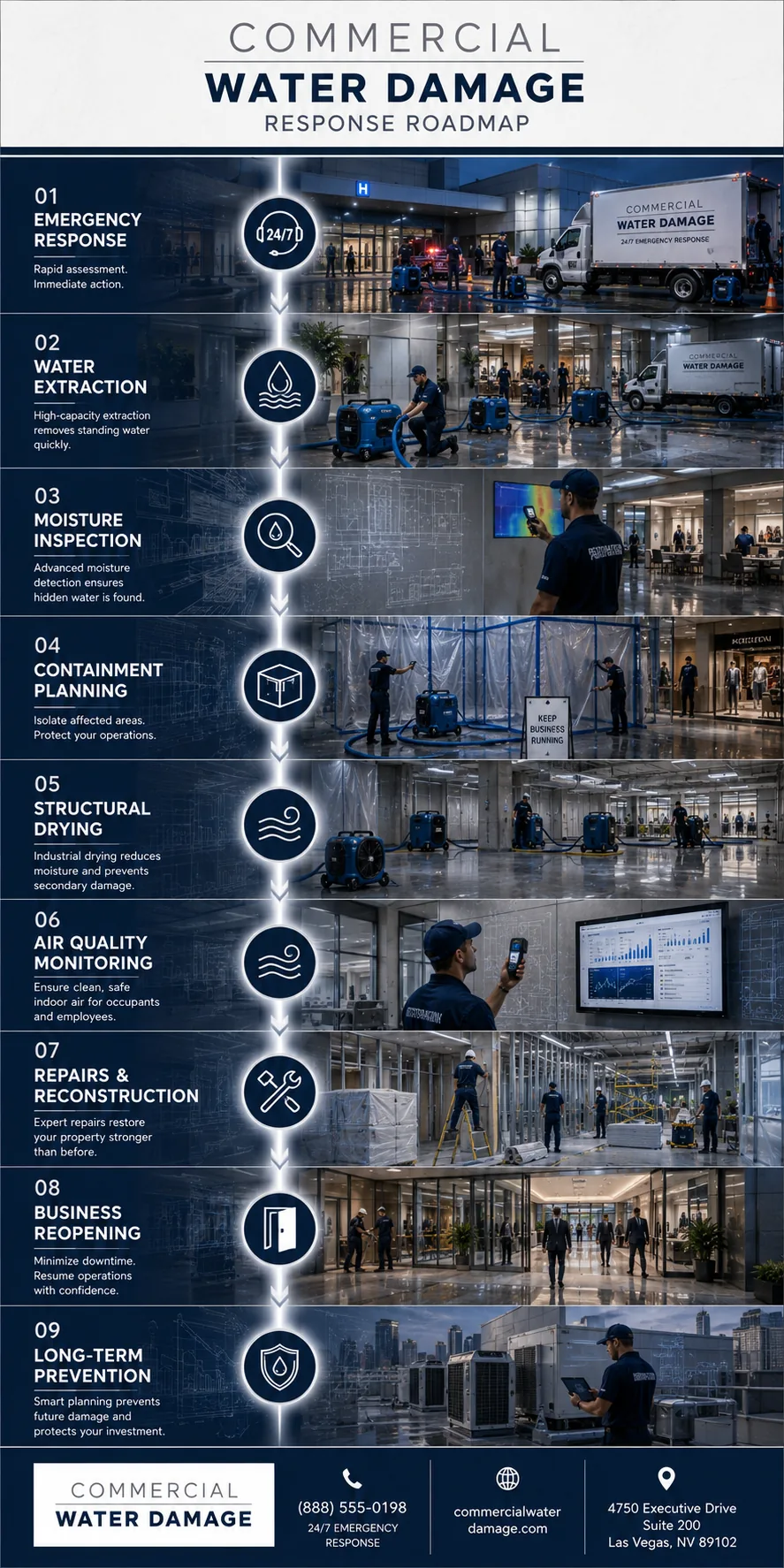
Emergency Burst Pipe Response
Commercial response often begins within minutes of discovering the leak.
Initial priorities may include:
- Shutting off the water supply
- Protecting occupants
- Isolating affected areas
- Water extraction
- Moisture inspections
- Temporary stabilization
- Structural drying
- Equipment protection
- Debris removal
- Restoration planning
- Acting quickly helps reduce water migration into additional building materials and occupied spaces.
Commercial Properties Commonly Affected
Burst pipe emergencies occur across nearly every commercial property type.
Typical projects include:
- Office buildings
- Medical facilities
- Hospitals
- Hotels
- Retail centers
- Shopping malls
- Warehouses
- Distribution centers
- Manufacturing facilities
- Schools and universities
- Government buildings
- Apartment communities
- Industrial facilities
Every building presents unique challenges based on occupancy, operating hours, plumbing design, and business continuity requirements.
Looking Beyond the Immediate Repair
After the emergency has been stabilized, many organizations review the condition of the building’s plumbing infrastructure.
Planning often includes:
— Plumbing inspections
— Pipe replacement programs
— Freeze protection strategies
— Water pressure evaluations
— Preventive maintenance
— Leak detection technology
— Building monitoring systems
— Emergency response planning
— Capital improvement planning
— Insurance and risk management reviews
Rather than treating the event as an isolated plumbing repair, many owners use the opportunity to strengthen the overall reliability of the building.
Responding to Commercial Burst Pipe Emergencies
Commercial burst pipe response requires coordinated action from building owners, property managers, facility managers, restoration professionals, plumbers, contractors, engineers, tenants, and insurance representatives. Rapid water control, professional extraction, structural drying, detailed documentation, and thoughtful reconstruction planning all contribute to a successful recovery. Whether a pipe failure affects a downtown office tower, manufacturing facility, healthcare campus, warehouse, hotel, retail center, or educational building, a well-organized response helps minimize disruption, protect valuable assets, and support the long-term performance of the property.