Water emergency? Our commercial crews respond 24/7.
Home / Water Sources / Sewer Backups
Commercial Sewer Backups
- 24/7 Response
- Extraction
- Structural Drying
- Restoration
What happens when you call
24/7 dispatch
Call any hour. Crews mobilize for commercial losses, including nights and weekends.
Extraction & drying
Standing water removed, then structural drying with monitored moisture readings.
Insurance-ready records
Readings, photos and scope notes documented for your carrier from day one.
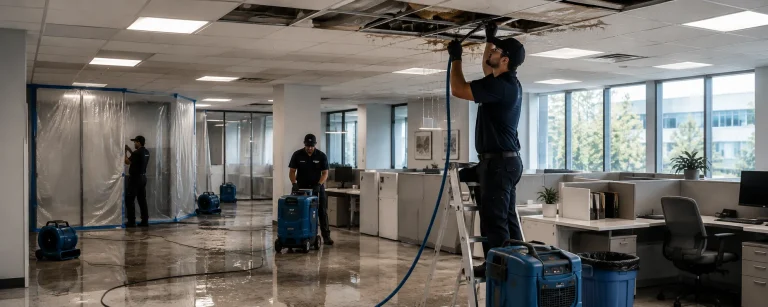
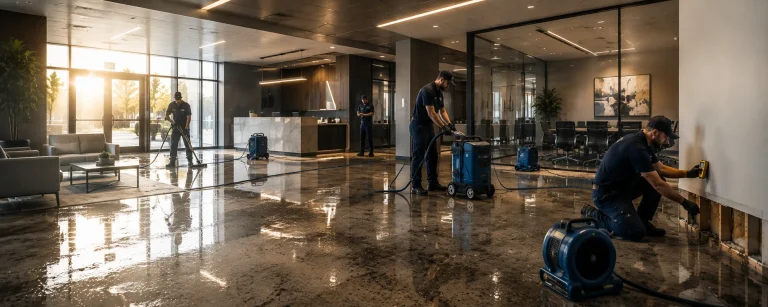
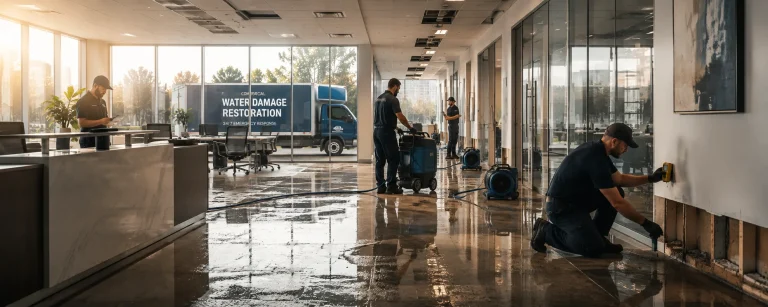
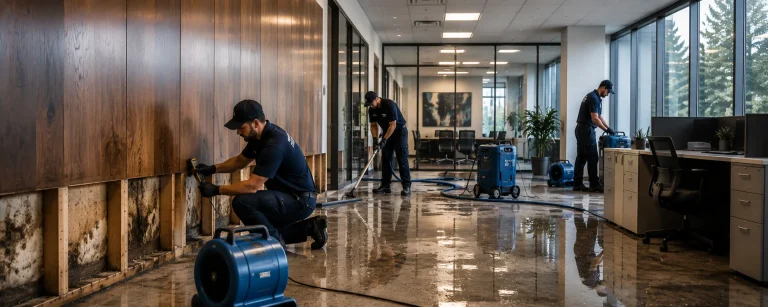
A sewer backup is the one water source where the contamination matters more than the volume. Water that has been in a sanitary line carries bacteria and other contaminants, and that single fact changes how every affected material is treated.
In a commercial building the exposure is broad. Restrooms, kitchens, janitor closets, floor drains and basement fixtures are all connected to the same system, and a blockage or surcharge downstream pushes water back through whichever opening is lowest.
Why Backups Happen
- Blockages from grease, particularly in buildings with food service
- Wipes, paper products and foreign objects in the line
- Root intrusion in older lateral lines
- Collapsed, offset or deteriorated piping
- Municipal main surcharge during heavy rainfall
- Lift station or ejector pump failure in below-grade spaces
- Combined sewer systems overwhelmed by storm flow
- Failed backflow prevention devices
Grease is the most common cause in commercial buildings with kitchens, and it accumulates gradually until a single busy service tips the line into blockage. Storm-driven surcharge is the other frequent cause, and it affects the lowest fixtures in the building first.
What Makes These Losses Different
Three things set a sewer backup apart from a clean water event.
The water is contaminated. Porous materials that absorbed it generally cannot be restored to a safe condition by drying alone, so removal is more extensive than the water volume suggests.
Access is restricted. Affected areas are isolated from occupied space during the work, which usually means containment, controlled access and attention to airflow between zones.
Cleaning precedes drying. In a clean water loss the priority is to dry the building. Here the affected surfaces and structure are cleaned first, and drying follows once the contamination has been addressed.
Where the Damage Concentrates
- Floor assemblies, including anything porous in contact with the slab
- The lower portion of wall assemblies, which wick contaminated water upward
- Carpet, pad and soft flooring, which are typically removed
- Base cabinetry, millwork and fixtures in the affected area
- Contents stored on the floor
- Below-grade spaces, where backups collect and sit
- HVAC components if the affected area shares an airstream
The Response Sequence
Stop the use of fixtures. Continuing to run water into a blocked system makes the backup worse, so affected fixtures are taken out of service immediately.
Clear the blockage. A plumbing contractor restores flow, and in some cases a camera inspection follows to establish why it happened.
Restrict access and contain the area. Occupants are kept out of the affected space, and containment is established before extraction begins.
Extract and remove. Contaminated water is extracted, and porous materials that absorbed it are removed rather than dried.
Clean and treat. Remaining surfaces and structure are cleaned, with attention to what the water reached rather than only what looks affected.
Dry and verify. Drying follows cleaning, and documented readings establish when materials have reached their target condition.
Reconstruct. Finishes are replaced once the underlying assembly has been cleaned, dried and verified.
The Occupancy Question
Backups raise an immediate question that other losses usually do not: can the building stay open? The answer depends on where the affected area is, whether it can be isolated from occupied space, and what the affected space is used for.
A backup in a rarely used basement storage room is a very different situation from a backup across a restaurant kitchen or a healthcare corridor. Food service and healthcare environments in particular have requirements that go beyond the restoration work itself, and the operational decision is made with those in mind.
Early Warning Signs
- Slow drains at multiple fixtures on the same line
- Gurgling from floor drains or fixtures when others are used
- Recurring odors near floor drains
- Water appearing at a floor drain during heavy rain
- Toilets that require repeated attention on the same branch
- Prior backups at the same location, which usually indicate an unresolved cause
Multiple slow fixtures on one line is the signal worth acting on. A single slow drain is a fixture problem. Several is a line problem, and line problems escalate.
Prevention
- Schedule grease trap service and line cleaning in food service buildings
- Camera inspect older laterals to identify root intrusion and deterioration
- Install and maintain backwater valves where appropriate
- Service ejector pumps and lift stations, including alarms
- Keep floor drains clear and traps primed
- Track repeat locations rather than treating each event as isolated
- Keep contents off the floor in below-grade storage
Documentation
- Photographs of affected areas before cleaning or removal
- The source and cause of the backup, including any camera findings
- Extent of contaminated water travel
- Materials removed, with the reasoning
- Cleaning performed and areas treated
- Moisture readings by location and date
- Any prior backups at the same location
Contamination Sets the Scope
The defining feature of a sewer backup is that the scope is decided by where the contaminated water went, not by how much of it there was. A small volume across a porous floor assembly produces more removal than a larger volume of clean water across the same area.
That is also why these projects benefit from careful investigation early. Establishing the actual boundary of contamination, rather than assuming it matches the visible water line, is what keeps the work from being reopened later.
Water Emergency?
Our commercial response team is available 24/7 for water extraction, structural drying and restoration.
Our Services
Talk To A Specialist
Need help with a water loss right now?
Call our commercial team for extraction, drying and restoration planning built around your building and your operations.