Water emergency? Our commercial crews respond 24/7.
Home / Insurance Process
Commercial Water Damage Insurance Process
- 24/7 Response
- Extraction
- Structural Drying
- Restoration
What happens when you call
24/7 dispatch
Call any hour. Crews mobilize for commercial losses, including nights and weekends.
Extraction & drying
Standing water removed, then structural drying with monitored moisture readings.
Insurance-ready records
Readings, photos and scope notes documented for your carrier from day one.
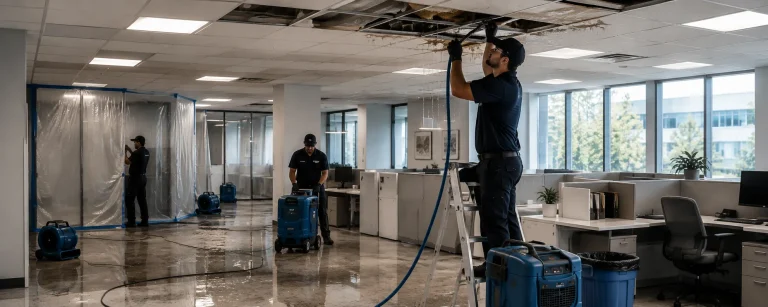
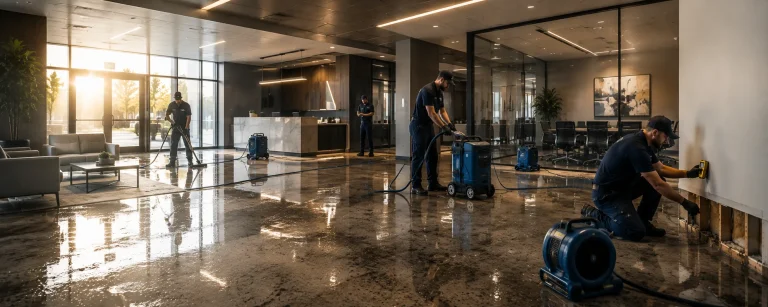
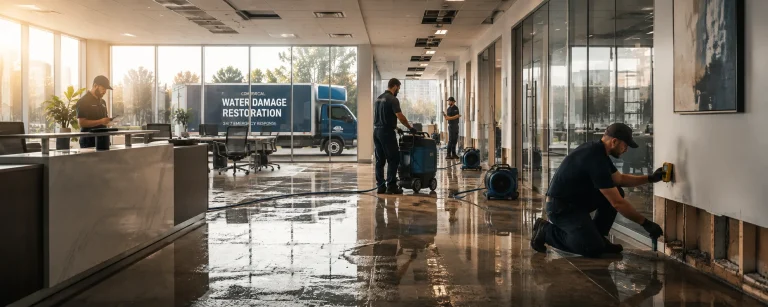
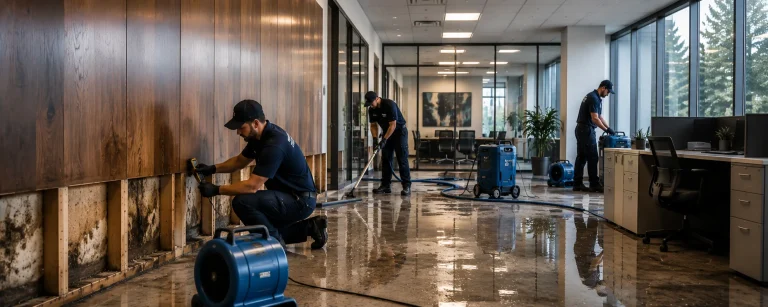
The insurance process is an important part of recovering from commercial water damage, but it is only one piece of the overall restoration effort. While emergency mitigation focuses on protecting the building from additional damage, the insurance process centers on documenting the loss, evaluating damages, coordinating inspections, and supporting the financial recovery of the property. Whether the water damage results from a burst pipe, roof leak, sprinkler discharge, flooding, sewer backup, or mechanical equipment failure, organized documentation and clear communication often help the claims process move more efficiently.
Every commercial property and every insurance policy is different. Building owners, property managers, facility managers, restoration contractors, consultants, adjusters, engineers, and tenants may all participate in different stages of the recovery depending on the size and complexity of the loss.
The First Steps After Water Damage
Most commercial water damage events begin with protecting the property before focusing on insurance documentation.
Initial priorities often include:
- Protecting occupants
- Stopping the source of water
- Preventing additional damage
- Beginning water extraction
- Documenting affected areas
- Photographing building conditions
- Contacting restoration professionals
- Notifying ownership
- Reviewing insurance requirements
Emergency mitigation generally occurs alongside—not after—the insurance process.
The Building Owner’s Perspective
Building owners often view insurance as one component of protecting a long-term investment.
Common priorities include:
— Preserving property value
— Understanding policy requirements
— Limiting financial exposure
— Supporting business continuity
— Coordinating repairs
— Managing capital improvements
— Protecting lease revenue
— Reducing long-term operating costs
Owners frequently balance immediate recovery with decisions that affect the property’s future performance.
The Property Manager’s Perspective
Property managers often coordinate communication between everyone involved.
Responsibilities may include:
- Reporting the loss
- Coordinating inspections
- Scheduling contractors
- Communicating with tenants
- Maintaining project documentation
- Updating ownership
- Managing building access
- Tracking restoration progress
Property managers help organize information while keeping the recovery process moving forward.
The Facility Manager’s Perspective
Facility managers focus on documenting how the water damage affected building operations.
Primary concerns often include:
- Mechanical systems
- Electrical infrastructure
- Fire protection systems
- HVAC equipment
- Building automation
- Elevator operation
- Utility restoration
- Occupant safety
- Equipment protection
- Operational continuity
Technical information gathered by facility managers often becomes valuable throughout both the restoration and insurance process.
Documentation Matters
Accurate documentation supports nearly every stage of commercial restoration.
Documentation commonly includes:
- Photographs
- Videos
- Moisture readings
- Thermal imaging reports
- Water extraction records
- Structural drying logs
- Material inventories
- Equipment logs
- Daily progress reports
- Repair estimates
The goal is to create a detailed record of building conditions and restoration activities from the beginning of the project through final completion.
Working With Insurance Professionals
Large commercial water losses often involve multiple professionals.
Participants may include:
- Insurance adjusters
- Restoration contractors
- Engineers
- Building consultants
- Property ownership
- Facility managers
- Property managers
- General contractors
- Estimators
- Environmental consultants
Each participant contributes different expertise throughout the recovery process, helping evaluate building conditions, document damages, and coordinate repairs.
Business Interruption Considerations
Commercial water damage can affect much more than the building itself.
Organizations may also evaluate:
— Temporary relocation needs
— Operational downtime
— Employee productivity
— Customer access
— Tenant communication
— Equipment availability
— Inventory protection
— Construction scheduling
— Recovery timelines
Many businesses prepare continuity plans so operations can continue while restoration work progresses.
Common Challenges During Recovery
Commercial insurance claims often involve complex buildings, multiple occupants, and ongoing operations.
Common challenges include:
- Large affected areas
- Hidden moisture
- Occupied tenant spaces
- Sensitive equipment
- Multiple contractors
- Construction coordination
- Long restoration timelines
Avoid:
✕ Waiting to begin mitigation while paperwork is being organized
✕ Failing to document damage before cleanup begins
✕ Discarding damaged materials without appropriate documentation
✕ Assuming visible damage represents the full extent of the loss
Early organization frequently improves communication and supports a smoother recovery.
Looking Beyond the Claim
Many organizations use the restoration process to strengthen future preparedness.
Planning may include:
- Reviewing emergency response procedures
- Updating maintenance programs
- Improving leak detection
- Evaluating plumbing systems
- Reviewing roofing and waterproofing
- Improving documentation procedures
- Updating disaster recovery plans
- Evaluating insurance coverage with advisors
A completed claim often becomes an opportunity to improve the property’s resilience against future water damage events.
Supporting Long-Term Recovery
The commercial water damage insurance process is ultimately about supporting an organized recovery while protecting both the building and the businesses operating inside it. Building owners, asset managers, property managers, facility managers, tenants, restoration professionals, contractors, engineers, consultants, and insurance representatives all contribute unique perspectives throughout the project. By combining rapid emergency mitigation, thorough documentation, clear communication, coordinated restoration, and proactive planning, commercial properties are better positioned to recover efficiently, reduce operational disruption, and protect long-term asset performance.
Water Emergency?
Our commercial response team is available 24/7 for water extraction, structural drying and restoration.
Our Services
Talk To A Specialist
Need help with a water loss right now?
Call our commercial team for extraction, drying and restoration planning built around your building and your operations.