
Water emergency? Our commercial crews respond 24/7.
Home / Water Sources / Plumbing Fixture Overflows
Plumbing Fixture Overflows
- 24/7 Response
- Extraction
- Structural Drying
- Restoration
What happens when you call
24/7 dispatch
Call any hour. Crews mobilize for commercial losses, including nights and weekends.
Extraction & drying
Standing water removed, then structural drying with monitored moisture readings.
Insurance-ready records
Readings, photos and scope notes documented for your carrier from day one.
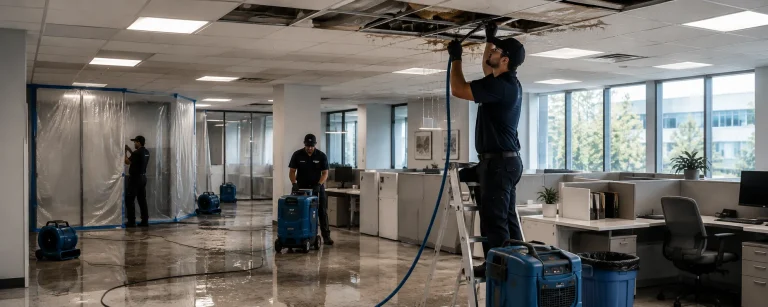
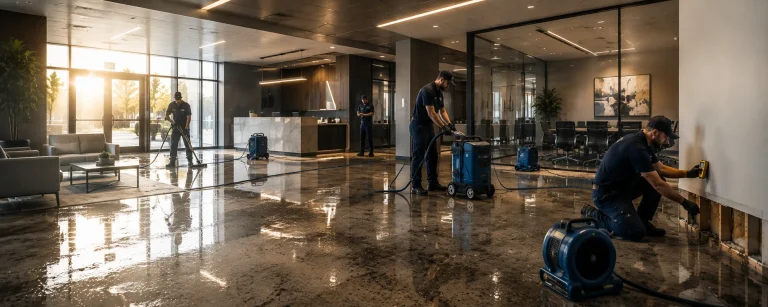
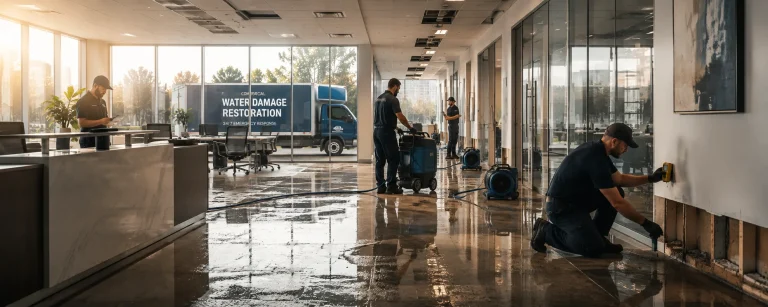
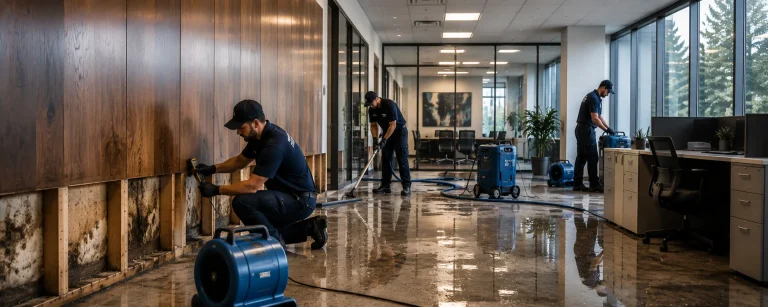
Fixture overflows are the most ordinary water source in a commercial building and one of the most frequent. A toilet blocks and keeps filling. A sink is left running. A floor drain surcharges and pushes water back into the room.
None of that is unusual. What turns it into a restoration project is timing: most overflows happen in restrooms, break rooms and janitor closets, and most of those spaces are unoccupied for long stretches, particularly overnight and on weekends.
Common Causes
- Blocked toilets, frequently from paper products or foreign objects
- Flush valves that fail open and keep delivering water
- Float and fill valve failures in tank-type fixtures
- Sinks left running with a blocked or slow drain
- Blocked floor drains that cannot accept normal flow
- Failed supply connectors at the fixture
- Drain line blockages that surcharge the lowest fixture
- Vandalism or deliberate misuse in public restrooms
Commercial flush valves deserve specific mention. A valve that sticks open delivers water continuously at a high rate, and because it makes little noise in an empty restroom, it can run for hours without detection.
Why Location Drives the Damage
Restrooms are usually grouped in a core, stacked floor over floor, with the plumbing risers running between them. An overflow therefore begins in the part of the building where water has the most direct route to the floors below.
From the restroom floor the water spreads under partitions, into the corridor, and toward floor penetrations around the risers. From there it moves to the ceiling of the floor below, into the wall cavities that share the chase, and outward into tenant spaces on both levels.
The same overflow in an isolated single-story space would be a mop-up. In a stacked core it becomes a multi-floor loss.
What Gets Damaged
- Restroom flooring and the substrate beneath it
- Partitions, base and wall assemblies in the affected room
- Corridor flooring where water spreads under the door
- Ceiling assemblies on the floor below
- Wall cavities sharing the plumbing chase
- Tenant spaces adjacent to and below the core
- Contents and equipment in the path
Water Quality Matters Here Too
Not all fixture overflows are the same. A sink overflowing with clean supply water is a different event from a toilet overflowing from the drain side, and a floor drain surcharge may involve water from elsewhere in the sanitary system.
That distinction sets the scope. Clean water losses can often be dried in place with limited removal. Contaminated overflows follow the approach described for sewer backups, where porous materials that absorbed the water are removed rather than dried, and cleaning precedes drying.
The Response Sequence
Stop the flow. Close the fixture stop, or the branch valve if the stop will not hold. Knowing where those valves are is what limits the size of the loss.
Establish the water category. Supply side or drain side changes everything that follows.
Extract and contain. Standing water is removed before it spreads further under partitions and through penetrations.
Check the floor below immediately. In a stacked core the level below is part of the loss until readings show otherwise.
Open and dry the assemblies. Chases, wall cavities and flooring substrates hold water long after the floor looks dry.
Clear the underlying blockage. An overflow caused by a drain problem will repeat until the line is addressed.
The Unattended Hours Problem
Almost every large fixture overflow shares one feature: nobody was there. The same failure during business hours produces a service call and a wet floor.
Buildings that reduce these losses do it by shortening that window rather than by preventing every blockage. Water detection in restroom and janitor closet floors, automatic shutoff on supply lines serving fixture groups, and staff trained to check restrooms at end of day all attack the duration rather than the cause.
For buildings that sit empty for extended periods, isolating fixture supply during long closures is worth considering. Many holiday-weekend losses are ordinary failures with seventy-two hours behind them.
Early Warning Signs
- Fixtures that drain slowly or gurgle
- Repeated blockages at the same fixture
- Flush valves that run on after use
- Water around the base of a toilet or at the floor drain
- Staining on the ceiling below a restroom core
- Damp base or flooring at partitions between restrooms and corridors
Prevention
- Service flush valves and fill valves on a schedule
- Keep fixture stops accessible, labeled and operable
- Address recurring blockages by inspecting the line, not just the fixture
- Install floor water detection in restrooms and janitor closets
- Consider automatic shutoff for fixture groups in unattended buildings
- Maintain floor drains and keep traps primed
- Include restroom checks in end-of-day closing routines
Ordinary Failure, Avoidable Scale
Fixture overflows are not complicated failures, and they cannot be designed out of a building that people use. What can be changed is how long they run before someone notices.
That is where the difference between a mop and a multi-floor restoration project actually lies, and it is the reason detection and shutoff pay for themselves in buildings that stand empty every night.
Water Emergency?
Our commercial response team is available 24/7 for water extraction, structural drying and restoration.
Our Services
Talk To A Specialist
Need help with a water loss right now?
Call our commercial team for extraction, drying and restoration planning built around your building and your operations.