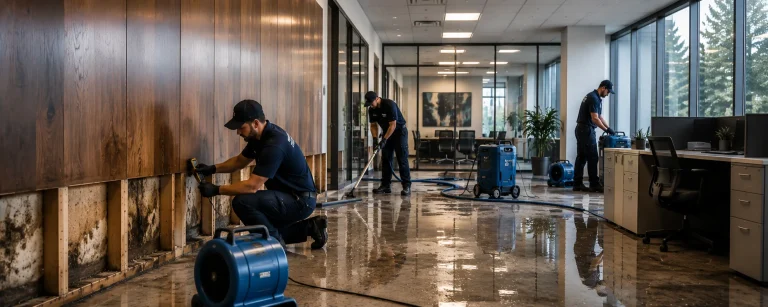
Commercial Water Damage Repair Is Different
Water damage in a commercial building isn’t just about removing water. Every hour of downtime can affect tenants, employees, customers, inventory, equipment, revenue, and long-term property value.
Commercial Water Damage specializes in helping businesses recover from water-related losses while minimizing operational disruption. Whether the damage affects a retail center, office building, healthcare facility, warehouse, industrial property, hotel, or multi-tenant complex, every repair decision impacts much more than the building itself.
Commercial repairs often require balancing construction schedules, tenant operations, insurance requirements, safety concerns, and long-term building performance—all at the same time.
Common Causes of Commercial Water Damage
Commercial buildings experience water damage differently than residential properties.
Some of the most common causes include:
- Roof leaks following storms
- Plumbing failures
- Fire sprinkler discharges
- HVAC system leaks
- Broken supply lines
- Sewer backups
- Overflowing restrooms
- Foundation or groundwater intrusion
- Mechanical equipment failures
- Flooding from severe weather
Many commercial losses involve multiple building systems simultaneously, requiring coordination between restoration professionals, contractors, engineers, and facility management teams.
Commercial Water Damage Repair vs. Restoration
These terms are often used interchangeably, but they serve different purposes.
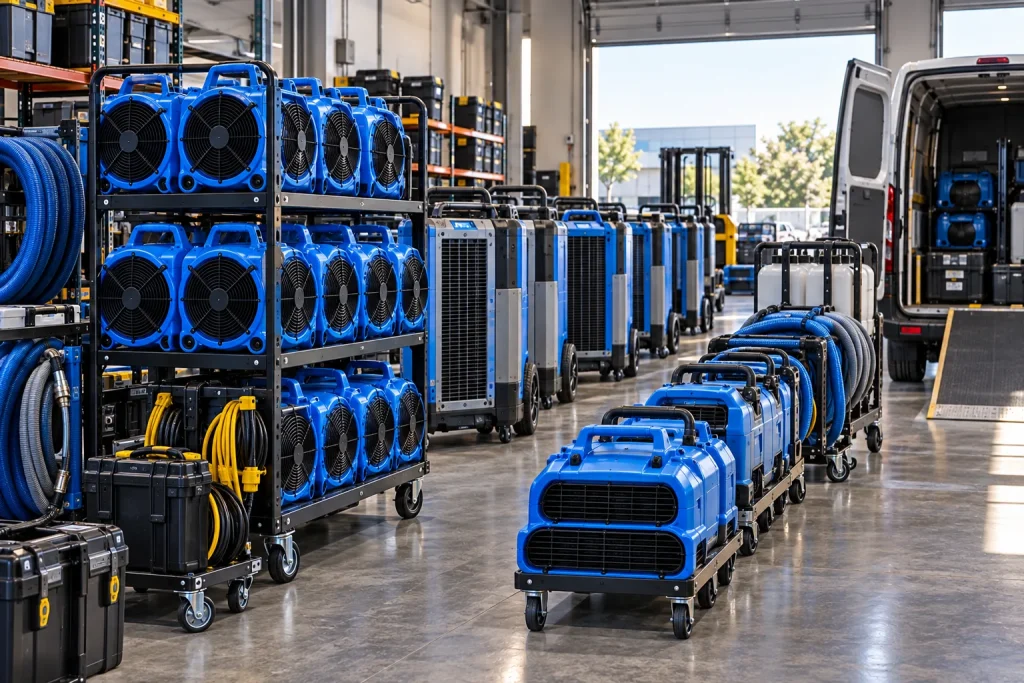
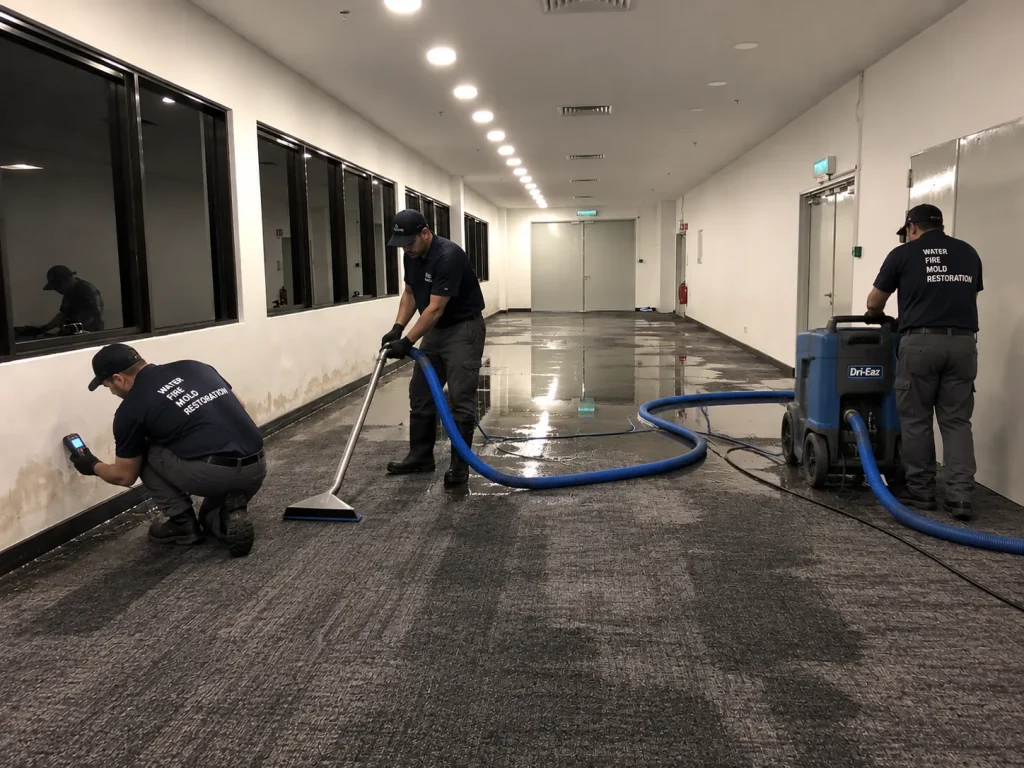
Commercial Water Damage Restoration focuses on stabilizing the property:
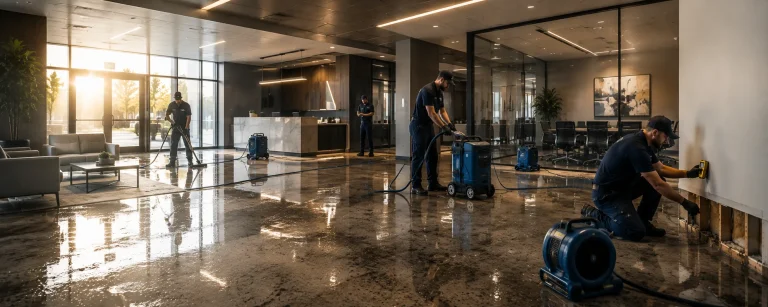
- Emergency water extraction
- Structural drying
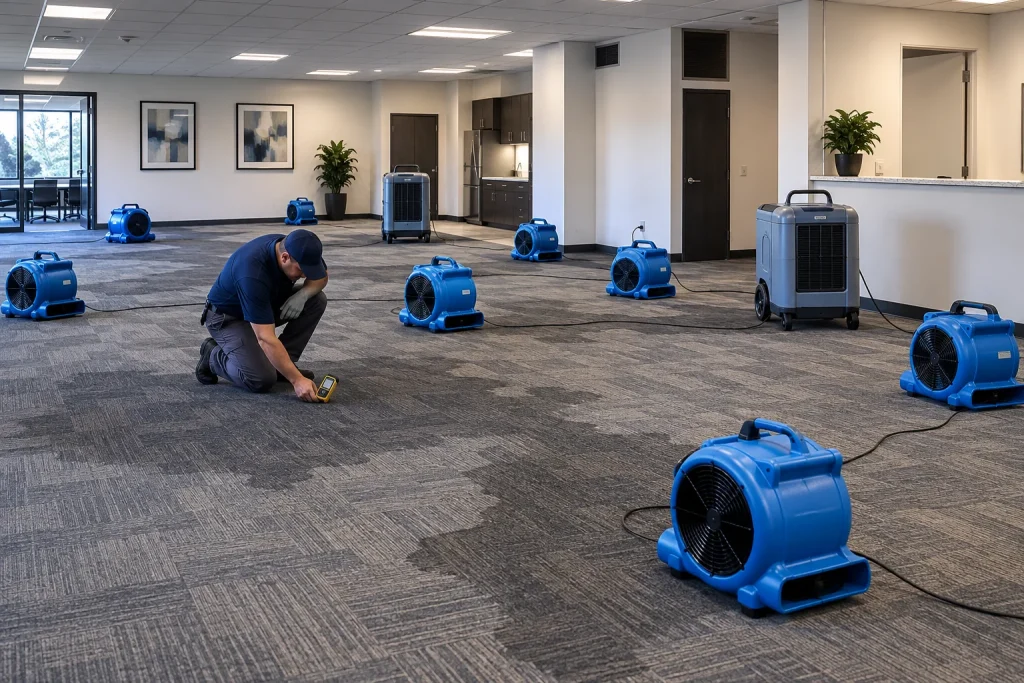
- Moisture mapping
- Dehumidification
- Mold prevention
- Cleaning and sanitization
Commercial Water Damage Repair focuses on rebuilding what was damaged:
- Drywall replacement
- Framing repairs
- Flooring replacement
- Ceiling systems
- Painting and finishes
- Millwork
- Doors and hardware
- Tenant improvements
- Interior reconstruction
Most commercial losses require both restoration and repair before the property can fully return to normal operations.
Large Loss Commercial Projects
Large commercial losses involve much more than replacing damaged materials.
Property teams often have to coordinate:
- Multiple contractors
- Insurance adjusters
- Building ownership
- Engineers
- Tenants
- Local inspections
- Safety requirements
- Occupancy concerns
Successful projects are built around communication, scheduling, documentation, and minimizing business interruption—not simply rebuilding walls.
Repairing Buildings That Remain Occupied
Many commercial properties cannot simply shut down.
Businesses still need to operate.
Employees still need to work.
Customers still need access.
Commercial repair planning often includes:
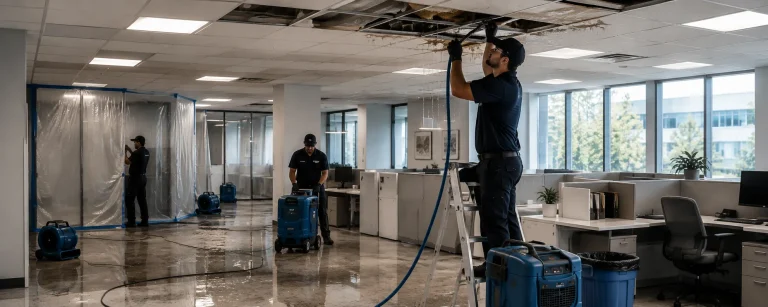
- Temporary containment walls
- Dust control systems
- Noise management
- After-hours scheduling
- Weekend work
- Phased construction
- Safe pedestrian pathways
- Temporary entrances
- Ongoing communication with tenants
The goal is to complete repairs while allowing as much normal business activity as possible.
Questions Commercial Property Owners Don’t Always Know to Ask
Choosing a contractor involves more than comparing estimates.
Consider asking:
- How will tenant disruption be minimized?
- What is the communication process during the project?
- Who coordinates with the insurance carrier?
- How is moisture verified before reconstruction begins?
- What documentation is provided?
- How are hidden moisture pockets identified?
- Will repairs be phased to reduce operational downtime?
- What happens if additional damage is discovered?
- How will occupants remain safe during construction?
- Can repairs be completed during evenings or weekends?
These conversations often determine how smoothly the entire recovery process proceeds.
Moisture That Can’t Be Seen
One of the biggest risks after a water loss is hidden moisture.
Water frequently migrates behind:
- Drywall
- Insulation
- Flooring systems
- Ceiling cavities
- Structural framing
- Mechanical spaces
Without proper moisture mapping and verification, buildings can experience ongoing deterioration long after visible water has disappeared.
Commercial repair projects should be based on measured moisture conditions—not assumptions.
Insurance Is Only One Part of the Process
Insurance can play an important role in commercial water damage projects, but successful outcomes depend on much more than claim approval.
Building owners often need to coordinate:
- Detailed project documentation
- Repair estimates
- Moisture reports
- Scope verification
- Tenant communication
- Scheduling
- Vendor coordination
- Long-term building maintenance
A well-managed project helps reduce delays while keeping everyone informed throughout the repair process.
Long-Term Building Performance
Commercial water damage repairs should restore more than appearance.
They should also protect:
- Building longevity
- Indoor air quality
- Structural integrity
- Occupant safety
- Tenant satisfaction
- Property value
- Operational efficiency
- Future maintenance costs
Every repair decision becomes part of the building’s long-term performance strategy.
Why Commercial Water Damage Exists
Commercial Water Damage focuses exclusively on the unique challenges facing commercial properties.
Our educational resources help facility managers, property managers, building owners, general contractors, and commercial decision-makers better understand repair planning, restoration strategies, insurance coordination, and long-term building recovery.
Whether the loss is small or catastrophic, informed planning helps reduce downtime, improve communication, and support a more successful recovery from beginning to end.