
Water emergency? Our commercial crews respond 24/7.
Home / Water Sources / Window and Curtain Wall Leaks
Window and Curtain Wall Leaks
- 24/7 Response
- Extraction
- Structural Drying
- Restoration
What happens when you call
24/7 dispatch
Call any hour. Crews mobilize for commercial losses, including nights and weekends.
Extraction & drying
Standing water removed, then structural drying with monitored moisture readings.
Insurance-ready records
Readings, photos and scope notes documented for your carrier from day one.
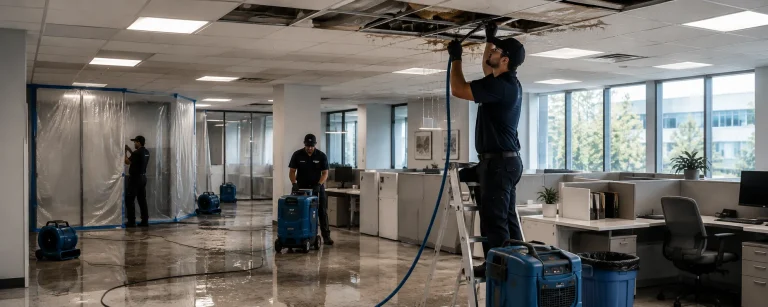
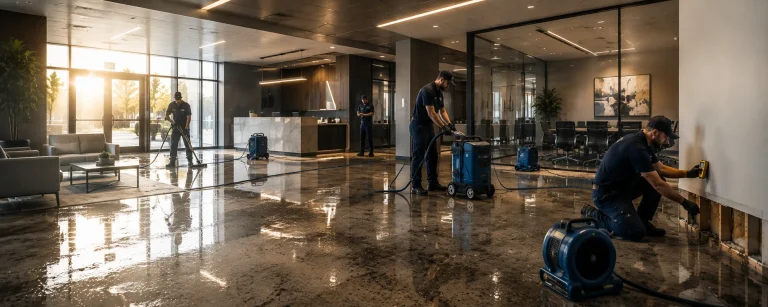
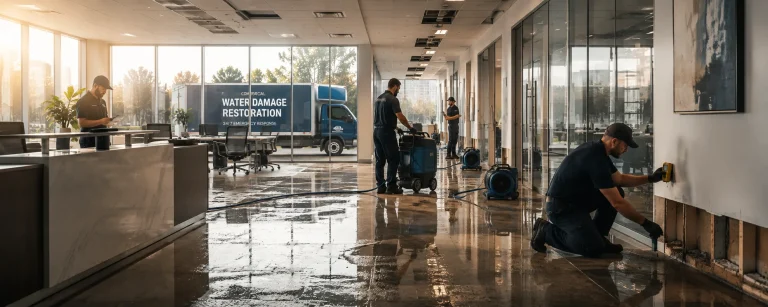
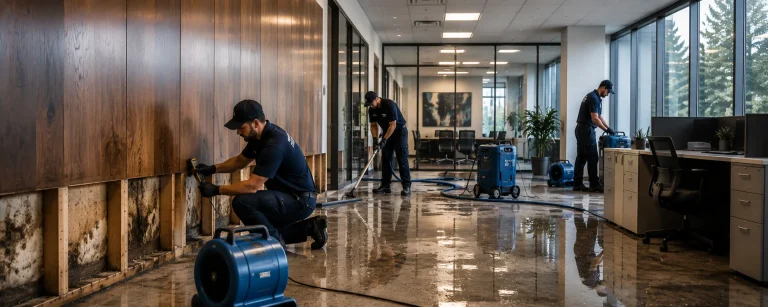
Commercial glazing systems are not designed to be perfectly watertight. Curtain wall and storefront assemblies are designed to manage water: to let a certain amount in, collect it, and drain it back out through weeps and internal gutters. Trouble starts when that drainage path stops working, not when water first gets past the glass.
That distinction explains why envelope leaks are so often misdiagnosed. The visible symptom is water at a windowsill, but the cause is usually a blocked drainage path or a failed joint several feet away.
Where Glazing Systems Leak
- Failed perimeter sealant between the frame and the wall
- Deteriorated gaskets at glass and panel edges
- Blocked or painted-over weep holes
- Corner joints and frame connections that have opened
- Failed flashing and transitions at heads and sills
- Interfaces where the glazing meets a different wall system
- Movement joints between curtain wall sections
- Failed insulated glass units allowing moisture into the assembly
Sealant is the component that ages most visibly. It is also the one most often repaired without addressing why it failed, which is why the same joint frequently leaks again a year or two later.
Wind-Driven Rain
Envelope leaks are rarely proportional to rainfall alone. A steady, heavy rain may produce nothing. A moderate rain with strong wind from one direction produces water inside.
Wind pressure drives water horizontally and upward into joints that gravity alone would never challenge, and it overwhelms drainage paths that work perfectly well in calm conditions. That is why leak reports cluster on one elevation of a building and only during certain storms.
It also makes these leaks hard to reproduce on demand, which complicates diagnosis. Water testing under controlled conditions, done in a defined sequence, is usually more productive than waiting for the next storm.
Where the Water Goes
Water entering a glazing system travels within the wall assembly before it appears. It runs down the inside face of the frame, collects in the sill, and either drains as designed or spills into the interior wall.
From there it enters the wall cavity, wets insulation, runs along the slab edge and appears at the base of the wall, at a ceiling on the floor below, or at a column enclosure some distance away. The interior stain is where the water exited the assembly, not where it entered it.
What Gets Damaged
- Interior finishes at window perimeters and column enclosures
- Wall cavity insulation, which loses performance when wet
- Framing, furring and backing within the assembly
- Flooring at the perimeter, including carpet and wood
- Ceiling assemblies on the floor below
- Window treatments, millwork and built-ins
- Tenant contents and equipment placed along the glass line
The Response Sequence
Establish the pattern. Which elevation, which floors, which wind direction, and which storms. The pattern is the most reliable diagnostic information available.
Check drainage before sealant. Blocked weeps and gutters are common, reversible causes. Sealing over a drainage problem makes the next event worse by trapping water inside the assembly.
Open the assembly where evidence points. Targeted access at the suspected path is more productive than opening the visible stain.
Dry the cavity. Wall assemblies dry slowly, and insulation that has been repeatedly wet usually comes out.
Correct the envelope defect. Sealant, gaskets, flashing or drainage are addressed based on what the investigation found.
Verify with testing. Controlled water testing after the repair confirms whether the path is actually closed.
Then rebuild the interior. Finishes replaced before the envelope is verified are exposed to the next storm.
The Recurring Leak Problem
Envelope leaks are the classic repeat offender. The cycle is familiar: a stain appears, the interior is repaired, the building waits, the stain returns.
Each cycle costs money and, more importantly, keeps the assembly wet. Insulation that goes through repeated wetting stops performing, and the materials behind the finish deteriorate whether or not anyone opens the wall.
Breaking the cycle usually means treating the investigation as the project. That means documenting each event, identifying the conditions that produce it, testing rather than guessing, and repairing the mechanism rather than the symptom.
Early Warning Signs
- Staining at the head, jamb or sill of the same window after storms
- Bubbling paint or soft drywall at a window perimeter
- Carpet that is damp along the glass line
- Condensation or fogging between glass panes, indicating a failed unit
- Sealant that is cracked, chalky, shrinking or pulling away
- Mineral staining or efflorescence on interior masonry near glazing
- Tenant complaints that cluster on one elevation
Prevention
- Inspect perimeter sealant on a schedule and track its age
- Keep weep holes clear, and confirm they are not sealed during painting or cleaning
- Check gaskets for shrinkage, hardening and displacement
- Inspect transitions where glazing meets other wall systems
- Log every leak report by elevation, floor and weather condition
- Water test after any envelope repair rather than waiting for a storm
- Plan for sealant replacement as a capital item, since it has a finite life
The Envelope Is a System
Curtain wall and storefront assemblies manage water rather than block it. When they leak, the question is not simply where the water came in, but why the system stopped moving it back out.
Answering that question is what separates a repair that lasts from one that buys a season. The interior restoration matters, but on envelope losses it is the second half of the work, not the first.
Water Emergency?
Our commercial response team is available 24/7 for water extraction, structural drying and restoration.
Our Services
Talk To A Specialist
Need help with a water loss right now?
Call our commercial team for extraction, drying and restoration planning built around your building and your operations.