Water emergency? Our commercial crews respond 24/7.
Home / Commercial Fire Sprinkler Systems NV Las Vegas – Service & Repair
Commercial Fire Sprinkler Systems
- 24/7 Response
- Extraction
- Structural Drying
- Restoration
What happens when you call
24/7 dispatch
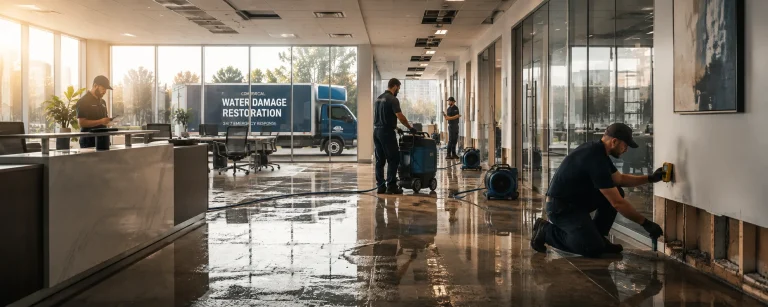
Call any hour. Crews mobilize for commercial losses, including nights and weekends.
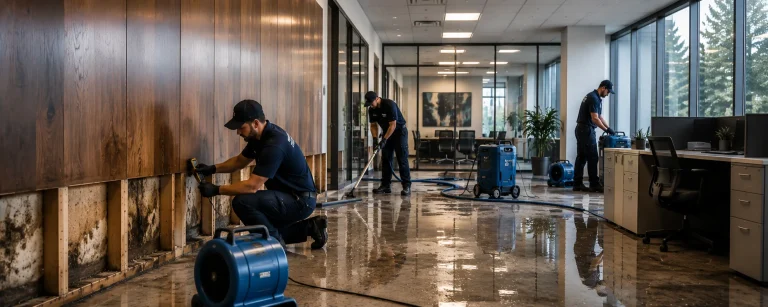
Extraction & drying
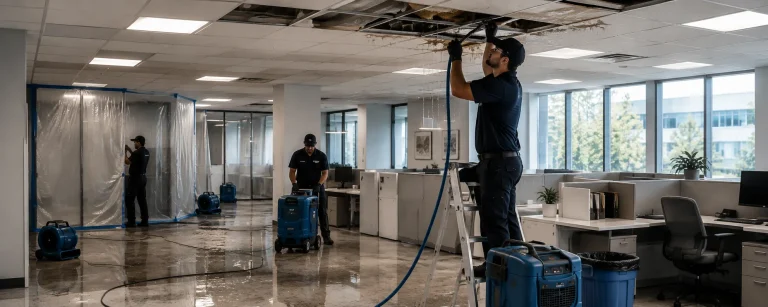
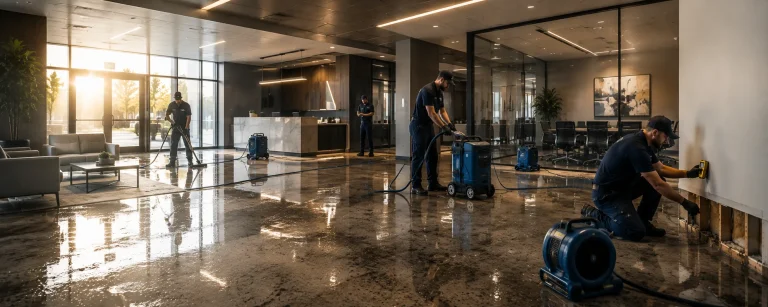
Standing water removed, then structural drying with monitored moisture readings.
Insurance-ready records
Readings, photos and scope notes documented for your carrier from day one.
Las Vegas, NV — Service & Repair
High-Rise Resort Towers Concentrate More Sprinkler Piping Above Occupied Space Than Almost Any Other Market
Las Vegas operates some of the largest and most heavily sprinklered commercial buildings in the United States. Resort towers with thousands of guest rooms, casino floors, convention halls, showrooms, and back-of-house corridors all carry continuous fire suppression coverage, and the total length of pressurized pipe above occupied space in a single property is substantial.
Nevada’s fire safety requirements are stringent for good historical reasons. That protection is essential — and it also means that when a sprinkler system fails accidentally, the water damage consequences in a high-rise are severe and immediate.
Commercial Water Damage provides educational resources that help facility managers, property managers, building owners, developers, and commercial contractors better understand fire sprinkler system service, inspection, repair, and the water damage consequences of system failure throughout the Las Vegas metropolitan area.
What Commercial Fire Sprinkler Service Covers
✓ Inspection, testing, and maintenance programs
✓ Wet-pipe, dry-pipe, and pre-action system service
✓ Standpipe and high-rise riser servicing
✓ Fire pump testing and maintenance
✓ Backflow prevention testing and certification
✓ Control valve, alarm, and supervisory device checks
✓ Sprinkler head replacement and obstruction correction
✓ System modification for renovations and tenant work
Why Sprinkler Systems Discharge When There Is No Fire
In Las Vegas, freeze is rarely the cause. The failure modes are different here.
- Mechanical impact during housekeeping, setup, or teardown
- Corrosion pinholes in aging steel pipe
- Microbiologically influenced corrosion in wet systems
- Hard water scaling accelerating internal deterioration
- Manufacturing defects and recalled head models
- Overheating near lighting, kitchen, and show equipment
- Damage during renovation and convention build-outs
- Pressure surges in tall standpipe systems
- Accidental contact in guest rooms and public areas
Convention and event turnover is a genuinely elevated risk window. Rigging, scaffolding, forklifts, and temporary structures all operate in close proximity to exposed sprinkler heads on tight schedules.
High-Rise Discharge Is a Multi-Floor Event
A discharge on the thirtieth floor does not stay on the thirtieth floor.
- Guest room stacks and shared plumbing chases
- Corridor ceilings and return air plenums
- Elevator shafts, pits, and machine rooms
- Stairwells and pressurized egress paths
- Post-tension slab penetrations
- Electrical closets and low-voltage rooms
- Casino floor ceilings and gaming equipment
- Custom millwork, casegoods, and specialty finishes
The operative cost driver is out-of-service guest rooms. A discharge affecting six floors of a tower removes inventory from sale for as long as drying and reconstruction take.
Inspection, Testing, and Maintenance Requirements
NFPA 25 establishes the framework for inspection, testing, and maintenance of water-based fire protection systems, enforced locally by the authority having jurisdiction.
Typical intervals include:
- Weekly or monthly checks of gauges and control valves, depending on supervision
- Quarterly inspection of alarm devices and connections
- Annual inspection and testing of the overall system
- Five-year internal pipe inspection
- Five-year obstruction investigation
- Periodic sprinkler head testing or replacement based on type and age
- Fire pump testing on defined schedules
In gaming and hospitality properties, scheduling this work around occupancy is its own logistical exercise. Requirements vary by system type and occupancy, so owners should confirm specifics with their local fire authority and licensed sprinkler contractor.
Las Vegas Building Types That Depend on Sprinkler Systems
✓ Resort casinos and high-rise hotel towers
✓ Convention and exhibition facilities
✓ Showrooms, theaters, and entertainment venues
✓ Restaurants and commercial kitchens
✓ Distribution centers and high-pile storage
✓ Healthcare campuses and medical offices
✓ Data centers and technology facilities
✓ Retail centers and parking structures
Repair Work Commonly Required
- Replacing discharged, damaged, or recalled heads
- Correcting corrosion and pinhole leaks
- Replacing scaled or deteriorated pipe sections
- Repairing or replacing control and check valves
- Fire pump and standpipe repair in high-rise systems
- Correcting obstructions found during internal inspection
- Head layout changes following renovation
- Recharging, testing, and returning the system to service
Affected areas generally cannot reoccupy until the system is restored and certified, which places sprinkler repair directly on the critical path for returning rooms to inventory.
Questions Las Vegas Facility Managers Frequently Ask
- What caused the discharge, and can it happen again?
- How many floors and guest rooms were affected?
- Is internal corrosion or scaling present in the system?
- Would zone isolation valves have limited this loss?
- How quickly can the system be recertified for reoccupancy?
- Can gaming and food service areas remain open?
- How do we protect heads during convention build-outs?
- Does our documentation satisfy the local fire authority?
Reducing the Risk of Accidental Discharge
✓ Head guards in warehouses, docks, and back-of-house areas
✓ Contractor protocols and protection during build-outs
✓ Corrosion monitoring and nitrogen inerting where appropriate
✓ Water treatment to reduce internal scaling
✓ Zone isolation valves that limit discharge area
✓ Water flow alarms monitored around the clock
✓ Recalled head inventory tracking and replacement
✓ Rapid response procedures for closing zone valves
Why Commercial Water Damage Covers Fire Sprinkler Systems in Las Vegas
In a market where buildings never close, the fire suppression system is both essential protection and the most likely origin of a large interior water loss. Understanding both roles is part of managing the asset.
Commercial Water Damage provides educational resources that help facility managers, property managers, building owners, developers, and commercial contractors better understand sprinkler system types, inspection and testing obligations, discharge causes, water damage response, insurance coordination, and long-term building performance.
Whether responding to an impact discharge during a convention setup, a corrosion pinhole above a casino ceiling, a multi-floor guest room event in a resort tower, or a system requiring recertification before rooms return to inventory, informed planning helps reduce downtime, preserve valuable assets, and support a faster, more efficient recovery.
Water Emergency?
Our commercial response team is available 24/7 for water extraction, structural drying and restoration.
Our Services
Talk To A Specialist
Need help with a water loss right now?
Call our commercial team for extraction, drying and restoration planning built around your building and your operations.