Water emergency? Our commercial crews respond 24/7.
Home / Commercial Property Water Damage
Commercial Property Water Damage
- 24/7 Response
- Extraction
- Structural Drying
- Restoration
What happens when you call
24/7 dispatch
Call any hour. Crews mobilize for commercial losses, including nights and weekends.
Extraction & drying
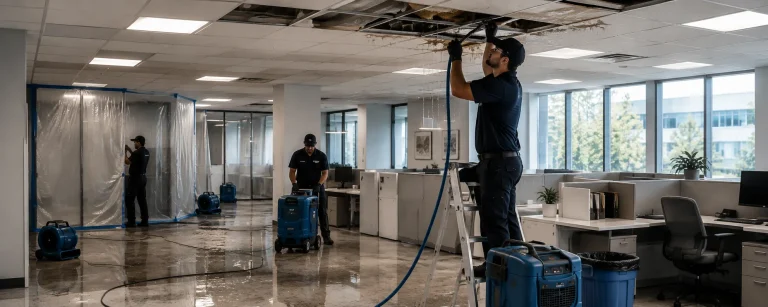
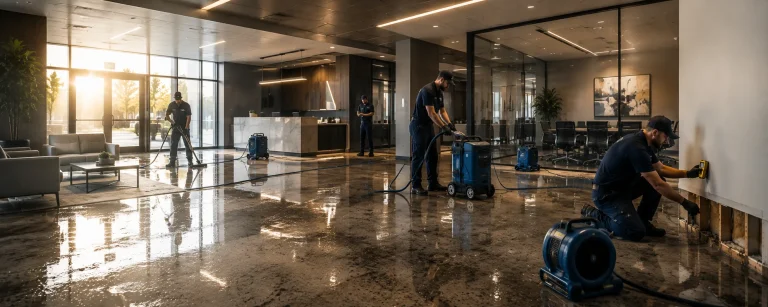
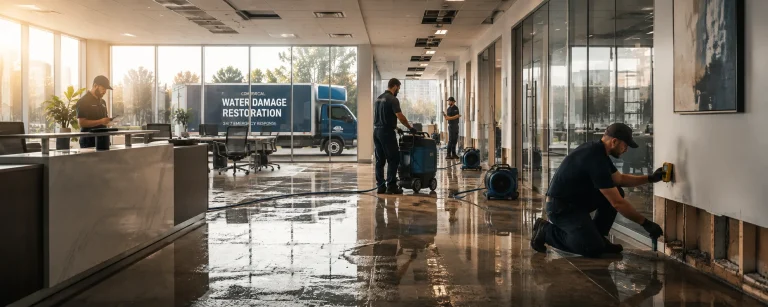
Standing water removed, then structural drying with monitored moisture readings.
Insurance-ready records
Readings, photos and scope notes documented for your carrier from day one.
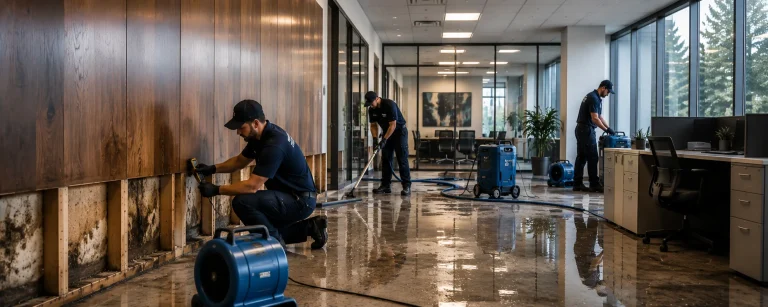
Commercial Property Water Damage Affects More Than the Structure
A commercial property is more than a building. It is an investment, a workplace, a source of revenue, and often home to multiple tenants with different operational needs.
When water damage occurs, the impact extends beyond wet materials. Property owners and managers must consider business continuity, tenant communication, insurance coordination, repair planning, and the long-term performance of the asset.
Commercial Water Damage provides educational resources that help commercial decision-makers understand how to manage water losses while protecting both the property and the people who rely on it every day.
Every Property Has Different Priorities
The recovery strategy for a commercial property depends on far more than the source of the water.
Factors that often influence project planning include:
- Number of tenants
- Building occupancy
- Property age
- Lease obligations
- Public accessibility
- Mechanical systems
- Business operations
- Future renovation plans
Understanding these variables helps property teams prioritize recovery efforts more effectively.
Common Causes of Commercial Property Water Damage
Commercial properties experience water losses from a wide range of sources.
Typical examples include:
- Burst plumbing lines
- Roof failures
- Storm-related flooding
- Fire sprinkler activation
- HVAC leaks
- Mechanical equipment failures
- Sewer backups
- Overflowing restrooms
- Foundation water intrusion
- Appliance or supply-line failures
Regardless of the source, the objective remains the same: stabilize the property and minimize additional damage.
Water Can Affect the Entire Property
Water often spreads beyond the location where it first becomes visible.
It may migrate through:
- Shared corridors
- Tenant suites
- Utility chases
- Ceiling systems
- Flooring assemblies
- Mechanical rooms
- Electrical infrastructure
- Common areas
For multi-tenant properties, a single leak may affect several businesses simultaneously.
Protecting Tenants During Recovery
Many commercial properties remain occupied while cleanup and restoration are underway.
Property managers often coordinate:
- Temporary access routes
- Safety barriers
- Tenant notifications
- Off-hour work schedules
- Noise management
- Dust control
- Elevator access
- Parking adjustments
Careful planning helps reduce disruption while maintaining a safe environment for occupants.
Water Damage Is Also an Asset Management Issue
Commercial property recovery involves protecting long-term asset value—not simply repairing visible damage.
Important considerations include:
- Building performance
- Tenant retention
- Lease obligations
- Insurance documentation
- Deferred maintenance
- Future capital planning
- Property reputation
- Operating expenses
Every recovery decision may influence the property’s value long after the project is complete.
Large Commercial Properties Require Coordination
Larger properties often involve multiple stakeholders working toward the same objective.
Projects may include collaboration between:
- Property ownership
- Asset managers
- Facility managers
- Restoration professionals
- General contractors
- Engineers
- Insurance representatives
- Building occupants
Communication helps keep projects organized and reduces unnecessary delays.
Questions Property Owners Should Ask
Before recovery begins, commercial property owners may want to discuss:
- Which tenants are affected?
- Can portions of the property remain operational?
- How will moisture be verified before repairs begin?
- What documentation will be available?
- How will project updates be communicated?
- Are there opportunities to phase the work?
- What systems require immediate attention?
- How can future water losses be reduced?
- What long-term maintenance should follow the project?
These discussions often improve both project outcomes and tenant confidence.
Recovery Extends Beyond Cleanup
Recovering a commercial property usually involves several connected phases.
A typical project may include:
- Emergency response
- Water extraction
- Damage mitigation
- Structural drying
- Water damage restoration
- Building repairs
- Interior reconstruction
- Final inspections
Each stage helps prepare the property for safe, reliable operation once again.
Looking Beyond the Immediate Damage
Commercial property owners often use a water loss as an opportunity to strengthen future resilience.
Potential improvements may include:
- Updated maintenance schedules
- Roof evaluations
- Plumbing inspections
- Water detection technology
- Mechanical upgrades
- Emergency response planning
- Vendor partnerships
- Building documentation improvements
Taking a proactive approach can reduce future downtime and protect long-term property performance.
Why Commercial Water Damage Focuses on Commercial Properties
Commercial property water damage requires balancing structural recovery with business operations, tenant needs, and long-term asset management.
Commercial Water Damage provides educational resources that help property owners, facility managers, asset managers, developers, and commercial contractors better understand water mitigation, extraction, restoration, repair planning, insurance coordination, and business continuity.
Whether the property consists of a single office building or a large multi-building portfolio, informed planning helps reduce operational disruption, protect investments, and support a smoother recovery from the initial water loss through final repairs.
Water Emergency?
Our commercial response team is available 24/7 for water extraction, structural drying and restoration.
Our Services
Talk To A Specialist
Need help with a water loss right now?
Call our commercial team for extraction, drying and restoration planning built around your building and your operations.