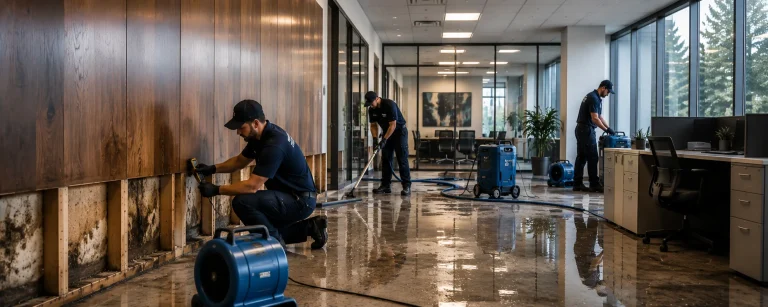
Property Managers Are Often the First to Respond to Commercial Water Damage
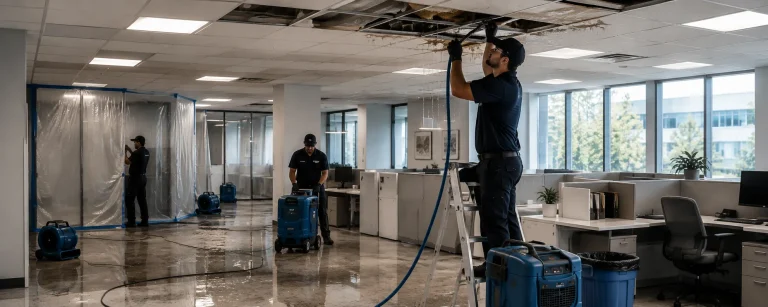
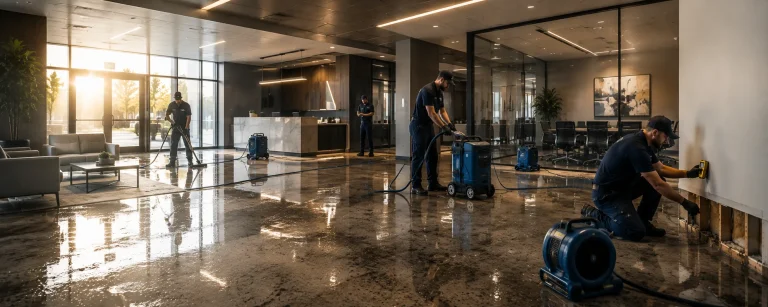
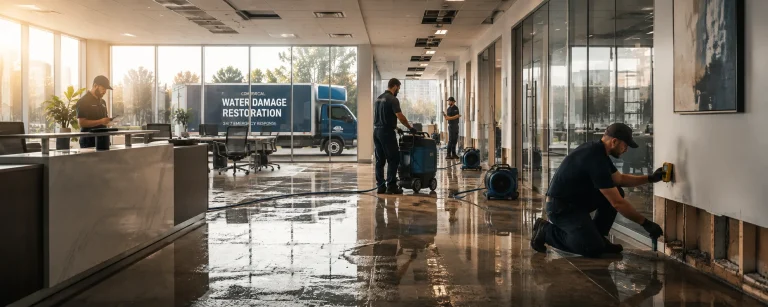
When water damage affects a commercial property, property managers are frequently responsible for coordinating the initial response while balancing the needs of ownership, tenants, contractors, and daily building operations.
Every decision made during the first hours of a water loss can influence recovery timelines, repair costs, tenant satisfaction, and long-term property performance.
Commercial Water Damage Repair provides educational resources that help property managers understand commercial water damage, recovery planning, restoration strategies, and the coordination required throughout the entire process.
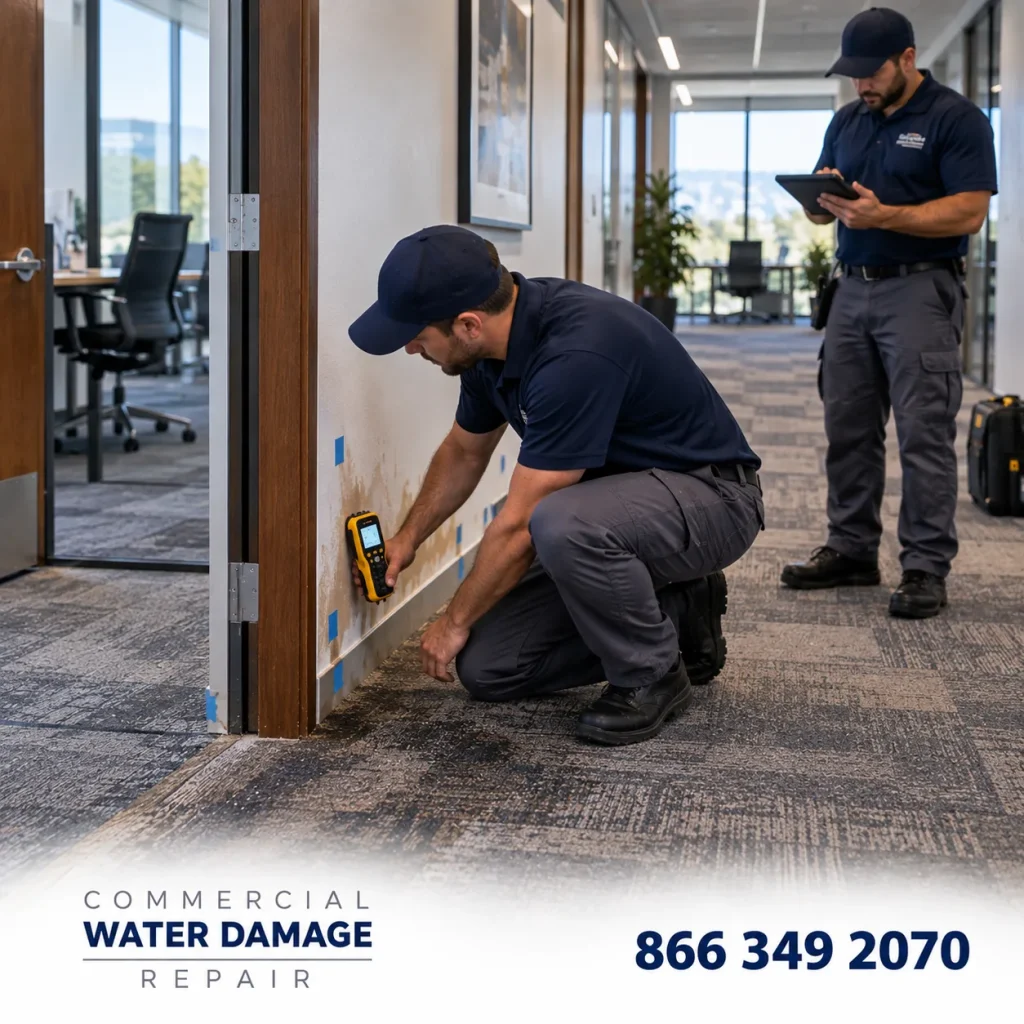
Property Managers Balance Multiple Responsibilities
Commercial water damage involves much more than repairing a building.
Property managers often coordinate:
- Tenant communication
- Emergency response
- Facility access
- Contractor scheduling
- Insurance coordination
- Building operations
- Safety planning
- Project documentation
The objective is to protect both the physical property and the businesses operating inside it.
Common Commercial Water Damage Events
Commercial properties experience water losses from many different sources.
Typical examples include:
- Roof leaks
- Burst plumbing lines
- Fire sprinkler activation
- Storm-related flooding
- HVAC system failures
- Mechanical equipment leaks
- Sewer backups
- Overflowing restrooms
- Foundation water intrusion
- Window and building envelope leaks
Each event requires a thoughtful response that balances immediate action with long-term recovery planning.
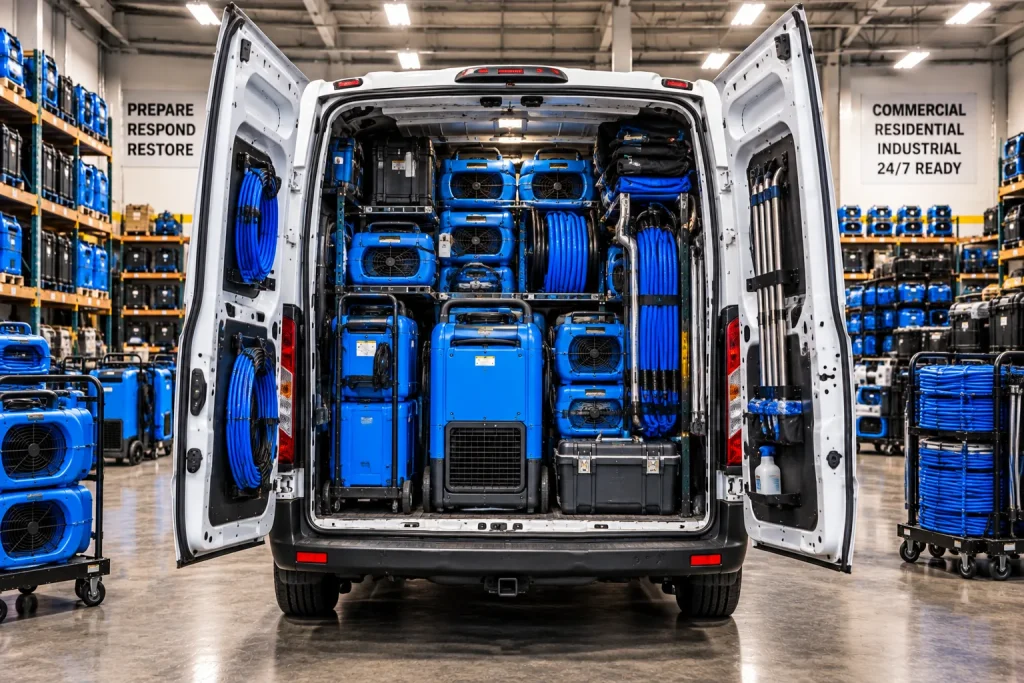
Protecting Tenants During Recovery
Many commercial buildings remain occupied while restoration and repairs are underway.
Property managers may need to organize:
- Temporary access routes
- Tenant notifications
- Safety barriers
- After-hours work
- Elevator coordination
- Parking adjustments
- Dust and noise management
- Ongoing project updates
Clear communication often helps reduce confusion while maintaining tenant confidence.
Coordinating Multiple Project Teams
Commercial recovery frequently involves several organizations working together.
Property managers often communicate with:
- Building ownership
- Facility managers
- Restoration contractors
- General contractors
- Engineers
- Insurance representatives
- Building occupants
- Maintenance personnel
Keeping everyone informed helps projects move more efficiently while reducing delays.
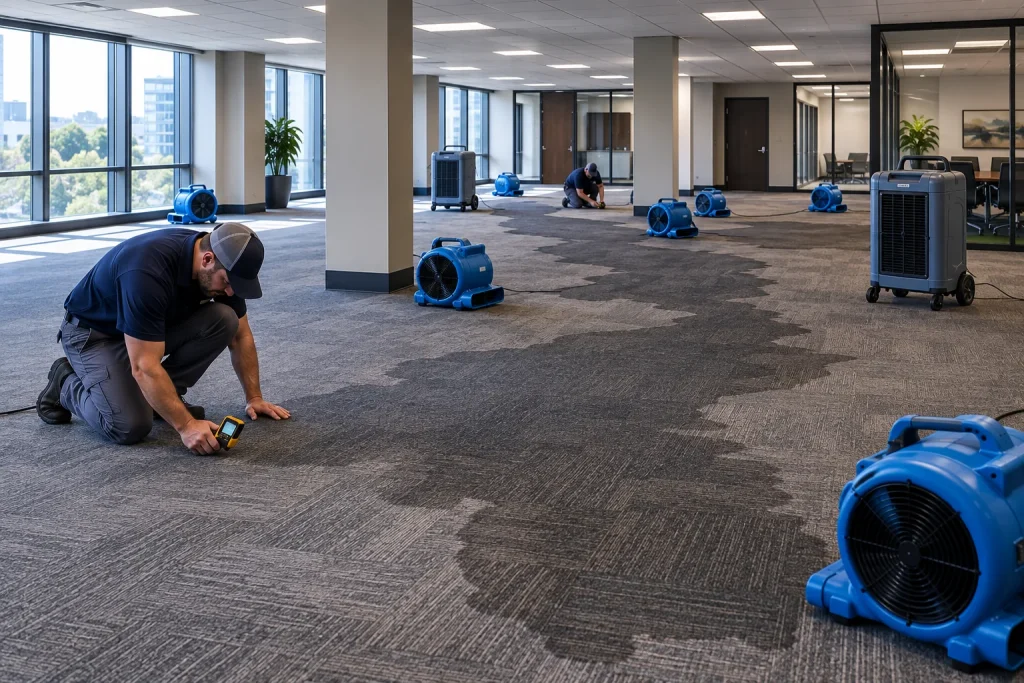
Business Continuity Matters
Commercial tenants rely on uninterrupted operations whenever possible.
Recovery planning often includes:
- Phased repairs
- Occupied work areas
- Safe customer access
- Equipment protection
- Utility coordination
- Temporary workspaces
- Scheduling flexibility
- Operational planning
Balancing repairs with everyday business activity is one of the most important responsibilities during commercial recovery.
Questions Property Managers Should Consider
Every commercial property presents different priorities.
Important questions include:
- Has the source of the water been identified?
- Which tenants have been affected?
- Has hidden moisture been evaluated?
- Can portions of the building remain operational?
- What documentation is available?
- How will insurance communication be handled?
- When can reconstruction begin?
- How will progress be communicated?
- What preventive improvements should be considered?
Asking these questions early often improves both project organization and long-term outcomes.
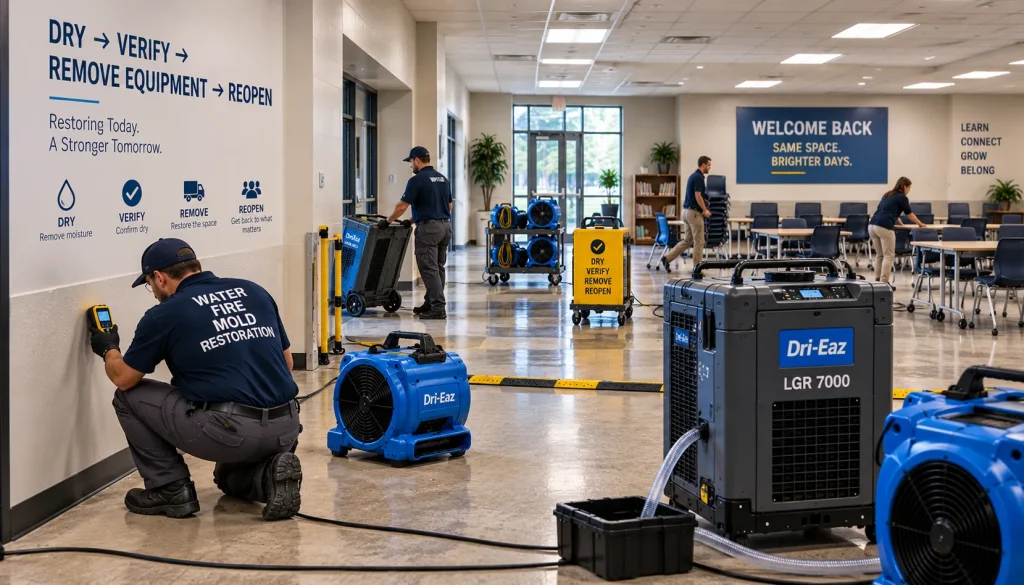
Documentation Supports Better Decisions
Accurate records benefit everyone involved in the recovery process.
Documentation commonly includes:
- Initial inspections
- Moisture readings
- Project photographs
- Daily progress reports
- Equipment logs
- Repair planning
- Insurance documentation
- Final verification
Well-organized information supports communication throughout every phase of the project.
Looking Beyond Today’s Water Loss
Many property managers use recovery projects to improve future preparedness.
Potential improvements include:
- Preventive maintenance schedules
- Roof inspection programs
- Plumbing evaluations
- Water detection technology
- Emergency response planning
- Vendor relationships
- Building documentation
- Routine facility inspections
Preparation today may help reduce future disruptions and maintenance costs.
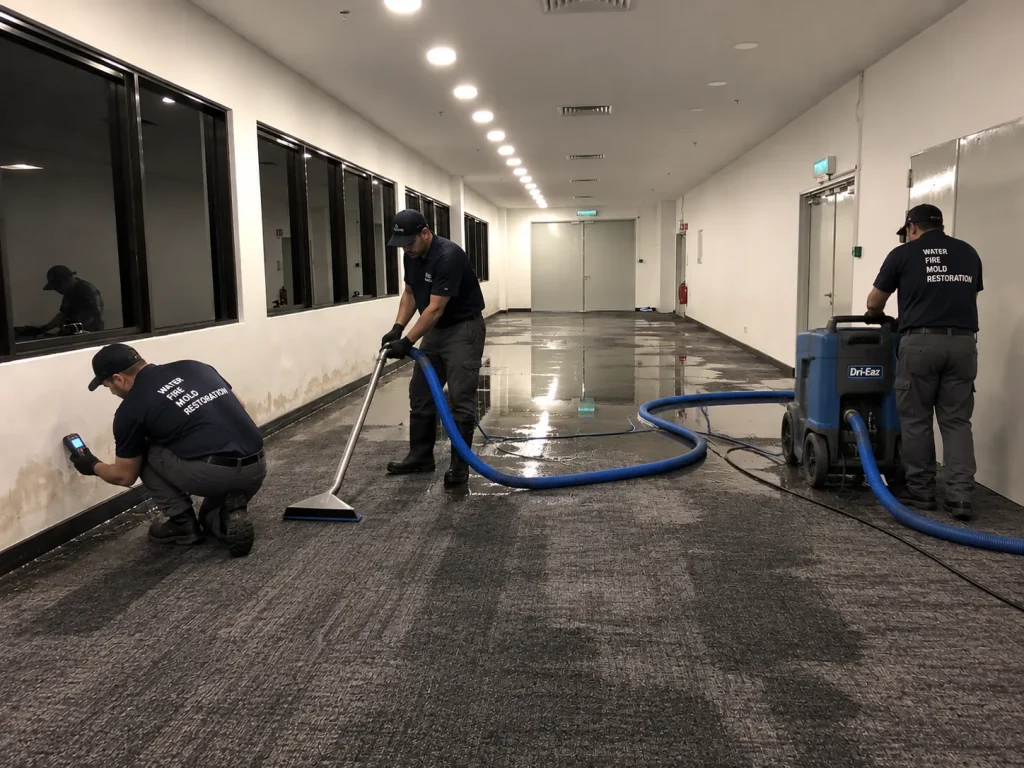
Supporting Long-Term Property Performance
Commercial water damage recovery is about more than returning a building to service.
Property managers often consider:
- Tenant retention
- Occupant safety
- Property value
- Maintenance planning
- Operational efficiency
- Capital improvements
- Insurance coordination
- Long-term asset performance
Successful projects restore confidence in both the building and its ongoing operation.
Why Commercial Water Damage Focuses on Property Managers
Property managers play a central role in nearly every commercial water damage project.
Commercial Water Damage provides educational resources that help property managers, building owners, facility managers, developers, and commercial contractors better understand emergency response, water mitigation, restoration planning, insurance coordination, business continuity, and long-term building performance.
Whether managing a small office property or a large multi-building portfolio, informed planning helps reduce downtime, improve communication, protect valuable assets, and support a faster, more organized recovery.