Water emergency? Our commercial crews respond 24/7.
Home / Commercial Water Damage Nevada
Commercial Water Damage
- 24/7 Response
- Extraction
- Structural Drying
- Restoration
What happens when you call
24/7 dispatch
Call any hour. Crews mobilize for commercial losses, including nights and weekends.
Extraction & drying
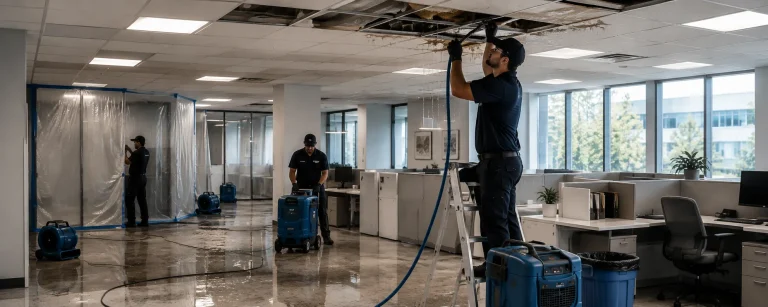
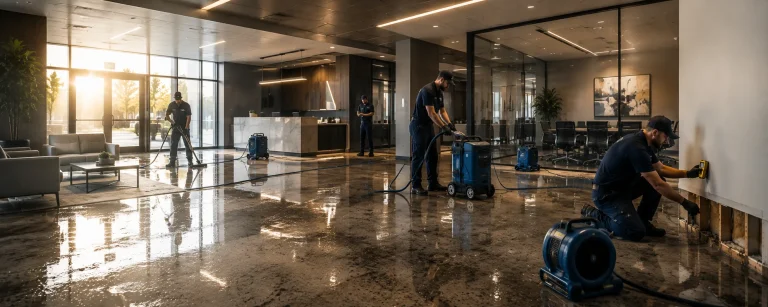
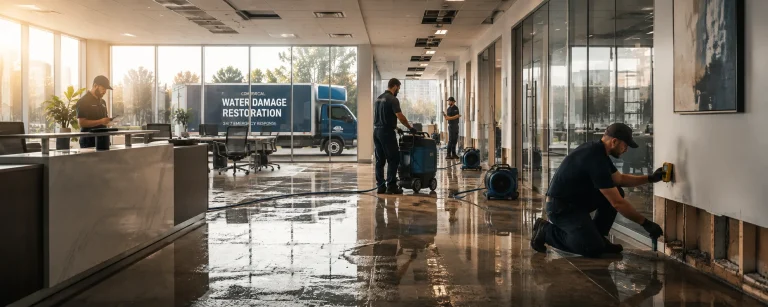
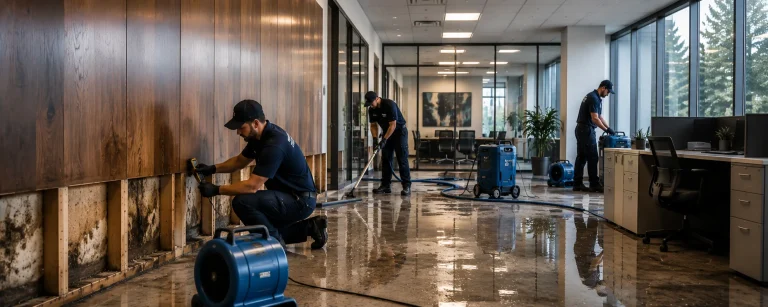
Standing water removed, then structural drying with monitored moisture readings.
Insurance-ready records
Readings, photos and scope notes documented for your carrier from day one.
Nevada
One State, Two Very Different Commercial Water Damage Climates
Nevada is often treated as a single desert market, which is a mistake when it comes to building performance. Southern Nevada and Northern Nevada sit roughly 3,500 feet apart in elevation and behave like different climates entirely. A freeze protection strategy that would be unnecessary in Las Vegas is essential in Reno and Elko.
Statewide, Nevada’s commercial base spans resort and gaming properties, convention facilities, an expanding logistics and manufacturing corridor, data centers, mining operations, healthcare systems, and warehouse distribution serving the entire western United States.
Commercial Water Damage provides educational resources that help facility managers, property managers, building owners, developers, and commercial contractors better understand commercial water damage throughout Nevada.
Southern Nevada: Heat, Monsoon, and Interior Failures
In the Las Vegas Valley, Henderson, and surrounding Clark County, the dominant loss causes originate inside the building or above it.
- Fire sprinkler discharges in high-rise and resort properties
- Domestic supply line failures affecting multiple floors
- Roof membrane degradation from extreme UV and heat
- Monsoon flash flooding and site drainage backups
- Commercial kitchen, laundry, and pool system failures
- Hard water scaling accelerating pipe and fixture wear
- HVAC condensate and cooling tower issues
Northern Nevada: Freeze, Snowmelt, and Industrial Scale
Reno, Sparks, Carson City, and the industrial corridor east along I-80 face a genuinely different set of risks.
- Frozen pipes in unheated warehouse and dock areas
- Wet-pipe sprinkler freezing in large-format buildings
- Sierra snowmelt and Truckee River flooding
- Roof snow load and ice damming
- Freeze-thaw stress on sealants and flashing
- High-altitude UV degradation of roofing systems
- Water losses across very large open floor plates
Buildings constructed on a “Nevada is warm” assumption are a recurring source of preventable freeze losses in the north of the state.
Restoration Has Become More Valuable Than Replacement
Nevada commercial properties contain systems and finishes with long replacement lead times.
Many properties include:
✓ Custom millwork and specialty hospitality finishes
✓ Gaming equipment and casino floor systems
✓ Warehouse automation and sortation equipment
✓ Data center and server infrastructure
✓ Advanced manufacturing and battery production lines
✓ Commercial kitchen and banquet infrastructure
✓ Building automation and surveillance networks
✓ High-density tenant improvements
Water Can Travel Well Beyond the Initial Leak
Moisture may migrate through:
- Concrete slabs, control joints, and post-tension penetrations
- Guest room stacks and plumbing chases
- Elevator shafts, pits, and machine rooms
- Tilt-up panel joints and insulated metal panels
- Ceiling plenums and return air pathways
- Electrical and low-voltage rooms
- Below-grade parking and utility trenches
Nevada Commercial Property Types
Commercial restoration projects across the state may involve:
✓ Resort casinos and high-rise hotel towers
✓ Convention and exhibition facilities
✓ Distribution, fulfillment, and cold storage centers
✓ Data centers and technology campuses
✓ Advanced manufacturing and industrial facilities
✓ Mining support and processing operations
✓ Healthcare campuses and medical offices
✓ Retail centers and mixed-use developments
Business Continuity Is Critical
Recovery planning often includes:
- Zone isolation so unaffected operations continue
- Guest room inventory and relocation management
- Inventory relocation and salvage assessment
- Equipment and automation protection
- Overnight, shift-based, and event-calendar scheduling
- Coordination with gaming and health regulators
- Tenant and corporate communication
- Documented business interruption tracking
Modern Restoration Protects Valuable Commercial Assets
Commercial restoration frequently includes:
✓ Moisture mapping and thermal imaging
✓ Rapid extraction to limit migration
✓ Structural and concrete slab drying
✓ Industrial dehumidification
✓ Specialty finish and equipment preservation
✓ Controlled demolition
✓ Targeted reconstruction
✓ Verification before reoccupancy
Nevada’s low ambient humidity is a real advantage during drying, north and south alike, provided moisture has been properly located rather than merely surface-dried.
Questions Nevada Property Owners Frequently Ask
- Does this building have freeze protection appropriate to its elevation?
- How far did water travel through floors and shafts?
- Can revenue-generating areas remain open during restoration?
- Can custom finishes be restored given replacement lead times?
- Was equipment, inventory, or server infrastructure exposed?
- Was the sprinkler discharge accidental, and can it recur?
- How is business interruption being documented?
- What piping and roofing systems should be evaluated for age?
Reducing Future Water Damage Exposure Statewide
Potential improvements include:
✓ Fire sprinkler inspection, testing, and maintenance programs
✓ Freeze protection sized to local elevation and climate
✓ Zone isolation valves that limit discharge area
✓ Leak detection and automatic shutoff systems
✓ Roof inspection cycles tuned to UV and heat exposure
✓ Monsoon and snowmelt drainage review
✓ Water treatment to reduce scaling in domestic systems
✓ After-hours monitoring and escalation procedures
Why Commercial Water Damage Focuses on Nevada
Nevada concentrates hospitality, gaming, conventions, logistics, data centers, manufacturing, and mining into a state where two distinct climates demand two distinct approaches to building protection.
Commercial Water Damage provides educational resources that help facility managers, property managers, building owners, developers, and commercial contractors better understand moisture migration, water mitigation, restoration planning, repair strategies, insurance coordination, and long-term building performance.
Whether responding to a sprinkler discharge in a Las Vegas resort tower, a frozen main at a Northern Nevada distribution center, monsoon flooding in Clark County, or snowmelt intrusion near Reno, informed planning helps reduce downtime, preserve valuable assets, and support a faster, more efficient commercial recovery.
Water Emergency?
Our commercial response team is available 24/7 for water extraction, structural drying and restoration.
Our Services
Talk To A Specialist
Need help with a water loss right now?
Call our commercial team for extraction, drying and restoration planning built around your building and your operations.