Water emergency? Our commercial crews respond 24/7.
Home / Commercial Water Damage Nevada Las Vegas
Commercial Water Damage
- 24/7 Response
- Extraction
- Structural Drying
- Restoration
What happens when you call
24/7 dispatch
Call any hour. Crews mobilize for commercial losses, including nights and weekends.
Extraction & drying
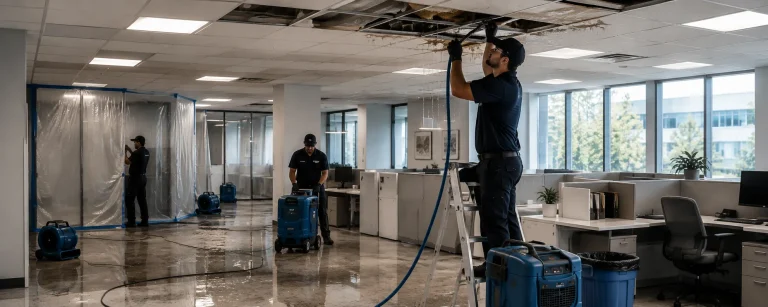
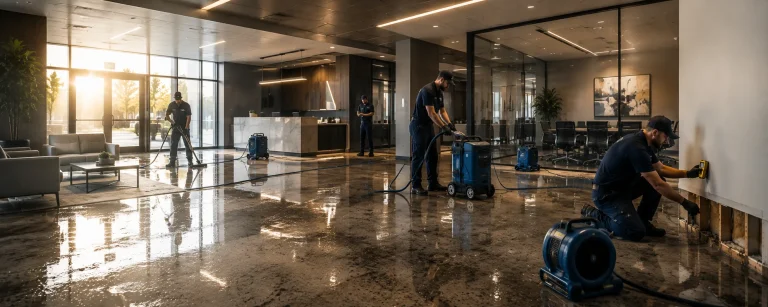
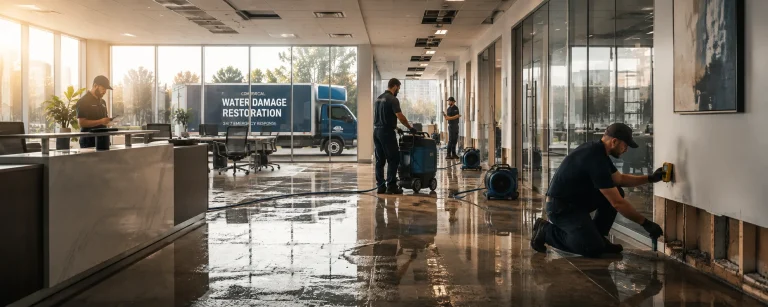
Standing water removed, then structural drying with monitored moisture readings.
Insurance-ready records
Readings, photos and scope notes documented for your carrier from day one.
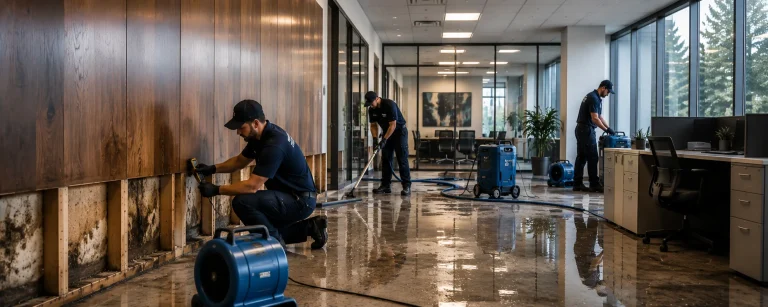
Nevada — Las Vegas
In a City Where Buildings Never Close, Water Damage Is Measured in Hours of Lost Revenue
Las Vegas operates on a schedule that almost no other American commercial market shares. Resort casinos, convention centers, showrooms, restaurants, and entertainment venues run twenty-four hours a day, every day of the year. A water event that would be an inconvenience elsewhere becomes an immediate revenue problem here.
The desert setting is misleading. Low annual rainfall does not mean low water damage risk. The Las Vegas Valley combines intense monsoon bursts, extreme heat that degrades roofing and sealants, aging plumbing infrastructure in older properties, and some of the largest fire suppression systems in the country.
Commercial Water Damage provides educational resources that help facility managers, property managers, building owners, developers, and commercial contractors better understand commercial water damage throughout the Las Vegas metropolitan area.
Desert Conditions Do Not Reduce Water Damage Risk
Most commercial water losses in Las Vegas originate inside the building, not outside it.
Commercial water damage commonly results from:
- Fire sprinkler discharges and system failures
- Domestic water and supply line failures in high-rise towers
- Commercial kitchen and laundry equipment leaks
- HVAC condensate and cooling tower issues
- Monsoon season flash flooding and site drainage backups
- Roof membrane failure from extreme UV and heat
- Pool, spa, and water feature system failures
- Aging cast iron and galvanized piping in older properties
- Hard water scaling that accelerates pipe and fixture failure
Summer temperatures well above 100 degrees put sustained thermal stress on roofing membranes, expansion joints, and sealants, shortening service life relative to milder climates.
High-Rise Water Losses Behave Differently
In a thirty- or forty-story resort tower, a single supply line failure on an upper floor becomes a multi-floor event within minutes.
Water in tall buildings travels through:
- Guest room stacks and shared plumbing chases
- Elevator shafts, pits, and machine rooms
- Stairwells and pressurized egress paths
- Post-tension slab penetrations
- Corridor ceilings and return air plenums
- Electrical closets and low-voltage rooms
- Casino floor ceilings and back-of-house corridors
The number of out-of-service guest rooms usually drives the cost of the event far more than the physical repair scope does.
Restoration Has Become More Valuable Than Replacement
Las Vegas commercial interiors carry unusually high finish values.
Many properties include:
✓ Custom millwork and specialty casegoods
✓ Gaming equipment and casino floor systems
✓ Theatrical rigging, lighting, and stage technology
✓ Commercial kitchen and banquet infrastructure
✓ Convention center audiovisual systems
✓ Imported stone, tile, and architectural finishes
✓ Building automation and surveillance networks
✓ High-density guest room fit-outs
Lead times on custom finishes can run months. Restoration is often the only path that returns rooms to inventory on a schedule ownership can accept.
Business Continuity Is Not Optional Here
Closing is rarely an acceptable answer on the Strip or in the convention corridor.
Recovery planning often includes:
- Room block management and guest relocation
- Work scheduled around convention and event calendars
- Containment that keeps public areas presentable
- Noise restrictions near occupied guest floors
- Back-of-house routing for equipment and debris
- Gaming floor and revenue area prioritization
- Coordination with gaming and health regulators
- Documented business interruption tracking
Las Vegas Property Types With Distinct Recovery Needs
Commercial restoration projects throughout the valley may involve:
✓ Resort casinos and high-rise hotel towers
✓ Convention and exhibition facilities
✓ Restaurants, nightclubs, and entertainment venues
✓ Healthcare campuses and medical offices
✓ North Las Vegas distribution and logistics centers
✓ Data centers and technology facilities
✓ Retail centers and outlet properties
✓ Class A office and mixed-use developments
Modern Restoration Protects Valuable Commercial Assets
Commercial restoration frequently includes:
✓ Moisture mapping and thermal imaging
✓ Rapid extraction to limit floor-to-floor migration
✓ Structural drying with documented targets
✓ Industrial dehumidification
✓ Specialty finish and millwork preservation
✓ Electronics and equipment stabilization
✓ Controlled demolition and targeted reconstruction
✓ Verification before rooms return to inventory
The desert’s low ambient humidity is a genuine advantage during drying, provided moisture has actually been located rather than merely surface-dried.
Questions Las Vegas Property Owners Frequently Ask
- How many floors and guest rooms are actually affected?
- How quickly can rooms be returned to sellable inventory?
- Did water reach elevator equipment or electrical rooms?
- Can gaming and food service areas remain open?
- Can custom finishes be restored given replacement lead times?
- How is business interruption being documented?
- Was this sprinkler discharge accidental, and can it recur?
- What piping infrastructure should be evaluated for age and condition?
Reducing Future Water Damage Exposure
Potential improvements include:
✓ Fire sprinkler inspection and testing programs
✓ Zone isolation valves that limit discharge area
✓ Leak detection and automatic shutoff on guest floors
✓ Supply line and connector replacement programs
✓ Roof inspection cycles tuned to UV and heat exposure
✓ Monsoon-season drainage and site grading review
✓ Water treatment to reduce scaling in domestic systems
✓ After-hours monitoring and escalation procedures
Why Commercial Water Damage Focuses on Las Vegas
Las Vegas concentrates hospitality, gaming, conventions, entertainment, healthcare, and logistics into a market where downtime is measured in continuous revenue rather than business days.
Commercial Water Damage provides educational resources that help facility managers, property managers, building owners, developers, and commercial contractors better understand moisture migration, water mitigation, restoration planning, repair strategies, insurance coordination, and long-term building performance.
Whether responding to a sprinkler discharge in a Strip resort tower, a supply line failure affecting multiple guest floors, monsoon flooding at a North Las Vegas distribution center, or a kitchen equipment leak inside a convention property, informed planning helps reduce downtime, preserve valuable assets, and support a faster, more efficient commercial recovery.
Water Emergency?
Our commercial response team is available 24/7 for water extraction, structural drying and restoration.
Our Services
Talk To A Specialist
Need help with a water loss right now?
Call our commercial team for extraction, drying and restoration planning built around your building and your operations.