Water emergency? Our commercial crews respond 24/7.
Home / Commercial Building Water Damage
Commercial Building Water Damage
- 24/7 Response
- Extraction
- Structural Drying
- Restoration
What happens when you call
24/7 dispatch
Call any hour. Crews mobilize for commercial losses, including nights and weekends.
Extraction & drying
Standing water removed, then structural drying with monitored moisture readings.
Insurance-ready records
Readings, photos and scope notes documented for your carrier from day one.
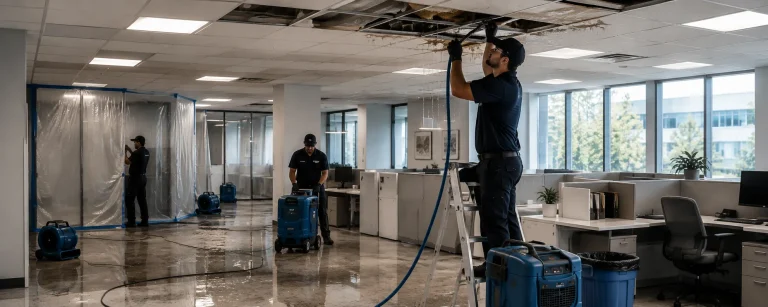
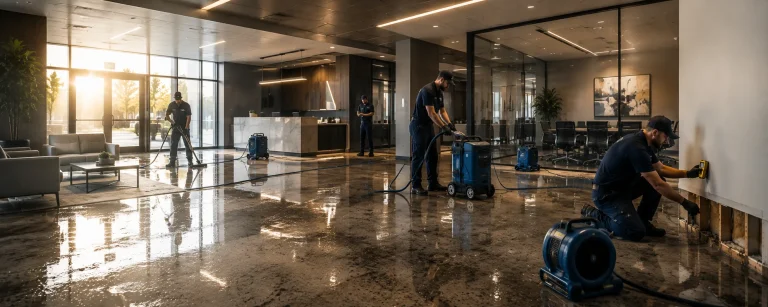
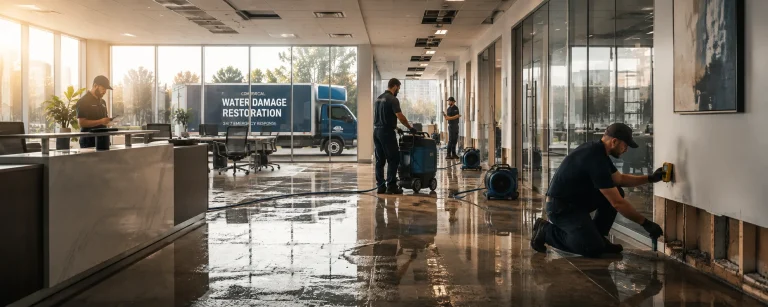
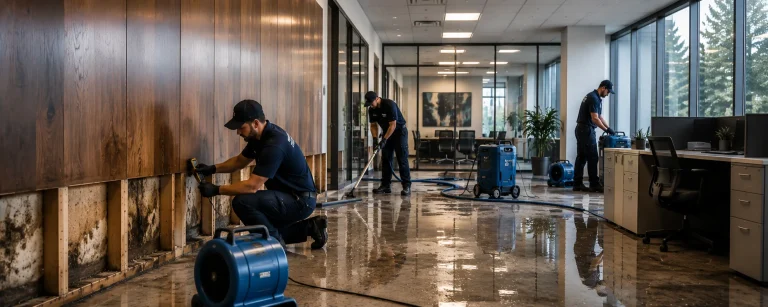
Commercial Building Water Damage Involves More Than Water
Water damage can affect nearly every system inside a commercial building.
While stained ceilings and wet flooring are often the first visible signs, water frequently travels far beyond the original source. Structural components, electrical systems, insulation, mechanical equipment, interior finishes, and tenant spaces may all be affected before the full extent of the damage becomes apparent.
Commercial Water Damage provides educational resources to help building owners, facility managers, property managers, asset managers, developers, and general contractors better understand commercial water loss, recovery planning, and long-term property protection.
Every Commercial Building Responds Differently
No two commercial properties experience water damage the same way.
Building design, occupancy, age, construction methods, and daily operations all influence the recovery strategy.
Commercial properties commonly include:
- Office buildings
- Retail centers
- Medical offices
- Hospitals
- Hotels
- Apartment communities
- Industrial facilities
- Warehouses
- Schools
- Government buildings
Each property type presents unique operational challenges during recovery.
Common Sources of Commercial Water Damage
Commercial buildings may experience water intrusion from a variety of causes.
Some of the most common include:
- Burst plumbing lines
- Roof leaks
- Fire sprinkler activation
- HVAC system failures
- Overflowing restrooms
- Sewer backups
- Storm flooding
- Foundation seepage
- Mechanical equipment leaks
- Water supply failures
Although the causes differ, every water event requires careful planning to reduce additional damage.
Water Often Travels Beyond the Visible Area
One of the greatest misconceptions about commercial water damage is assuming the visible damage represents the entire loss.
Moisture frequently migrates into:
- Wall cavities
- Floor assemblies
- Ceiling plenums
- Structural framing
- Elevator shafts
- Utility chases
- Mechanical rooms
- Electrical spaces
Without proper evaluation, hidden moisture can remain long after surfaces appear dry.
Occupied Buildings Create Additional Challenges
Many commercial buildings cannot simply close while recovery takes place.
Property teams often need to balance:
- Employee safety
- Customer access
- Tenant operations
- Vendor deliveries
- Building security
- Accessibility
- Noise management
- Daily business continuity
Successful recovery plans are designed to protect both the building and the people who continue using it.
Large Commercial Water Losses Require Coordination
Major building losses often involve numerous participants working together.
Projects may include coordination between:
- Facility managers
- Property managers
- Building ownership
- Insurance representatives
- Restoration contractors
- General contractors
- Engineers
- Architects
- Environmental consultants
- Building occupants
Clear communication helps keep projects moving while reducing unnecessary delays.
Recovery Happens in Several Phases
Commercial building recovery is typically completed in stages rather than all at once.
A typical project may include:
- Emergency response
- Water extraction
- Damage mitigation
- Structural drying
- Moisture verification
- Restoration
- Building repairs
- Interior reconstruction
- Final inspections
Each phase supports the next, helping restore safe and reliable building operations.
Questions Building Owners Frequently Overlook
Commercial property owners often focus on repairing visible damage while overlooking larger operational concerns.
Important questions include:
- Has hidden moisture been fully identified?
- Can tenants safely remain in the building?
- Which building systems require immediate attention?
- How will repairs affect ongoing operations?
- What documentation is being maintained?
- What areas should be restored first?
- How will indoor air quality be monitored?
- What long-term maintenance should be considered?
- How will communication be handled throughout the project?
These conversations frequently influence the overall success of the recovery.
Commercial Recovery Is About More Than Repairs
Water damage affects much more than building materials.
Recovery planning should also consider:
- Tenant satisfaction
- Business interruption
- Operational efficiency
- Occupant safety
- Property value
- Insurance coordination
- Future maintenance
- Long-term building performance
A well-managed project helps restore confidence in the building while reducing future risks.
Planning for Future Water Events
Every commercial water loss offers an opportunity to improve future preparedness.
Many property owners review:
- Preventive maintenance schedules
- Roof inspection programs
- Plumbing upgrades
- Mechanical equipment maintenance
- Water detection systems
- Emergency response procedures
- Vendor relationships
- Building documentation
Preparation today can help reduce disruption during the next unexpected event.
Why Commercial Water Damage Focuses on Commercial Buildings
Commercial buildings require a different approach than residential properties.
Larger structures, multiple occupants, complex mechanical systems, and ongoing business operations all influence how water damage should be evaluated and managed.
Commercial Water Damage provides educational resources that help commercial decision-makers understand water mitigation, extraction, restoration, repair planning, insurance coordination, business continuity, and long-term building performance.
Whether managing a localized leak or recovering from a major flood affecting an entire facility, informed planning helps reduce downtime, protect valuable assets, and support a more efficient recovery from start to finish.
Water Emergency?
Our commercial response team is available 24/7 for water extraction, structural drying and restoration.
Our Services
Talk To A Specialist
Need help with a water loss right now?
Call our commercial team for extraction, drying and restoration planning built around your building and your operations.