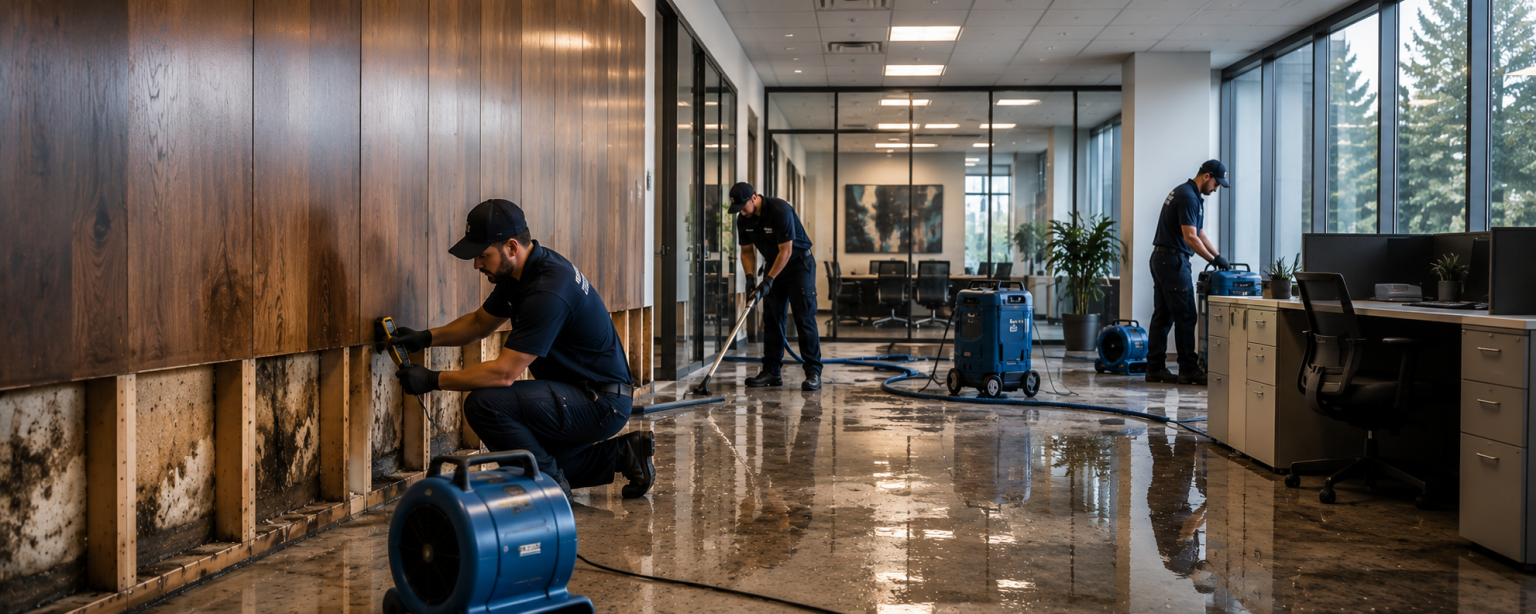
Commercial Water Damage Prevention
Preventing commercial water damage is often more cost-effective than responding to an emergency after it occurs. While no building is completely immune to plumbing failures, severe weather, roof leaks, equipment malfunctions, or flooding, many water losses can be reduced through routine inspections, preventive maintenance, proactive planning, and ongoing building improvements. A strong prevention strategy helps protect occupants, minimize business interruption, reduce repair costs, and extend the service life of commercial buildings.
Water damage prevention is rarely the responsibility of one person alone. Building owners, asset managers, property managers, facility managers, maintenance teams, engineers, contractors, insurance professionals, and tenants all play a role in protecting the property. Each group views prevention through a different lens, but they share the same goal of reducing risk and supporting long-term building performance.
Why Prevention Matters
Small maintenance issues can develop into major restoration projects if they are not identified early.
Common sources of preventable water damage include:
- Aging plumbing systems
- Roof deterioration
- Clogged roof drains
- HVAC condensate problems
- Failing waterproofing
- Window and storefront leaks
- Damaged sealants
- Foundation drainage issues
- Frozen pipes
- Deferred maintenance
✓ Regular inspections often identify developing issues before they become building emergencies.
Preventive maintenance helps reduce unexpected disruptions while improving the reliability of building systems.
The Building Owner’s Perspective
Building owners often evaluate prevention as a long-term investment rather than an annual expense.
Typical priorities include:
— Protecting asset value
— Extending building life
— Reducing capital expenditures
— Limiting emergency repairs
— Preserving occupancy
— Protecting lease revenue
— Supporting property appreciation
— Improving long-term operating performance
Many owners recognize that planned maintenance is generally less disruptive than emergency restoration.
The Property Manager’s Perspective
Property managers often oversee day-to-day building conditions while coordinating preventive maintenance.
Responsibilities may include:
- Scheduling inspections
- Managing maintenance vendors
- Responding to tenant concerns
- Tracking recurring leaks
- Coordinating repairs
- Communicating with ownership
- Maintaining service records
- Planning seasonal maintenance
Routine communication between tenants and property management frequently helps identify water issues before they become significant losses.
The Facility Manager’s Perspective
Facility managers focus on maintaining reliable building systems.
Preventive priorities often include:
✓ Plumbing inspections
✓ Roof evaluations
✓ HVAC maintenance
✓ Drainage system inspections
✓ Fire sprinkler testing
✓ Mechanical equipment maintenance
✓ Leak detection systems
✓ Building automation monitoring
✓ Utility inspections
✓ Emergency response planning
Facility managers often use maintenance data to identify trends and prioritize future improvements.
The Asset Manager’s Perspective
Asset managers typically evaluate prevention across the entire property lifecycle.
Common considerations include:
— Deferred maintenance
— Capital improvement planning
— Portfolio risk
— Insurance trends
— Reserve funding
— Building lifecycle costs
— Return on investment
— Long-term ownership strategy
Preventive maintenance is often viewed as a way to reduce unexpected expenses while improving long-term financial performance.
Insurance and Risk Management
Insurance professionals frequently encourage proactive risk management.
Preventive measures may include:
- Routine inspections
- Maintenance documentation
- Leak detection technology
- Water shutoff procedures
- Emergency response planning
- Equipment monitoring
- Building condition assessments
- Vendor relationships
Well-documented maintenance programs may also help demonstrate a property’s commitment to responsible building management.
Building Systems That Deserve Attention
Water damage prevention extends across the entire commercial property.
Regular evaluations often include:
- Roofing systems
- Plumbing infrastructure
- HVAC equipment
- Windows and storefront systems
- Curtain walls
- Waterproofing assemblies
- Foundation drainage
- Parking structures
- Fire suppression systems
- Mechanical rooms
Looking at these systems together provides a more complete understanding of how water moves through a building.
Creating a Prevention Strategy
Many organizations establish formal water damage prevention programs.
Planning may include:
— Annual building inspections
— Seasonal maintenance schedules
— Roof and drainage cleaning
— Pipe insulation before winter
— Leak detection technology
— Emergency vendor partnerships
— Staff training
— Documentation procedures
— Capital improvement planning
— Building condition assessments
A structured approach helps reduce uncertainty while improving preparedness.
Common Mistakes to Avoid
Even well-maintained buildings can experience preventable water losses.
Avoid:
✕ Delaying routine maintenance
✕ Ignoring recurring leaks
✕ Waiting for equipment to fail before replacing it
✕ Overlooking roof drainage and waterproofing
✕ Failing to document inspections and repairs
✕ Relying solely on emergency response instead of prevention
Addressing small issues early often prevents larger restoration projects and unnecessary business interruption.
Building a More Resilient Property
Commercial water damage prevention is an ongoing process rather than a one-time project. Successful prevention combines routine inspections, preventive maintenance, building system evaluations, thoughtful capital planning, insurance awareness, and clear communication among building owners, asset managers, property managers, facility managers, contractors, engineers, and tenants. By identifying risks before they become emergencies, commercial properties can reduce lifecycle costs, improve operational reliability, protect tenant satisfaction, and strengthen long-term building performance. While emergencies cannot always be avoided, a proactive prevention strategy helps organizations respond with greater confidence and recover more efficiently when unexpected events occur.