Commercial Water Damage
Florida — Orlando
Commercial Water Damage in Orlando Means Managing Humidity, Hurricane Season, and Buildings That Never Close
Orlando is one of the busiest commercial markets in the Southeast. Resort hotels, theme park support facilities, convention properties, healthcare campuses, senior living communities, simulation and defense contractors, distribution centers along the I-4 corridor, medical office buildings, and multi-tenant retail centers all operate on schedules that rarely allow for extended closures.
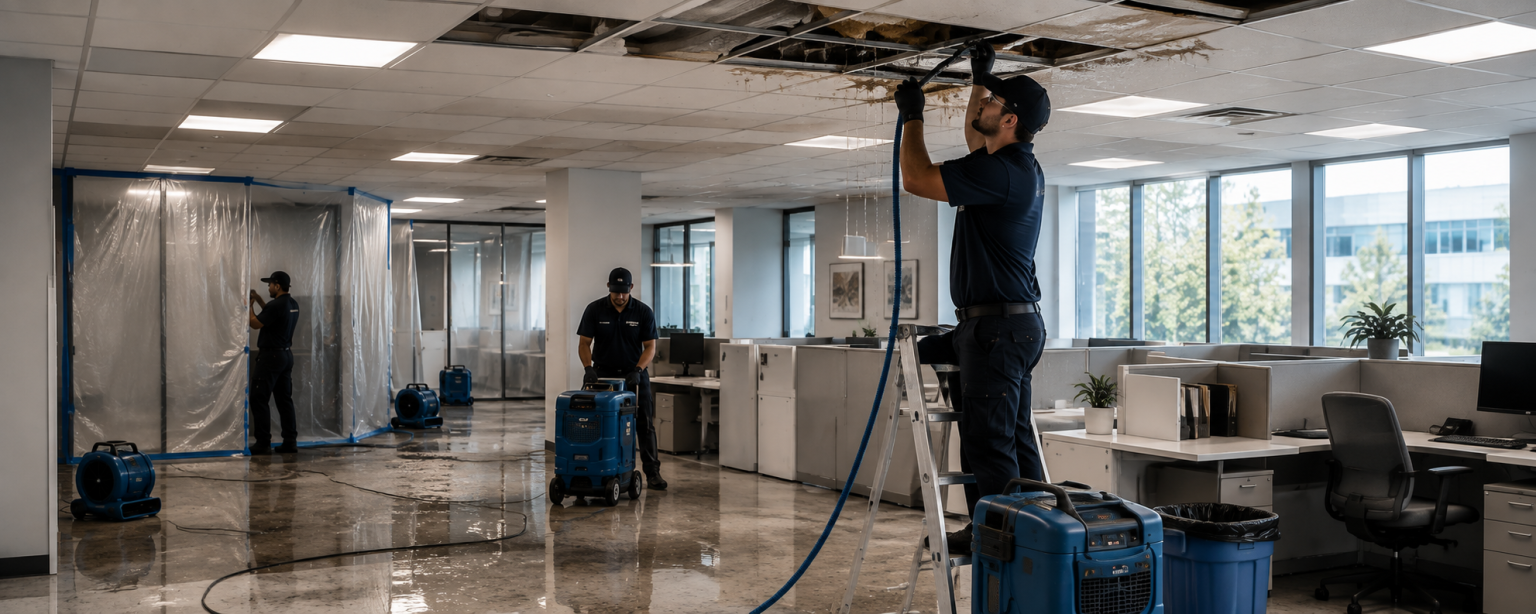
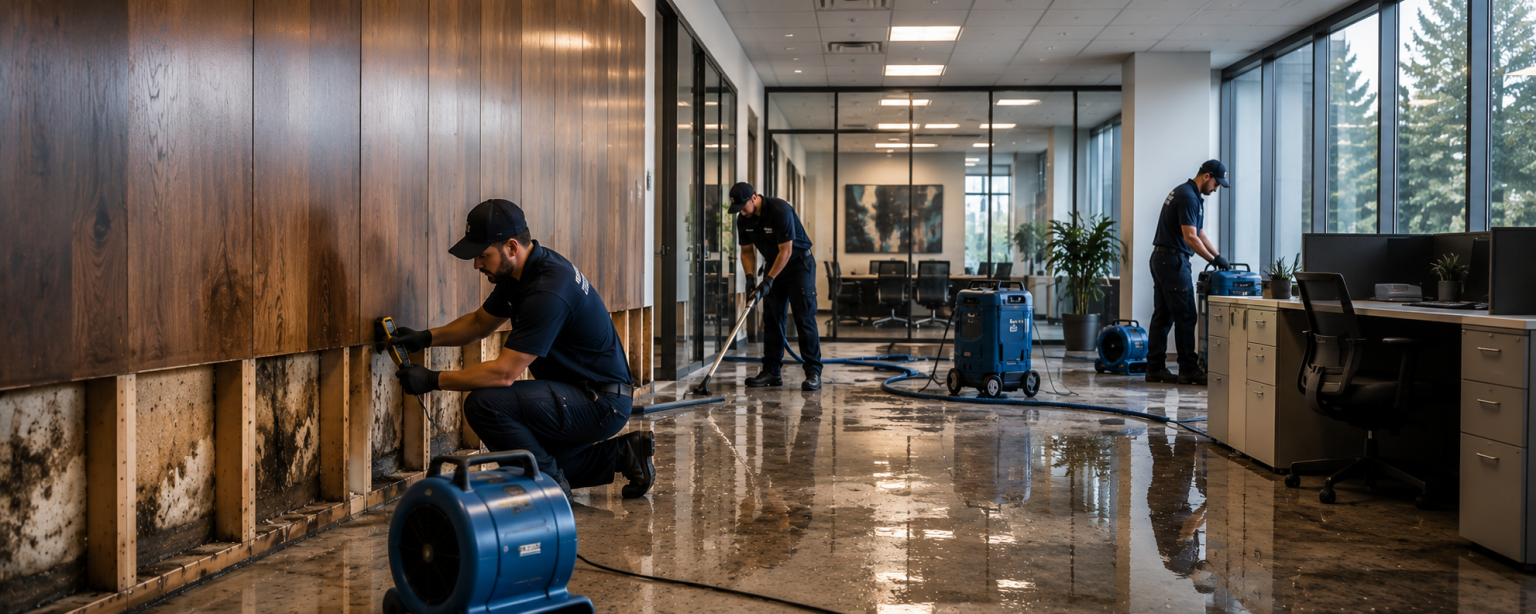
Commercial water damage in Central Florida is rarely just a matter of drying wet materials. Year-round humidity, an active storm season, high water tables, and buildings that run continuous occupancy create conditions where moisture problems escalate quickly and mold growth becomes a concern within days rather than weeks.
Commercial Water Damage provides educational resources that help facility managers, property managers, building owners, developers, and commercial contractors better understand commercial water damage throughout the Orlando metropolitan area.
Restoration Has Become More Valuable Than Replacement
Modern commercial buildings in Orlando contain specialized systems that represent significant capital investment.
Many Orlando commercial properties include:
✓ High-capacity HVAC and dehumidification systems
✓ Hospitality guest room finishes and casegoods
✓ Commercial kitchen and food service equipment
✓ Conference and ballroom audiovisual infrastructure
✓ Medical imaging and clinical equipment
✓ Simulation and training technology
✓ Building automation and access control
✓ Custom tenant improvements
Replacing these systems after a significant water event often requires long lead times, specialized contractors, and substantial capital. For many property owners, restoration has become the preferred strategy because it preserves valuable assets while reducing operational downtime.
Central Florida Conditions Create Distinct Water Damage Risks
Orlando’s climate places continuous stress on commercial building envelopes and mechanical systems.
Commercial water damage commonly results from:
- Tropical storm and hurricane wind-driven rain
- Daily summer convective downpours
- Flat roof ponding and drain blockages
- HVAC condensate line failures and overflow pans
- High humidity and sustained elevated dew points
- Fire sprinkler discharges
- Domestic water and supply line failures
- Slab and below-grade moisture intrusion
- Storm surge and site drainage backups
- Window, curtain wall, and sealant failures
Because ambient humidity is already high, buildings in Central Florida have far less natural drying capacity than properties in drier climates. Controlled dehumidification usually has to do work that outdoor air can do elsewhere.
Water Can Travel Well Beyond the Initial Leak
Commercial water damage rarely stays confined to the original point of entry.
Moisture may migrate through:
- Concrete slabs and post-tension floor systems
- Guest room demising walls and corridors
- Ceiling plenums and return air pathways
- Elevator shafts and stairwells
- Mechanical and electrical rooms
- Insulation cavities and vapor barriers
- Multi-tenant retail demising partitions
- Raised flooring and cable trays
In humid climates, moisture that migrates into a concealed cavity can remain there long after visible surfaces appear dry. Understanding moisture migration is essential before restoration and permanent repairs begin.
Orlando’s Commercial Economy Creates Diverse Recovery Needs
Commercial restoration projects throughout the region may involve:
✓ Resort and convention hotels
✓ Theme park support and back-of-house facilities
✓ Healthcare campuses and medical office buildings
✓ Senior living and assisted care communities
✓ I-4 corridor distribution and logistics centers
✓ Simulation, aerospace, and defense contractors
✓ Multi-tenant retail and entertainment districts
✓ Class A office and mixed-use developments
Each property type presents different operational priorities, occupancy requirements, and regulatory considerations that shape recovery planning.
Business Continuity Is Critical
Hospitality and healthcare properties in particular cannot simply close while restoration work proceeds.
Recovery planning often includes:
- Floor-by-floor or wing-by-wing phasing
- Guest and patient relocation planning
- Containment that maintains egress and life safety
- Overnight and low-occupancy scheduling
- Noise and odor control near occupied areas
- Infection control protocols in clinical settings
- Tenant and franchisor communication
- Documented business continuity planning
Maintaining operations wherever practical helps reduce revenue loss while protecting tenant and guest relationships.
Modern Restoration Protects Valuable Commercial Assets
Commercial recovery strategies increasingly emphasize preserving existing building systems wherever appropriate.
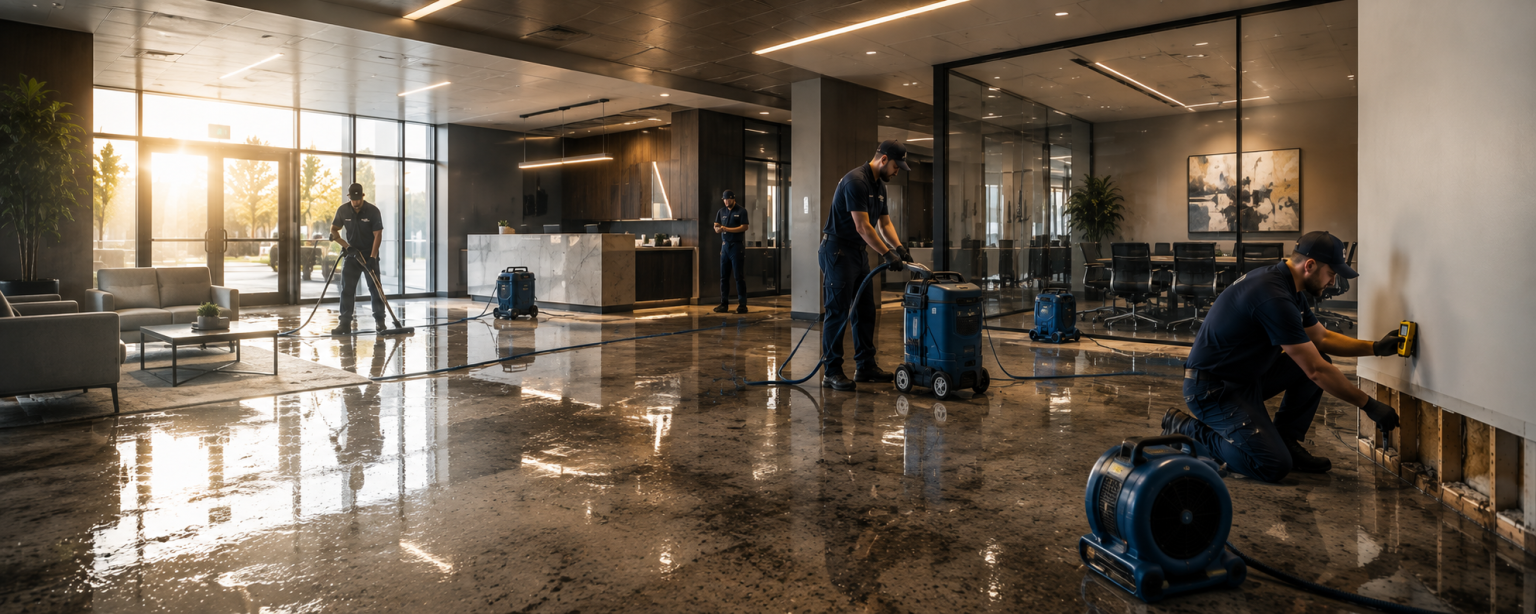
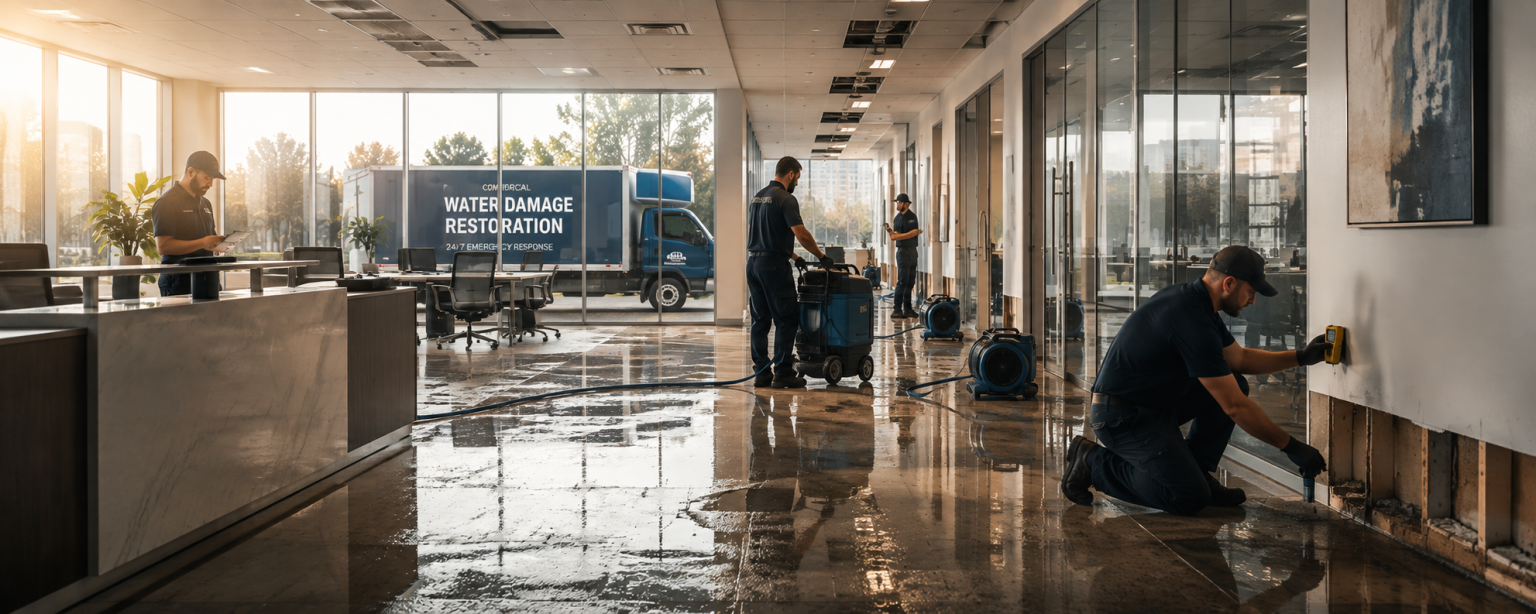
Commercial restoration frequently includes:
✓ Moisture mapping and thermal imaging
✓ Structural drying with monitored targets
✓ Industrial desiccant and refrigerant dehumidification
✓ Antimicrobial application and mold prevention
✓ Controlled demolition of unsalvageable materials
✓ Building system and equipment protection
✓ Targeted reconstruction and finish matching
✓ Post-restoration verification and documentation
Rather than replacing every affected material, restoration planning focuses on protecting valuable commercial investments while minimizing recovery time.
Questions Orlando Property Owners Frequently Ask
Commercial recovery requires balancing immediate repairs against long-term building performance.
Important questions often include:
- How far has moisture migrated beyond the visible damage?
- How quickly does humidity make mold growth a realistic concern?
- Can guest rooms or clinical areas remain in service during drying?
- Which materials can be restored rather than replaced?
- How should storm damage be documented separately from maintenance issues?
- What does the insurance policy treat as flood versus water damage?
- What envelope improvements should be made before the next storm season?
- How will progress be communicated to tenants, guests, and ownership?
Thoughtful planning early in a project often results in a more efficient recovery.
Preparing Commercial Buildings for Future Storm Seasons
Many Orlando property owners strengthen their facilities after a water damage event.
Potential improvements include:
✓ Pre-season roof and drain inspection programs
✓ Condensate line cleaning and overflow switch testing
✓ Sealant, flashing, and glazing evaluations
✓ Leak detection and automatic shutoff technology
✓ Humidity monitoring in concealed spaces
✓ Site drainage and retention review
✓ Documented emergency response procedures
✓ Long-term capital improvement planning
Preparing for predictable seasonal conditions helps reduce future operational disruption while improving long-term resilience.
Why Commercial Water Damage Focuses on Orlando
Orlando combines hospitality, healthcare, logistics, technology, and continuous commercial development with a subtropical climate that keeps moisture pressure on buildings all year.
Commercial Water Damage provides educational resources that help facility managers, property managers, building owners, developers, and commercial contractors better understand moisture migration, water mitigation, restoration planning, repair strategies, insurance coordination, and long-term building performance.
Whether responding to wind-driven rain at a convention hotel on International Drive, a condensate failure inside a medical office building, a roof drain backup at an I-4 distribution center, or a sprinkler discharge in a multi-tenant retail center, informed planning helps reduce downtime, preserve valuable assets, and support a faster, more efficient commercial recovery.