Commercial Fire Sprinkler Systems
Orlando, FL — Service & Repair
Humidity Accelerates Sprinkler Pipe Corrosion, and Corrosion Is What Makes Systems Fail Without a Fire
Central Florida’s commercial building stock is heavily sprinklered. Resort hotels, theme park facilities, convention centers, healthcare campuses, senior living communities, and distribution warehouses all depend on continuous fire suppression coverage, and Florida’s fire codes are demanding.
What sets Orlando apart is not freeze risk but corrosion. Sustained humidity, high ambient temperatures, and salt-influenced air in coastal-adjacent areas accelerate the internal and external deterioration of sprinkler piping, and corrosion is the leading cause of accidental discharge in warm, humid climates.
Commercial Water Damage provides educational resources that help facility managers, property managers, building owners, developers, and commercial contractors better understand fire sprinkler system service, inspection, repair, and the water damage consequences of system failure throughout the Orlando metropolitan area.
What Commercial Fire Sprinkler Service Covers
✓ Inspection, testing, and maintenance programs
✓ Wet-pipe, dry-pipe, and pre-action system service
✓ Backflow prevention testing and certification
✓ Fire pump testing and maintenance
✓ Control valve, alarm, and supervisory device checks
✓ Sprinkler head replacement and obstruction correction
✓ Corrosion assessment and pipe replacement
✓ System modification for renovations and tenant work
Why Corrosion Is the Dominant Local Failure Mode
Wet-pipe systems hold standing water indefinitely. That water contains dissolved oxygen, and in warm conditions it supports both electrochemical corrosion and microbiologically influenced corrosion, in which bacteria form colonies that pit pipe walls from the inside.
Contributing factors in Central Florida include:
- Consistently elevated ambient temperatures
- High humidity driving external condensation on piping
- Trapped air pockets creating oxygen-rich corrosion sites
- Dry-pipe systems that never fully drain after testing
- Water chemistry that supports bacterial growth
- Salt influence in coastal-adjacent facilities
- Long service life on original building systems
Corrosion pinholes rarely announce themselves. They typically appear as small persistent drips above ceilings, and by the time one is noticed, others in the same run are usually developing.
Other Causes of Discharge Without a Fire
- Mechanical impact from forklifts, ladders, and racking
- Manufacturing defects and recalled head models
- Overheating near lighting and kitchen equipment
- Damage during renovation and tenant build-outs
- Air pressure loss in dry and pre-action systems
- Storm-related power and pump control issues
- Accidental contact in guest rooms and public spaces
What Happens When a Sprinkler Discharges
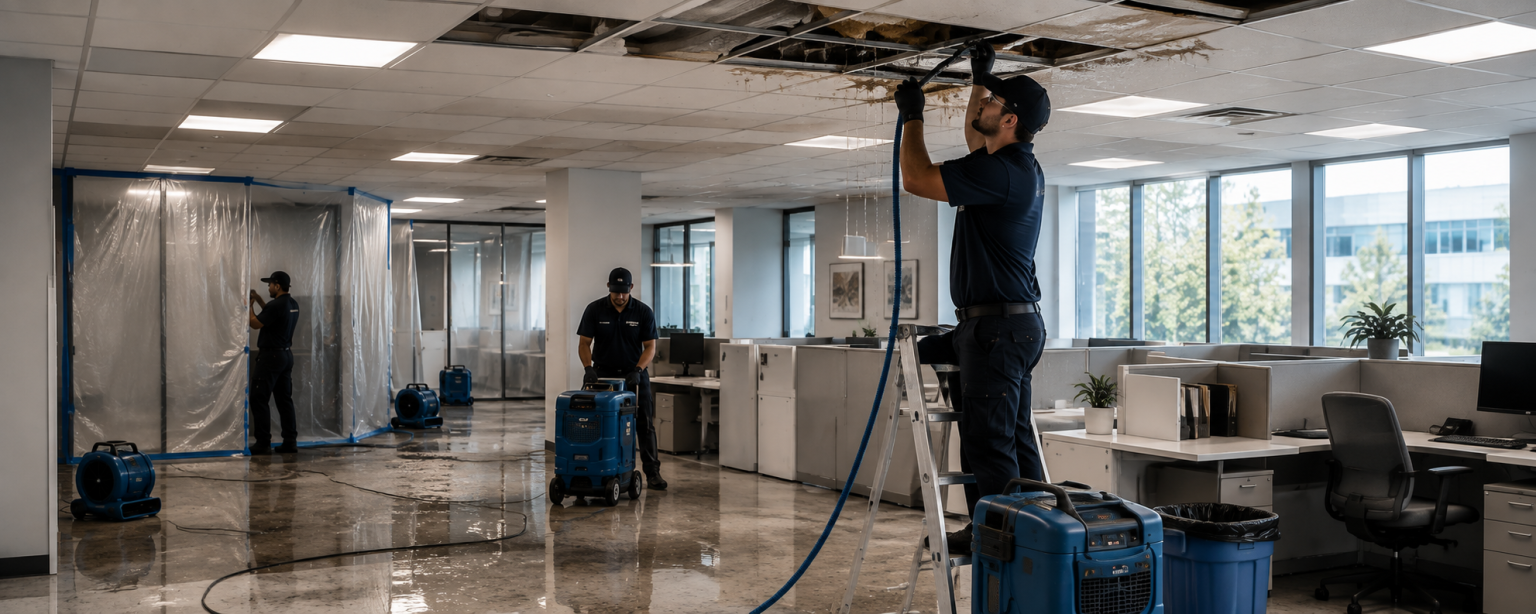
Water enters from ceiling level and saturates downward.
- Ceiling tile, insulation, and light fixtures
- Ceiling plenums and return air pathways
- Guest room stacks and corridor assemblies
- Electrical panels, conduit, and low-voltage rooms
- Server rooms and audiovisual infrastructure
- Elevator shafts and stairwells
- Inventory, furnishings, and documents
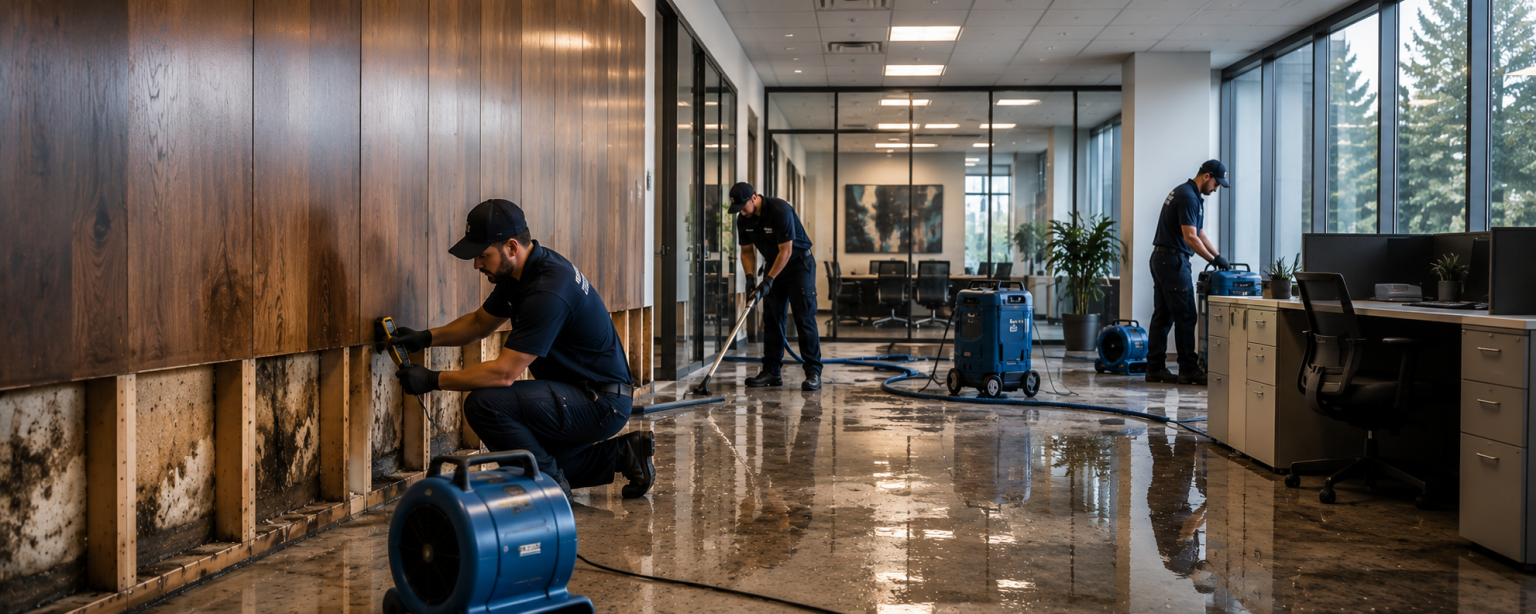
In Orlando’s humidity, the drying window is short. Saturated ceiling assemblies and insulation support mold growth quickly, which turns a sprinkler event into a remediation project if response is delayed.
Inspection, Testing, and Maintenance Requirements
NFPA 25 establishes the framework for inspection, testing, and maintenance of water-based fire protection systems, adopted and enforced through Florida fire prevention requirements and the local authority having jurisdiction.
Typical intervals include:
- Weekly or monthly checks of gauges and control valves, depending on supervision
- Quarterly inspection of alarm devices and connections
- Annual inspection and testing of the overall system
- Five-year internal pipe inspection
- Five-year obstruction investigation
- Periodic sprinkler head testing or replacement based on type and age
- Fire pump testing on defined schedules
The five-year internal inspection matters more in this climate than in most. It is the primary opportunity to find corrosion and obstruction before a pinhole does it for you. Requirements vary by system type and occupancy, so owners should confirm specifics with their local fire authority and licensed sprinkler contractor.
Orlando Building Types That Depend on Sprinkler Systems
✓ Resort and convention hotels
✓ Theme park and attraction support facilities
✓ Convention and exhibition centers
✓ Healthcare campuses and medical office buildings
✓ Senior living and assisted care communities
✓ I-4 corridor distribution and high-pile storage
✓ Restaurants, retail, and entertainment venues
✓ Simulation, aerospace, and technology facilities
Repair Work Commonly Required
- Replacing corroded and pinholed pipe sections
- Replacing discharged, damaged, or recalled heads
- Correcting obstructions found during internal inspection
- Repairing or replacing control and check valves
- Restoring air pressure on dry and pre-action systems
- Fire pump service and controller repair
- Head layout changes following renovation
- Recharging, testing, and returning the system to service
Questions Orlando Facility Managers Frequently Ask
- Is corrosion present, and how far has it progressed?
- Should we replace a pipe section or the whole run?
- Would nitrogen inerting extend system life?
- How quickly must we dry to prevent mold growth?
- Can guest rooms or clinical areas remain in service?
- How quickly can the system be recertified?
- Does our documentation satisfy the local fire authority?
- Would zone isolation valves have limited this loss?
Reducing the Risk of Accidental Discharge
✓ Corrosion monitoring and internal pipe assessment
✓ Nitrogen inerting on wet and dry systems where appropriate
✓ Proper drainage of dry systems after testing
✓ Head guards in warehouses and back-of-house areas
✓ Contractor protection protocols during build-outs
✓ Zone isolation valves that limit discharge area
✓ Water flow alarms monitored around the clock
✓ Recalled head inventory tracking and replacement
Why Commercial Water Damage Covers Fire Sprinkler Systems in Orlando
Fire protection and water damage are usually different budgets and different vendors, but in a humid climate they converge. Corrosion inside sprinkler piping is a slow, invisible process that ends as a sudden, expensive interior water loss.
Commercial Water Damage provides educational resources that help facility managers, property managers, building owners, developers, and commercial contractors better understand sprinkler system types, inspection and testing obligations, discharge causes, water damage response, insurance coordination, and long-term building performance.
Whether responding to a corrosion pinhole above a hotel corridor, an impact discharge in an I-4 distribution center, a failed head in a healthcare suite, or a system requiring recertification before reoccupancy, informed planning helps reduce downtime, preserve valuable assets, and support a faster, more efficient recovery.