Commercial Fire Sprinkler Systems
Minneapolis, MN — Service & Repair
No American Commercial Market Faces Greater Sprinkler Freeze Risk Than the Twin Cities
Minnesota winters routinely deliver sustained subzero temperatures for days at a time. Any water-filled pipe that drops below freezing will eventually rupture, and a fire sprinkler system is, by design, a building-wide network of water-filled pipe running above every occupied space.
This makes freeze protection the single most consequential fire protection maintenance issue in the Twin Cities. A frozen sprinkler main that ruptures over a holiday weekend can discharge for many hours before anyone is in the building to notice.
Commercial Water Damage provides educational resources that help facility managers, property managers, building owners, developers, and commercial contractors better understand fire sprinkler system service, inspection, repair, and the water damage consequences of system failure throughout the Minneapolis and St. Paul metropolitan area.
What Commercial Fire Sprinkler Service Covers
✓ Inspection, testing, and maintenance programs
✓ Wet-pipe, dry-pipe, and pre-action system service
✓ Antifreeze loop testing and concentration verification
✓ Fire pump testing and maintenance
✓ Backflow prevention testing and certification
✓ Control valve, alarm, and supervisory device checks
✓ Sprinkler head replacement and obstruction correction
✓ System modification for tenant improvements
Where Sprinkler Piping Freezes
Freeze failures are highly predictable in location, which is what makes them preventable.
- Parking ramps and structured parking levels
- Loading docks and vestibules with frequent door cycling
- Unheated attics, mezzanines, and interstitial spaces
- Exterior canopies, entries, and covered walkways
- Piping routed in exterior wall cavities
- Vacant tenant space with reduced or shut-off heat
- Rooftop penthouses and mechanical rooms
- Skyway connections and building transitions
Dry-pipe systems reduce but do not eliminate the risk. Water remaining in low points after testing, or condensation accumulating inside the pipe, can freeze and block or rupture the line. Proper drainage after every test matters more here than almost anywhere else.
Other Causes of Discharge Without a Fire
- Mechanical impact from forklifts, ladders, or racking
- Corrosion pinholes in aging steel pipe
- Microbiologically influenced corrosion in wet systems
- Manufacturing defects and recalled head models
- Overheating near unit heaters and kitchen equipment
- Damage during tenant improvement work
- Air compressor failure on dry systems
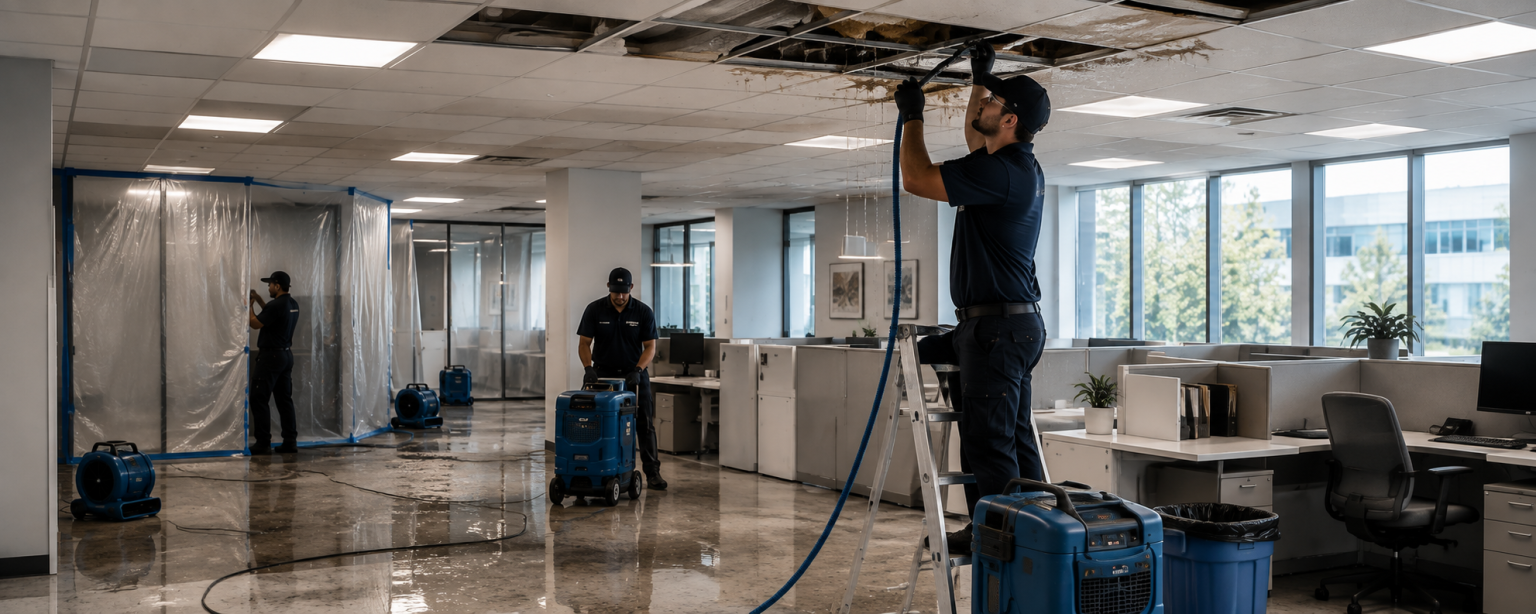
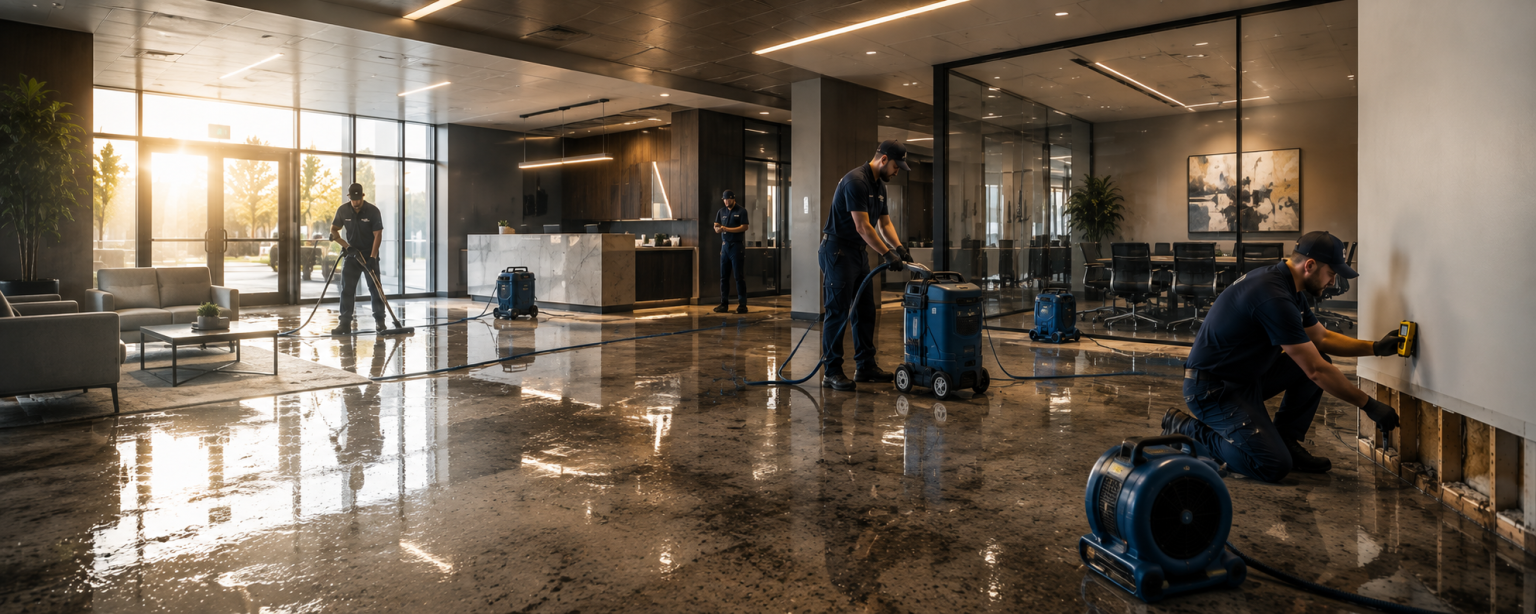
What Happens When a Sprinkler Discharges
- Ceiling tile, insulation, and light fixtures
- Ceiling plenums and return air pathways
- Wall cavities down to lower floors
- Electrical panels, conduit, and low-voltage rooms
- Server rooms and network infrastructure
- Elevator shafts and stairwells
- Skyway-connected adjacent properties
- Inventory, furnishings, and documents
Winter compounds the problem. Water released into a building during a deep freeze can itself freeze in wall cavities and on floors, and the building must be kept heated while walls are open for drying and repair.
Inspection, Testing, and Maintenance Requirements
NFPA 25 establishes the framework for inspection, testing, and maintenance of water-based fire protection systems, enforced locally by the authority having jurisdiction.
Typical intervals include:
- Weekly or monthly checks of gauges and control valves, depending on supervision
- Quarterly inspection of alarm devices and connections
- Annual inspection and testing of the overall system
- Annual antifreeze concentration testing where such loops exist
- Five-year internal pipe inspection
- Five-year obstruction investigation
- Periodic sprinkler head testing or replacement based on type and age
- Fire pump testing on defined schedules
Antifreeze systems warrant particular attention. Concentration must be verified, and allowable solutions have changed under current standards, so older loops may not meet present requirements. Owners should confirm specifics with their local fire authority and licensed sprinkler contractor.
Twin Cities Building Types That Depend on Sprinkler Systems
✓ Downtown office towers and skyway-connected properties
✓ Healthcare systems and medical device facilities
✓ Corporate headquarters campuses
✓ Distribution centers and cold storage
✓ Food processing and manufacturing plants
✓ Universities and institutional buildings
✓ Hotels, stadiums, and event venues
✓ Parking ramps and mixed-use developments
Repair Work Commonly Required
- Replacing frozen and ruptured pipe sections
- Thawing and clearing ice-blocked lines
- Replacing discharged, damaged, or recalled heads
- Correcting corrosion and pinhole leaks
- Converting vulnerable zones to dry-pipe systems
- Repairing air compressors and dry valve assemblies
- Correcting low points that retain water after testing
- Recharging, testing, and returning the system to service
Affected areas generally cannot reoccupy until the system is restored and certified, which places sprinkler repair on the critical path of the entire restoration schedule.
Questions Minneapolis Facility Managers Frequently Ask
- Which zones are most vulnerable to freezing this winter?
- Should we convert unheated areas to dry-pipe systems?
- Are our antifreeze loops still compliant with current standards?
- Are other pipe sections at risk of the same failure?
- Can the building be heated adequately while repairs proceed?
- How quickly can the system be recertified for reoccupancy?
- What minimum heat policy should apply to vacant space?
- Would low-temperature alarms have caught this earlier?
Reducing the Risk of Accidental Discharge
✓ Pre-winter freeze protection audits of every sprinkler zone
✓ Dry-pipe conversion in parking ramps and docks
✓ Heat trace installation, testing, and monitoring
✓ Low-temperature alarms with remote notification
✓ Minimum heat requirements written into leases
✓ Verified drainage of dry systems after every test
✓ Water flow alarms monitored during unoccupied periods
✓ Holiday and cold-snap building check procedures
Why Commercial Water Damage Covers Fire Sprinkler Systems in Minneapolis
In Minnesota, fire protection and water damage prevention are effectively the same maintenance program. The system that protects the building from fire is also the most likely source of a major winter water loss, and the difference between those outcomes is usually freeze protection and monitoring.
Commercial Water Damage provides educational resources that help facility managers, property managers, building owners, developers, and commercial contractors better understand sprinkler system types, inspection and testing obligations, freeze protection, discharge causes, water damage response, insurance coordination, and long-term building performance.
Whether responding to a frozen main in a downtown parking ramp, a rupture in vacant tenant space over a holiday weekend, a dry system that failed to drain properly, or a system requiring recertification before reoccupancy, informed planning helps reduce downtime, preserve valuable assets, and support a faster, more efficient recovery.