Water emergency? Our commercial crews respond 24/7.
Home / Structural Drying
Commercial Structural Drying
- 24/7 Response
- Extraction
- Structural Drying
- Restoration
What happens when you call
24/7 dispatch
Call any hour. Crews mobilize for commercial losses, including nights and weekends.
Extraction & drying
Standing water removed, then structural drying with monitored moisture readings.
Insurance-ready records
Readings, photos and scope notes documented for your carrier from day one.
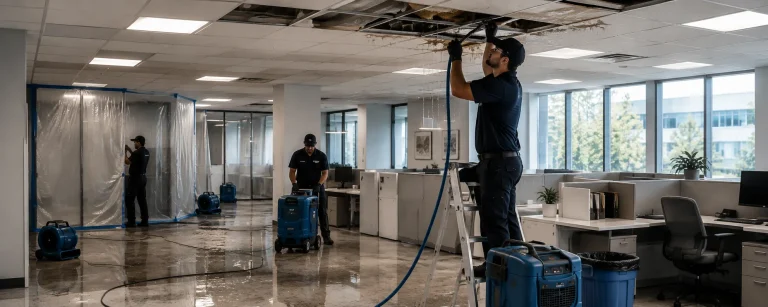
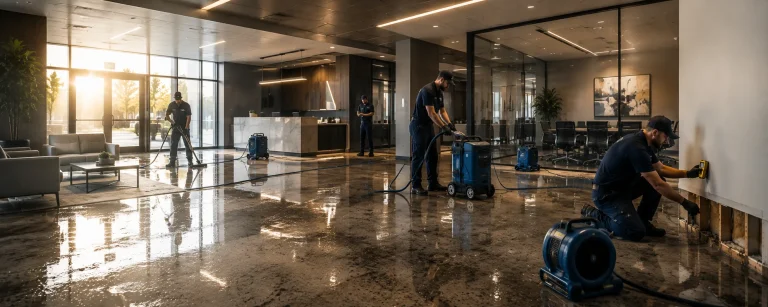
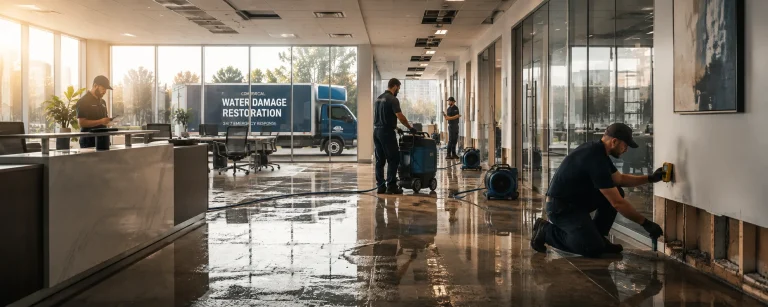
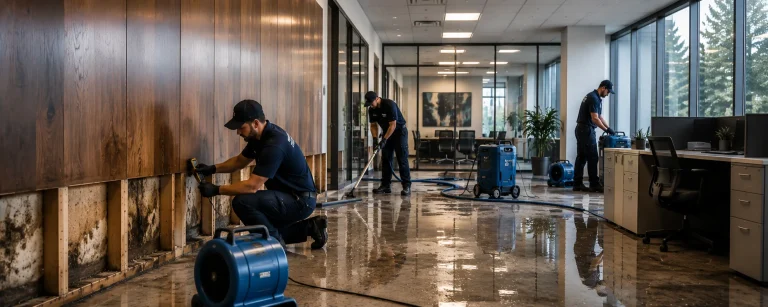
Structural drying is one of the most important phases of commercial water damage restoration. After standing water has been extracted, moisture often remains hidden inside walls, flooring systems, insulation, concrete, structural framing, ceiling assemblies, and other building materials. Drying these materials properly helps reduce additional damage, supports a safe return to occupancy, and prepares the building for repairs or reconstruction.
Commercial drying projects are often more complex than residential work because they involve larger buildings, multiple tenants, sensitive equipment, occupied spaces, and business operations that may continue throughout the restoration process. Every drying strategy is influenced by the building’s construction, the extent of water intrusion, occupancy requirements, and long-term ownership goals.
Why Structural Drying Matters
Removing standing water is only the beginning of the recovery process.
Moisture can remain inside:
- Wall cavities
- Concrete slabs
- Wood framing
- Steel framing assemblies
- Insulation
- Ceiling systems
- Subflooring
- Mechanical rooms
- Elevator shafts
- Utility chases
- Proper drying helps stabilize building materials before reconstruction begins.
Leaving hidden moisture untreated may increase repair costs while extending recovery timelines.
The Building Owner’s Perspective
Building owners often view drying as an investment in protecting the long-term performance of the property.
Typical priorities include:
— Preserving structural integrity
— Protecting long-term asset value
— Reducing reconstruction costs
— Extending building life
— Limiting future maintenance
— Supporting tenant retention
— Protecting lease revenue
— Improving long-term building resilience
Owners frequently evaluate whether investing in thorough drying today can help prevent larger expenses later.
The Property Manager’s Perspective
Property managers often coordinate the drying process while balancing tenant expectations and daily operations.
Responsibilities may include:
- Scheduling restoration activities
- Coordinating tenant access
- Providing project updates
- Managing contractor communication
- Documenting restoration progress
- Coordinating inspections
- Working with ownership
- Supporting insurance representatives
Maintaining communication throughout the drying process helps reduce uncertainty while improving the overall tenant experience.
The Facility Manager’s Perspective
Facility managers focus on restoring safe and reliable building operations.
Primary concerns often include:
- HVAC performance
- Electrical systems
- Mechanical equipment
- Indoor environmental conditions
- Fire protection systems
- Building automation systems
- Utility reliability
- Occupant safety
- Drying progress verification
- Operational continuity
Drying often becomes part of a broader strategy to restore every critical building system as efficiently as possible.
Drying Equipment and Technology
Commercial restoration teams use specialized equipment to remove moisture from building materials and indoor air.
Common equipment includes:
- Commercial dehumidifiers
- Air movers
- Axial fans
- Low-grain refrigerant dehumidifiers
- Desiccant drying systems
- Air filtration devices
- Temporary containment systems
- Floor drying systems
- Wall cavity drying equipment
- Specialized drying mats
Equipment selection depends on building size, construction materials, environmental conditions, and the amount of moisture present.
Moisture Monitoring
Drying is guided by measurement rather than appearance alone.
Monitoring commonly includes:
— Moisture meter readings
— Thermal imaging inspections
— Relative humidity measurements
— Temperature monitoring
— Material moisture content
— Daily equipment adjustments
— Drying logs
— Progress documentation
- Verification testing helps determine when building materials have returned to acceptable moisture levels.
Professional monitoring helps ensure that drying continues until hidden moisture has been adequately addressed.
Insurance and Documentation
Drying activities are often documented throughout the restoration process.
Documentation may include:
- Initial moisture readings
- Daily progress reports
- Equipment placement logs
- Environmental conditions
- Drying verification records
- Photographs
- Material assessments
- Reconstruction recommendations
Accurate documentation supports communication between restoration contractors, property ownership, consultants, and insurance professionals while providing a detailed record of the recovery process.
Commercial Buildings That Require Structural Drying
Drying services are performed across many types of commercial facilities.
Common projects include:
- Office buildings
- Medical facilities
- Hospitals
- Hotels
- Warehouses
- Distribution centers
- Manufacturing facilities
- Restaurants
- Retail centers
- Schools and universities
- Government buildings
- Apartment communities
- Industrial facilities
Every property has different occupancy requirements, operational priorities, and restoration challenges that influence drying strategies.
Looking Beyond the Immediate Damage
Successful drying often leads to broader conversations about reducing future water losses.
Many organizations evaluate:
— Building envelope performance
— Roofing systems
— Plumbing infrastructure
— Waterproofing improvements
— Drainage systems
— HVAC maintenance
— Preventive inspection programs
— Emergency response planning
Rather than viewing drying as a standalone task, many owners use the restoration process to improve the long-term performance and resilience of the entire property.
Restoring Commercial Buildings Through Proper Drying
Commercial structural drying is about more than removing moisture—it is about protecting the long-term health of the building. Careful monitoring, specialized drying equipment, thorough documentation, and coordinated communication help reduce business interruption while supporting insurance recovery and future reconstruction. Whether drying a flooded warehouse, an office tower affected by a burst pipe, a healthcare facility after a sprinkler discharge, or a retail center following storm damage, a well-planned drying strategy helps owners, property managers, facility managers, tenants, and insurance professionals move confidently from emergency response to full recovery.
Water Emergency?
Our commercial response team is available 24/7 for water extraction, structural drying and restoration.
Our Services
Talk To A Specialist
Need help with a water loss right now?
Call our commercial team for extraction, drying and restoration planning built around your building and your operations.