Water emergency? Our commercial crews respond 24/7.
What happens when you call
24/7 dispatch
Call any hour. Crews mobilize for commercial losses, including nights and weekends.
Extraction & drying
Standing water removed, then structural drying with monitored moisture readings.
Insurance-ready records
Readings, photos and scope notes documented for your carrier from day one.
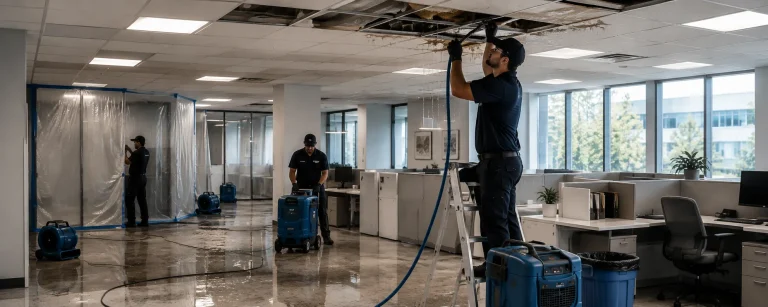
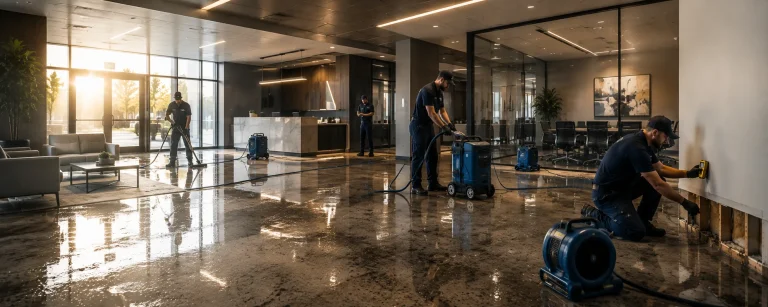
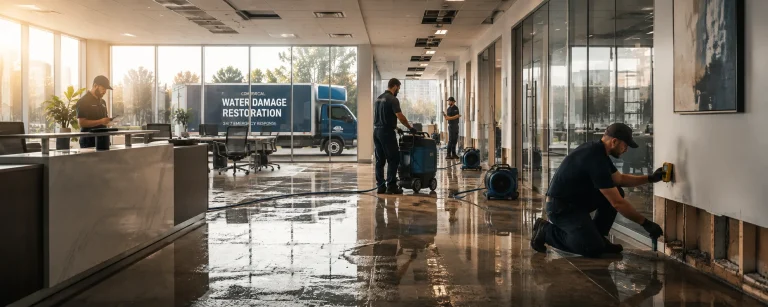
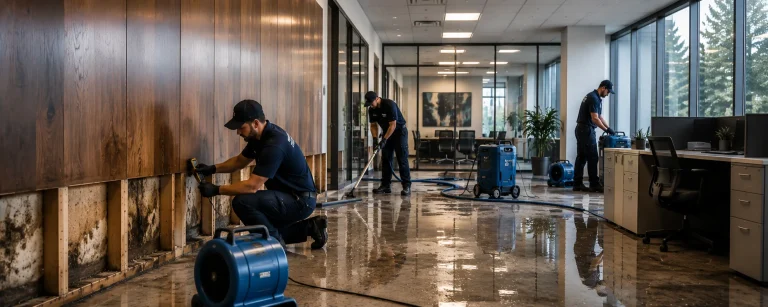
Commercial flood damage can be one of the most disruptive events a business or property owner experiences. Unlike isolated plumbing leaks or small roof failures, flooding often affects multiple building systems simultaneously, spreads rapidly across large areas, and may interrupt operations for days or weeks. Whether caused by severe storms, overflowing rivers, flash floods, drainage failures, broken water mains, sprinkler system discharges, or interior plumbing failures, flood events require a coordinated response that balances emergency mitigation, business continuity, insurance documentation, and long-term property recovery.
Every flood is different. The amount of water, how long it remains inside the building, the type of water involved, building construction, occupancy, and operational requirements all influence the restoration strategy.
Understanding Commercial Flood Events
Flooding can originate from both external and internal sources.
Common causes include:
- Heavy rainfall
- Flash flooding
- River or creek overflow
- Storm surge in coastal areas
- Broken municipal water mains
- Burst plumbing systems
- Fire sprinkler discharges
- Sewer backups
- Drainage failures
- Parking lot or site flooding
- Foundation water intrusion
- Mechanical equipment failures
Avoid:
✕ Waiting for water to recede before beginning mitigation planning
✕ Assuming only the visibly flooded areas are affected
✕ Delaying inspections of electrical and mechanical systems
Early assessment often helps reduce overall restoration costs while limiting additional damage.
The Building Owner’s Perspective
Building owners typically evaluate flood damage from a long-term investment perspective.
Common priorities include:
— Protecting structural integrity
— Preserving asset value
— Reducing reconstruction costs
— Maintaining occupancy
— Protecting lease revenue
— Managing capital expenditures
— Limiting future flood risk
— Planning long-term improvements
Flood recovery often becomes an opportunity to identify vulnerabilities and improve the property’s resilience against future events.
The Property Manager’s Perspective
Property managers often coordinate nearly every aspect of the emergency response.
Responsibilities commonly include:
- Contacting restoration contractors
- Communicating with tenants
- Coordinating emergency vendors
- Managing access to affected areas
- Documenting damages
- Scheduling inspections
- Providing ownership updates
- Assisting insurance representatives
- Tracking restoration progress
Clear communication helps reduce confusion while maintaining confidence throughout the recovery process.
The Facility Manager’s Perspective
Flooding can affect nearly every operational system within a commercial building.
Facility managers frequently prioritize:
- Electrical safety
- Mechanical equipment protection
- HVAC operation
- Elevator systems
- Fire protection systems
- Utility restoration
- Indoor environmental conditions
- Occupant safety
- Building accessibility
- Operational continuity
Restoring building systems safely is often just as important as removing floodwater.
Insurance and Flood Documentation
Flood losses often require extensive documentation throughout the restoration process.
Typical documentation includes:
- Photographs and videos
- Water depth measurements
- Moisture mapping
- Equipment logs
- Material inventories
- Emergency response timelines
- Drying records
- Structural assessments
- Repair estimates
- Daily progress reports
- Thorough documentation helps support communication between property owners, restoration contractors, consultants, adjusters, and insurance carriers throughout the recovery process.
Flood Mitigation and Restoration
Commercial flood recovery typically occurs in multiple phases.
Restoration services may include:
- Emergency water extraction
- Flood pumping
- Debris removal
- Structural drying
- Moisture mapping
- Temporary stabilization
- Cleaning and sanitization
- Controlled demolition
- Contents protection
- Equipment restoration
- Reconstruction planning
- Final repairs
Each phase builds on the previous one to move the property from emergency response toward full recovery.
Commercial Properties Commonly Affected
Flood damage can impact virtually every commercial property type.
Projects often include:
- Office buildings
- Healthcare facilities
- Hospitals
- Hotels
- Retail centers
- Shopping malls
- Warehouses
- Distribution centers
- Manufacturing plants
- Educational campuses
- Government buildings
- Apartment communities
- Industrial facilities
Different occupancy types require different recovery priorities, operational strategies, and restoration timelines.
Looking Beyond the Flood
Once the immediate emergency has been stabilized, many organizations evaluate ways to reduce future flood exposure.
Planning may include:
— Drainage improvements
— Roof drainage evaluations
— Waterproofing upgrades
— Foundation inspections
— Building envelope improvements
— Stormwater management
— Emergency response planning
— Preventive maintenance programs
— Infrastructure improvements
— Insurance and risk management reviews
Flood events often provide valuable insight into how a property can become more resilient over time.
Recovering from Commercial Flood Damage
Commercial flood damage restoration requires much more than removing standing water. Successful recovery depends on coordinated emergency response, professional extraction, structural drying, detailed documentation, insurance coordination, clear communication, and thoughtful reconstruction planning. Whether flooding affects a warehouse, office building, retail center, healthcare campus, manufacturing facility, or mixed-use development, every stakeholder—from building owners and asset managers to facility managers, property managers, tenants, contractors, and insurance professionals—plays a role in protecting the property and restoring business operations. A comprehensive recovery strategy not only addresses today’s emergency but also helps strengthen the building for the future.
Water Emergency?
Our commercial response team is available 24/7 for water extraction, structural drying and restoration.
Our Services
Talk To A Specialist
Need help with a water loss right now?
Call our commercial team for extraction, drying and restoration planning built around your building and your operations.