Water emergency? Our commercial crews respond 24/7.
Home / Facility Manager Guide
Facility Manager Guide to Commercial Water Damage
- 24/7 Response
- Extraction
- Structural Drying
- Restoration
What happens when you call
24/7 dispatch
Call any hour. Crews mobilize for commercial losses, including nights and weekends.
Extraction & drying
Standing water removed, then structural drying with monitored moisture readings.
Insurance-ready records
Readings, photos and scope notes documented for your carrier from day one.
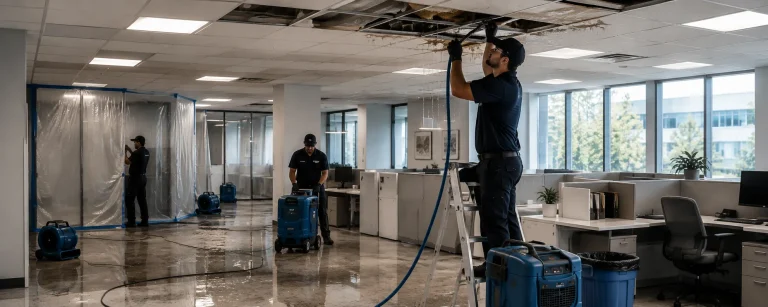
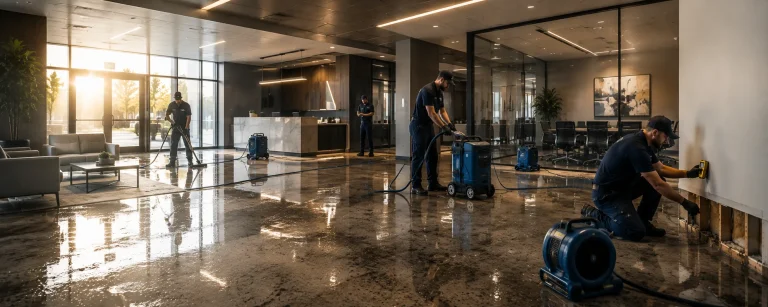
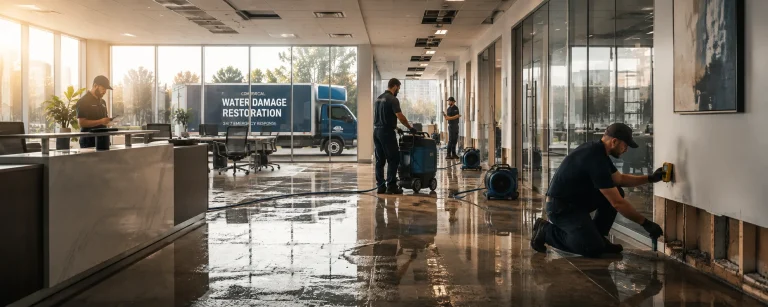
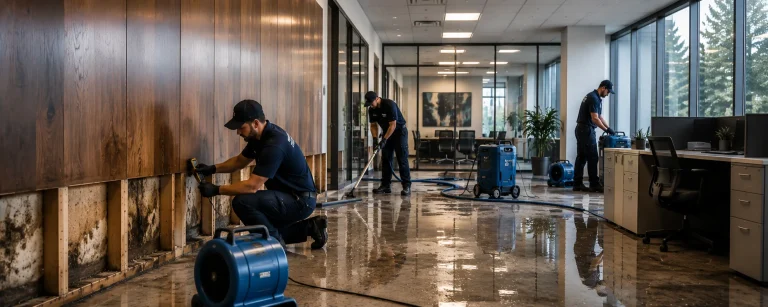
Facility managers are often the first decision-makers called when commercial water damage occurs. Whether responding to a burst pipe, roof leak, sprinkler discharge, flooding event, sewer backup, or HVAC failure, they are responsible for protecting occupants, maintaining building operations, coordinating emergency vendors, and minimizing downtime. Their role extends well beyond cleanup—it involves balancing life safety, operational continuity, asset protection, tenant satisfaction, insurance coordination, and long-term building performance.
Every commercial property presents different challenges. A healthcare campus has different priorities than a warehouse, office tower, hotel, manufacturing plant, or retail center. Despite these differences, facility managers share the same objective: restoring the building safely while reducing operational disruption and protecting long-term property value.
The Facility Manager’s Role
Commercial water damage affects far more than wet floors.
Facility managers often coordinate:
- Emergency response
- Water extraction
- Structural drying
- Building access
- Occupant safety
- Mechanical systems
- Electrical systems
- Fire protection systems
- Elevator operations
- Restoration contractors
- General contractors
- Insurance representatives
- Property management
- Building ownership
Facility managers frequently become the central point of communication throughout the entire restoration process.
The First Few Hours
The earliest decisions often have the greatest impact on the recovery.
Initial priorities may include:
- Protecting occupants
- Stopping the source of water
- Isolating affected utilities
- Securing damaged areas
- Contacting restoration professionals
- Protecting sensitive equipment
- Beginning documentation
- Communicating with stakeholders
Avoid:
✕ Waiting until normal business hours
✕ Allowing water to continue spreading
✕ Assuming only visible materials are affected
✕ Restarting damaged systems without inspection
A well-organized response often reduces restoration costs while shortening business interruption.
Managing Building Systems
Commercial water damage frequently affects multiple building systems at once.
Facility managers commonly evaluate:
— HVAC equipment
— Electrical infrastructure
— Plumbing systems
— Fire suppression systems
— Building automation controls
— Elevators
— Roof drainage
— Interior finishes
— Building envelope performance
— Emergency power systems
Each system influences the others, making coordination essential throughout the recovery process.
Working With Property Managers
Although facility managers and property managers often work together, their responsibilities usually differ.
Property managers typically focus on:
- Tenant communication
- Lease obligations
- Vendor coordination
- Ownership updates
- Occupancy concerns
- Customer service
Facility managers generally concentrate on:
- Building operations
- Mechanical systems
- Life safety
- Utility restoration
- Technical problem solving
- Long-term building performance
Together, both roles help move the property from emergency response toward full operational recovery.
Working With Building Owners
Building owners often evaluate emergencies differently than on-site management teams.
Owners frequently consider:
— Long-term asset value
— Capital expenditures
— Business interruption
— Insurance recovery
— Tenant retention
— Future maintenance costs
— Property performance
— Investment protection
Facility managers provide the technical information owners need to make informed decisions throughout the restoration process.
Insurance Coordination
Facility managers often play an important role during commercial insurance claims.
Typical responsibilities include:
- Providing site access
- Documenting damage
- Recording emergency actions
- Coordinating inspections
- Sharing maintenance records
- Assisting adjusters
- Supporting restoration contractors
- Tracking project progress
Detailed documentation helps create a clear record of the emergency while supporting efficient communication among everyone involved.
Preventing Future Water Damage
Many facility managers use emergency events as opportunities to strengthen building performance.
Long-term planning may include:
- Routine plumbing inspections
- Roof maintenance programs
- HVAC preventive maintenance
- Leak detection technology
- Moisture monitoring
- Waterproofing improvements
- Drainage evaluations
- Emergency response planning
- Vendor partnerships
- Staff training
Preventive maintenance often reduces both emergency frequency and long-term operating costs.
Supporting Business Continuity
Water damage affects more than building materials—it affects people and operations.
Facility managers often balance:
- Employee safety
- Tenant operations
- Customer access
- Equipment protection
- Production schedules
- IT infrastructure
- Inventory preservation
- Regulatory compliance
- Emergency communications
Maintaining business continuity is often just as important as restoring the physical structure.
A Long-Term Perspective
Successful facility management extends beyond responding to emergencies. Every water damage event provides insight into the condition of the building, the reliability of its infrastructure, and opportunities for future improvements. By combining rapid emergency response, organized communication, professional restoration, preventive maintenance, and thoughtful capital planning, facility managers help protect commercial properties throughout their entire lifecycle. Whether overseeing an office tower, hospital, warehouse, manufacturing facility, hotel, retail center, educational campus, or mixed-use development, a proactive facility management strategy supports safer operations, stronger building performance, lower lifecycle costs, and greater resilience against future water damage.
Water Emergency?
Our commercial response team is available 24/7 for water extraction, structural drying and restoration.
Our Services
Talk To A Specialist
Need help with a water loss right now?
Call our commercial team for extraction, drying and restoration planning built around your building and your operations.