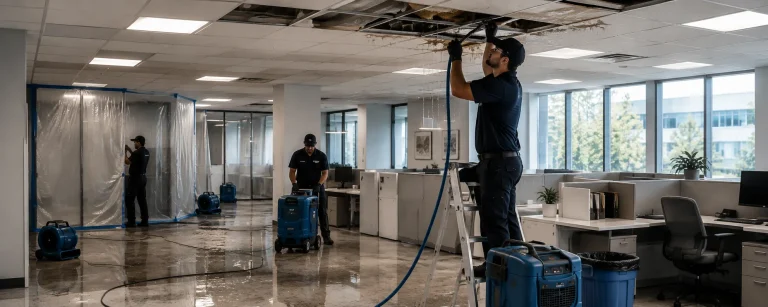
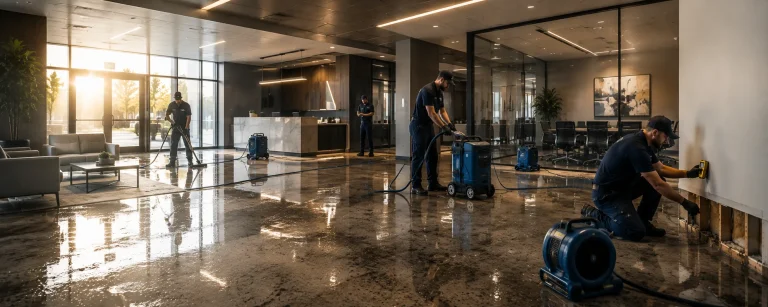
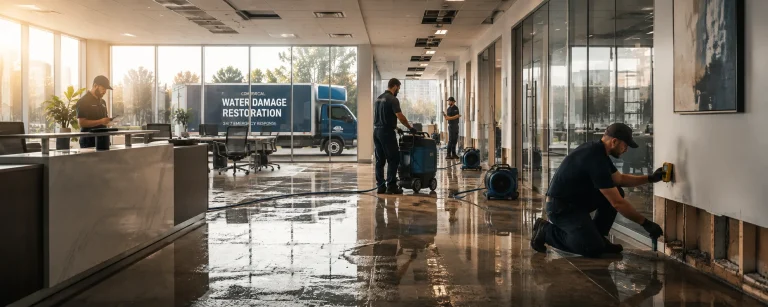
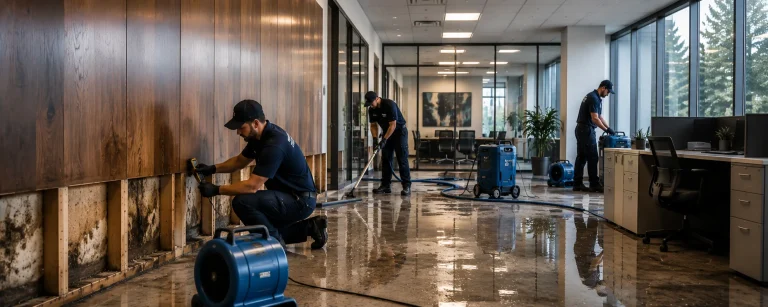
Business continuity is one of the primary objectives during any commercial water damage event. While removing water and repairing the building are important, the larger challenge is keeping businesses operating, protecting employees and customers, minimizing financial losses, and restoring normal operations as quickly as possible. Whether water damage is caused by a burst pipe, flooding, roof leaks, sprinkler system activation, sewer backups, or mechanical equipment failures, every hour of downtime can affect productivity, tenant satisfaction, revenue, and long-term property performance.
Successful business continuity requires more than emergency restoration. It depends on planning, communication, coordination, insurance documentation, and informed decision-making among building owners, facility managers, property managers, tenants, contractors, and restoration professionals.
What Business Continuity Means
Business continuity focuses on keeping critical operations functioning during and after an emergency.
Typical priorities include:
- Employee safety
- Customer access
- Tenant operations
- Critical equipment protection
- IT infrastructure
- Data protection
- Inventory preservation
- Utility restoration
- Temporary workspaces
- Operational recovery
Every organization defines business continuity differently based on its industry, occupancy, and operational requirements.
The Building Owner’s Perspective
Building owners often evaluate business continuity through the long-term performance of the property.
Common priorities include:
— Maintaining occupancy
— Protecting lease income
— Preserving property value
— Limiting business interruption
— Managing repair costs
— Supporting tenant retention
— Protecting long-term investments
— Reducing future operational risk
Owners understand that a prolonged disruption can affect not only repair expenses but also tenant relationships and future leasing opportunities.
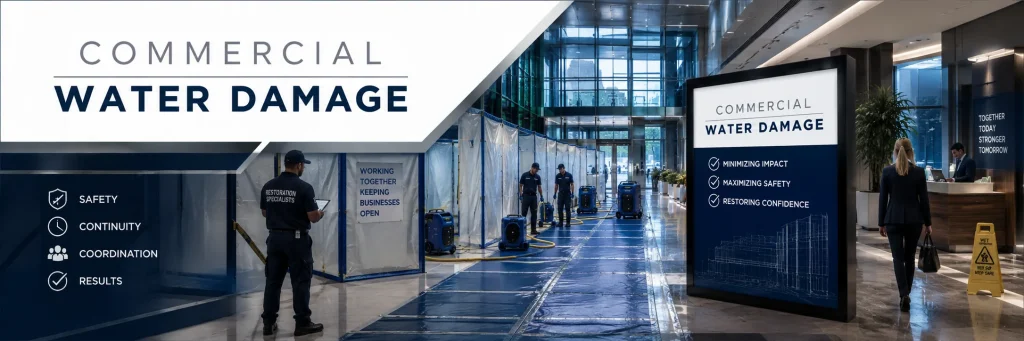
The Property Manager’s Perspective
Property managers often become the primary communication hub during a commercial water emergency.
Responsibilities commonly include:
- Updating tenants
- Coordinating emergency vendors
- Scheduling contractor access
- Communicating with ownership
- Managing occupied spaces
- Coordinating temporary relocations
- Providing restoration updates
- Supporting insurance coordination
Maintaining clear communication helps reduce uncertainty while improving the tenant experience throughout the recovery process.
The Facility Manager’s Perspective
Facility managers focus on restoring building functionality as safely and efficiently as possible.
Primary concerns often include:
- Electrical systems
- HVAC operation
- Plumbing systems
- Fire protection equipment
- Elevator operation
- Building automation systems
- Indoor environmental conditions
- Utility restoration
- Occupant safety
- Operational reliability
Business continuity depends on restoring these critical systems in a logical and coordinated manner.
The Tenant’s Perspective
For commercial tenants, downtime often has immediate financial consequences.
Typical concerns include:
- Employee productivity
- Customer access
- Inventory protection
- Technology systems
- Sensitive equipment
- Manufacturing schedules
- Patient services
- Revenue interruption
- Temporary relocation
- Lease obligations
Quick restoration and consistent communication help businesses resume operations with less disruption.
Insurance and Financial Recovery
Insurance plays an important role in many business continuity strategies.
Documentation often includes:
- Damage photographs
- Emergency response timelines
- Moisture documentation
- Equipment inventories
- Business interruption records
- Restoration progress reports
- Repair estimates
- Contractor documentation
- Building system evaluations
Well-organized documentation helps support communication between property owners, restoration professionals, consultants, adjusters, and insurance carriers throughout the recovery process.
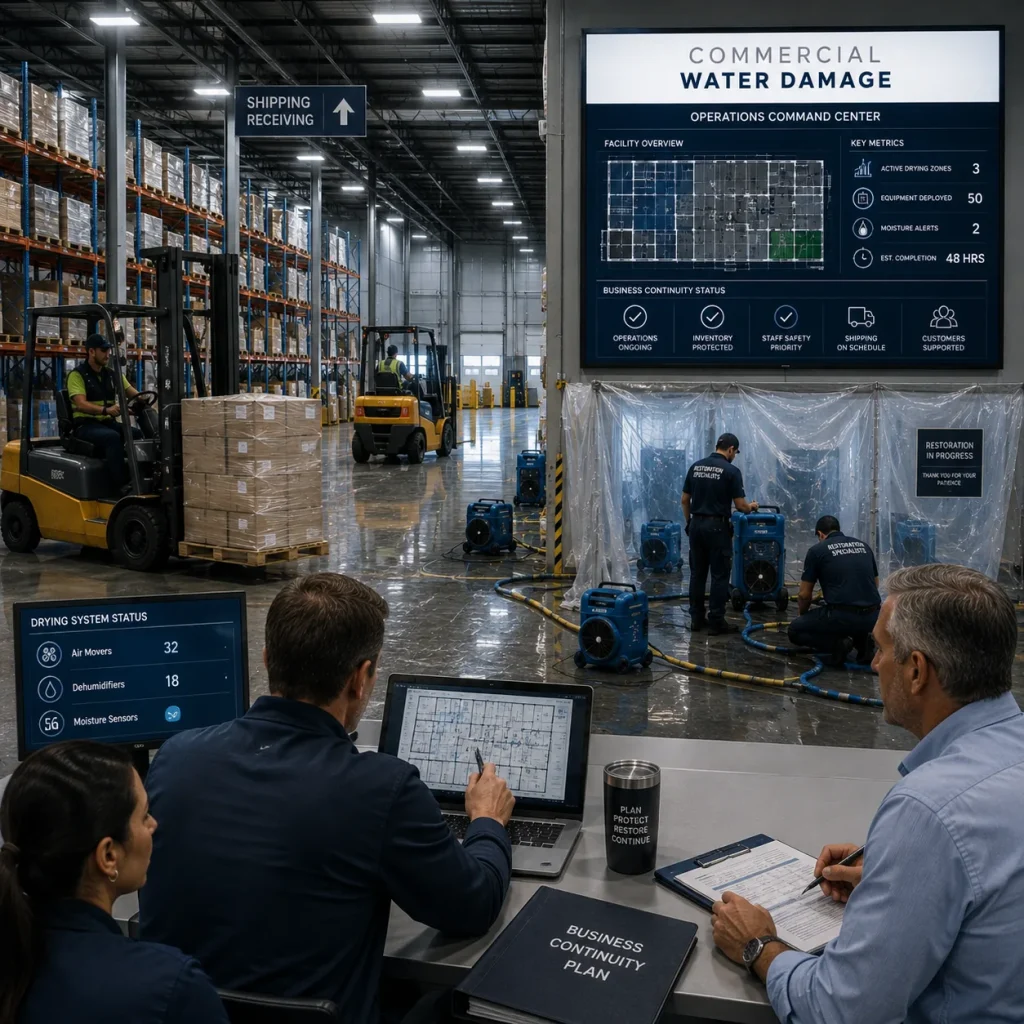
Planning Before an Emergency
Business continuity is most effective when planning occurs before a loss.
Organizations frequently develop:
— Emergency response procedures
— Vendor partnerships
— Contact lists
— Equipment protection plans
— Data backup strategies
— Communication protocols
— Temporary workspace plans
— Disaster recovery procedures
— Facility shutdown procedures
— Business resumption plans
Preparation allows organizations to respond with greater confidence when unexpected events occur.
Recovering More Efficiently
Several actions often help shorten recovery timelines.
Recommended practices include:
- Begin mitigation immediately
- Protect critical equipment
- Document damages thoroughly
- Communicate regularly with stakeholders
- Prioritize occupied spaces
- Monitor structural drying
- Coordinate reconstruction planning
Avoid:
✕ Delaying emergency response
✕ Waiting to notify tenants
✕ Assuming visible damage tells the entire story
✕ Reopening affected areas before proper drying and safety verification
A coordinated response often reduces both operational disruption and long-term restoration costs.
Building Resilience for the Future
Many commercial property owners use water damage events to improve future preparedness.
Long-term improvements may include:
- Leak detection systems
- Preventive maintenance programs
- Plumbing upgrades
- Roof inspections
- Waterproofing improvements
- Drainage enhancements
- Emergency response training
- Building monitoring technology
- Insurance reviews
- Capital improvement planning
Rather than simply restoring the property to its previous condition, many organizations focus on making the building more resilient against future emergencies.
Protecting Operations Through Business Continuity
Business continuity is ultimately about protecting people, operations, and long-term investments during unexpected disruptions. Successful recovery requires coordination between building owners, asset managers, property managers, facility managers, tenants, restoration contractors, engineers, and insurance professionals, each bringing a different perspective to the emergency. By combining rapid mitigation, organized communication, professional restoration, detailed documentation, and proactive planning, commercial properties can reduce downtime, protect revenue, preserve tenant confidence, and strengthen overall building performance long after the immediate water damage has been resolved.