Water emergency? Our commercial crews respond 24/7.
Home / Commercial Water Damage Restoration
Commercial Water Damage Restoration
- 24/7 Response
- Extraction
- Structural Drying
- Restoration
What happens when you call
24/7 dispatch
Call any hour. Crews mobilize for commercial losses, including nights and weekends.
Extraction & drying
Standing water removed, then structural drying with monitored moisture readings.
Insurance-ready records
Readings, photos and scope notes documented for your carrier from day one.
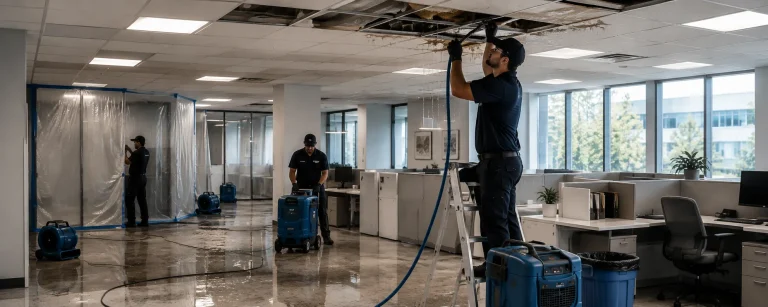
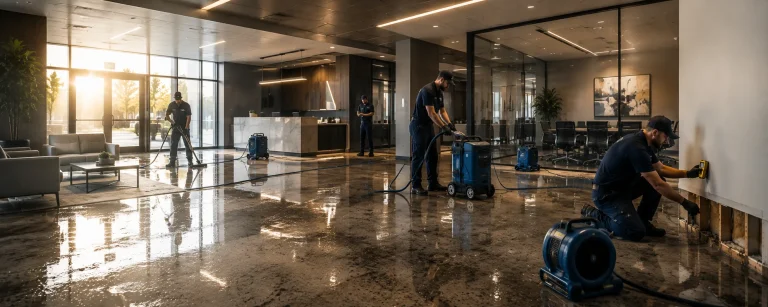
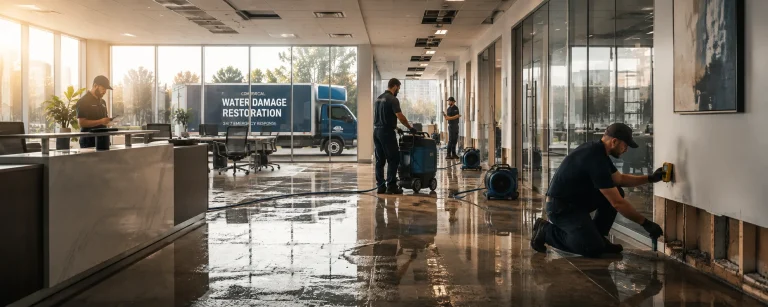
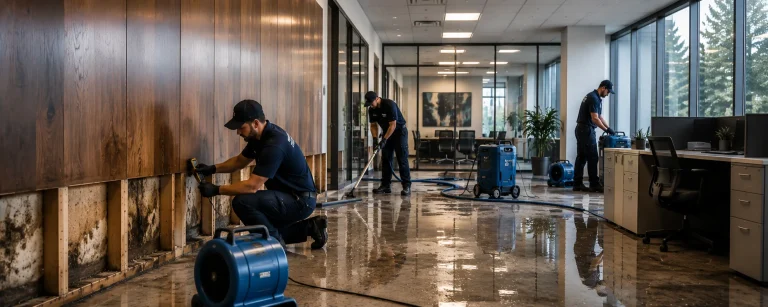
Commercial Water Damage Restoration Protects More Than Buildings
When water enters a commercial property, every minute matters.
Water can quickly spread beneath flooring, inside walls, above ceilings, through mechanical spaces, and into structural components long before visible damage appears. The primary goal of commercial water damage restoration is to stabilize the property, remove excess moisture, and prevent additional damage before permanent repairs begin.
Commercial Water Damage provides educational resources focused on the unique restoration needs of office buildings, retail centers, warehouses, healthcare facilities, industrial properties, hotels, schools, apartment communities, and multi-tenant commercial buildings.
Restoration Comes Before Repair
One of the most common misconceptions is assuming restoration and repair are the same service.
Commercial Water Damage Restoration focuses on protecting the structure:
- Emergency response
- Water extraction
- Moisture mapping
- Structural drying
- Dehumidification
- Air movement
- Contamination control
- Mold prevention
- Documentation
Commercial Water Damage Repair begins after the building has been properly dried:
- Drywall replacement
- Ceiling reconstruction
- Flooring installation
- Painting
- Millwork
- Interior finishes
- Tenant improvements
- Building reconstruction
Attempting repairs before proper drying can create expensive problems months later.
The First 24 to 72 Hours Matter
Water damage continues to evolve after the initial event.
During the first several days, restoration professionals are typically focused on:
- Locating hidden moisture
- Removing standing water
- Stabilizing humidity levels
- Protecting unaffected areas
- Salvaging materials when appropriate
- Monitoring drying progress
- Documenting conditions for insurance
Fast action often reduces repair costs and shortens recovery time.
Every Commercial Property Presents Different Challenges
No two restoration projects are identical.
Building type, occupancy, construction methods, and business operations all influence the restoration strategy.
Examples include:
- Corporate offices
- Medical facilities
- Retail centers
- Restaurants
- Manufacturing plants
- Distribution warehouses
- Educational campuses
- Hospitality properties
Each environment has different operational priorities, safety requirements, and scheduling concerns.
Restoring Occupied Commercial Buildings
Many commercial properties remain occupied throughout the restoration process.
That creates additional planning requirements beyond simply drying the building.
Commercial restoration teams often coordinate:
- Temporary containment systems
- Safe access routes
- Noise reduction
- Dust control
- Off-hour scheduling
- Weekend restoration activities
- Tenant communication
- Building security
- Business continuity planning
The objective is to restore the property while minimizing interruptions to daily operations whenever possible.
Hidden Moisture Is Often the Biggest Threat
Visible water represents only part of the problem.
Moisture frequently migrates into:
- Wall cavities
- Ceiling assemblies
- Structural framing
- Floor systems
- Insulation
- Elevator shafts
- Mechanical rooms
- Utility chases
Professional moisture mapping and ongoing monitoring help determine when the building is actually dry—not simply when surfaces appear dry.
Understanding the Drying Process
Commercial structural drying is a controlled process, not simply placing fans throughout a building.
Restoration plans may include:
- Commercial-grade dehumidifiers
- High-volume air movers
- Moisture monitoring equipment
- Thermal imaging
- Hygrometers
- Daily moisture readings
- Equipment adjustments
- Target drying goals
Drying strategies change as moisture levels decline, helping restore building materials safely and efficiently.
Large Loss Restoration Requires Coordination
Large commercial water losses involve many moving parts.
Property owners often work alongside:
- Restoration contractors
- General contractors
- Insurance adjusters
- Consultants
- Engineers
- Property managers
- Facility managers
- Building ownership
Keeping everyone informed is often just as important as the physical restoration work itself.
Insurance Documentation Matters
Commercial restoration generates valuable documentation throughout the project.
Typical records may include:
- Moisture readings
- Daily equipment logs
- Drying reports
- Progress photographs
- Material inventories
- Scope documentation
- Restoration timelines
- Environmental monitoring
Accurate documentation helps demonstrate the condition of the property and supports communication among all project stakeholders.
Questions Commercial Decision-Makers Should Ask
Before selecting a restoration company, consider discussing:
- How will drying progress be verified?
- What technology is used to detect hidden moisture?
- How often will moisture readings be taken?
- Can restoration occur while the building remains occupied?
- How are tenants kept informed?
- What documentation will be provided?
- How is equipment placement managed?
- How are unaffected areas protected?
- What happens if additional damage is discovered?
- When can reconstruction safely begin?
These questions often have a significant impact on the success of the overall recovery.
Restoration Is About Long-Term Building Performance
Effective restoration is designed to protect the building long after the equipment has been removed.
Successful projects help preserve:
- Structural integrity
- Indoor air quality
- Occupant health
- Tenant confidence
- Building operations
- Asset value
- Maintenance budgets
- Future property performance
Proper restoration creates the foundation for successful repairs and long-term building reliability.
Why Commercial Water Damage Focuses on Restoration Education
Commercial water losses involve much more than removing water.
Commercial Water Damage provides educational resources that help facility managers, property managers, building owners, general contractors, and commercial decision-makers better understand restoration planning, moisture management, insurance coordination, occupant safety, and long-term recovery strategies.
Whether responding to a localized plumbing failure or a large catastrophic loss, informed restoration planning helps reduce downtime, protect valuable assets, and support a more efficient return to normal operations.
Water Emergency?
Our commercial response team is available 24/7 for water extraction, structural drying and restoration.
Our Services
Talk To A Specialist
Need help with a water loss right now?
Call our commercial team for extraction, drying and restoration planning built around your building and your operations.