Water emergency? Our commercial crews respond 24/7.
Home / Commercial Water Damage Cleanup
Commercial Water Damage Cleanup
- 24/7 Response
- Extraction
- Structural Drying
- Restoration
What happens when you call
24/7 dispatch
Call any hour. Crews mobilize for commercial losses, including nights and weekends.
Extraction & drying
Standing water removed, then structural drying with monitored moisture readings.
Insurance-ready records
Readings, photos and scope notes documented for your carrier from day one.
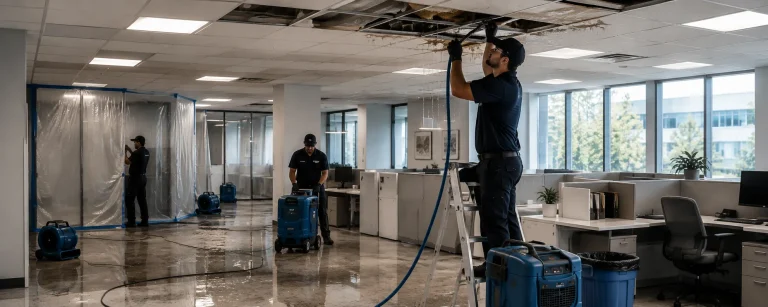
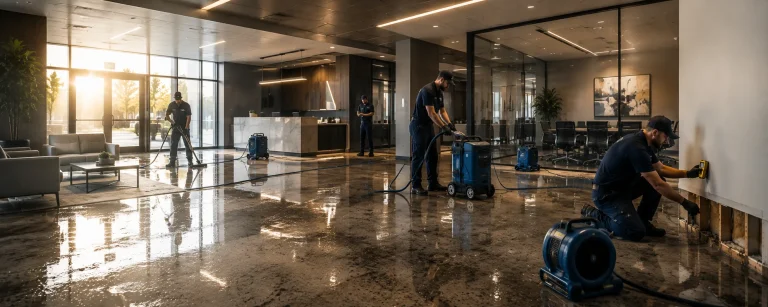
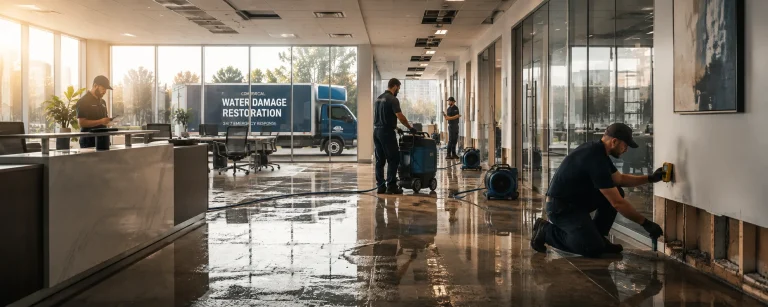
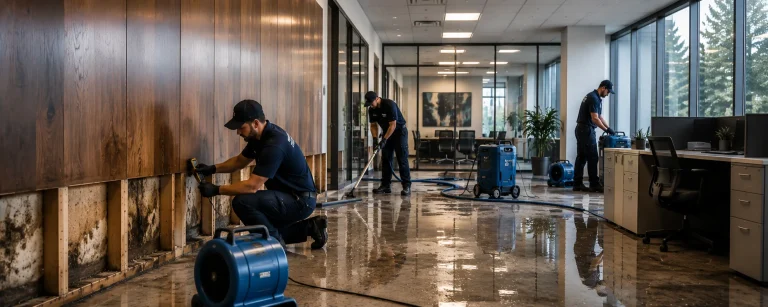
Commercial Water Damage Cleanup Starts the Recovery Process
The first priority after a commercial water loss is protecting people, stabilizing the property, and preventing additional damage.
Commercial water damage cleanup involves much more than removing standing water. It requires evaluating affected materials, controlling moisture, identifying potential contamination, documenting conditions, and preparing the building for restoration and eventual repairs.
Commercial Water Damage provides educational resources that help facility managers, property managers, building owners, and general contractors better understand the cleanup process from the first emergency response through long-term recovery.
Cleanup, Restoration, and Repair Are Different Phases
Many commercial property owners use these terms interchangeably, but each serves a different purpose.
Cleanup focuses on the immediate response:
- Removing standing water
- Protecting unaffected areas
- Removing damaged debris
- Initial sanitation
- Beginning moisture control
Restoration focuses on drying and stabilizing the building:
- Structural drying
- Moisture mapping
- Dehumidification
- Environmental monitoring
- Mold prevention
Repair restores the building to its intended condition:
- Drywall replacement
- Flooring installation
- Ceiling systems
- Interior finishes
- Painting
- Reconstruction
Understanding these phases helps commercial projects move more efficiently.
Fast Cleanup Reduces Long-Term Costs
Water doesn’t stay where it first appears.
It migrates beneath flooring, inside wall cavities, above suspended ceilings, through insulation, and into structural components.
Prompt cleanup can help reduce:
- Material replacement
- Business interruption
- Mold risk
- Structural deterioration
- Equipment damage
- Tenant complaints
- Future maintenance issues
The sooner cleanup begins, the more options property owners often have.
Commercial Buildings Present Unique Challenges
Unlike residential properties, commercial buildings frequently remain active during cleanup.
Property teams may need to balance:
- Employee safety
- Customer access
- Tenant operations
- Security requirements
- Loading docks
- Shared common areas
- Elevators
- Mechanical systems
- Daily business activity
Cleanup planning should account for both the building and the people who continue using it.
Controlling the Spread of Damage
Water rarely affects only one room.
Cleanup efforts often include isolating affected areas to prevent additional damage throughout the property.
Common protective measures include:
- Temporary containment barriers
- Floor protection
- Dust control
- Equipment staging
- Controlled work zones
- Moisture monitoring
- Safe pedestrian routes
- Debris management
Limiting the spread of damage can significantly improve the overall recovery process.
Large Commercial Cleanup Projects
Major commercial losses often require extensive coordination.
Projects may involve:
- Multiple tenant spaces
- Several building floors
- Mechanical rooms
- Electrical systems
- Parking structures
- Loading areas
- Shared corridors
- Common amenities
Large-loss cleanup is often managed in phases so portions of the property can continue operating whenever practical.
Occupied Buildings Require Careful Planning
Closing an entire commercial property isn’t always possible.
Many cleanup projects are completed while businesses continue serving customers or employees.
Planning may include:
- Evening work schedules
- Weekend operations
- Quiet work zones
- Temporary entrances
- Occupant communication
- Equipment relocation
- Phased cleanup strategies
- Daily progress updates
Reducing operational disruption is often just as important as removing the water itself.
Questions Commercial Owners Should Consider
Before cleanup begins, property teams may want to ask:
- How quickly can cleanup begin?
- Which building areas require immediate attention?
- What materials can realistically be saved?
- How will moisture be monitored?
- How will tenants remain informed?
- What documentation is being created?
- How is contaminated material handled?
- What happens after cleanup is complete?
Asking these questions early often leads to smoother project management.
Documentation Throughout the Cleanup Process
Commercial cleanup generates valuable information that helps guide the remainder of the project.
Documentation often includes:
- Initial damage assessments
- Moisture readings
- Daily photographs
- Equipment logs
- Material inventories
- Progress reports
- Safety observations
- Insurance documentation
Well-organized records improve communication among contractors, ownership, insurance representatives, and property managers.
Cleanup Is Only the Beginning
Removing water is only one step in recovering a commercial property.
After cleanup, many projects continue with:
- Structural drying
- Environmental monitoring
- Restoration
- Repairs
- Interior reconstruction
- Final inspections
- Preventive maintenance planning
Each phase builds upon the one before it to help restore safe and reliable building operations.
Why Commercial Water Damage Focuses on Commercial Cleanup
Commercial cleanup involves far more than extracting water.
Commercial Water Damage provides educational resources that help commercial property owners, facility managers, property managers, building engineers, and general contractors understand emergency response, cleanup planning, restoration strategies, insurance coordination, tenant communication, and long-term building recovery.
Whether responding to a localized plumbing leak or a large catastrophic event, effective cleanup creates the foundation for a faster, safer, and more organized recovery process.
Water Emergency?
Our commercial response team is available 24/7 for water extraction, structural drying and restoration.
Our Services
Talk To A Specialist
Need help with a water loss right now?
Call our commercial team for extraction, drying and restoration planning built around your building and your operations.