Water emergency? Our commercial crews respond 24/7.
Home / Commercial Water Extraction
Commercial Water Extraction
- 24/7 Response
- Extraction
- Structural Drying
- Restoration
What happens when you call
24/7 dispatch
Call any hour. Crews mobilize for commercial losses, including nights and weekends.
Extraction & drying
Standing water removed, then structural drying with monitored moisture readings.
Insurance-ready records
Readings, photos and scope notes documented for your carrier from day one.
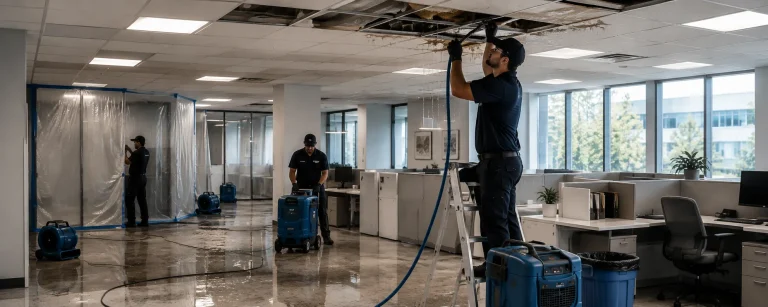
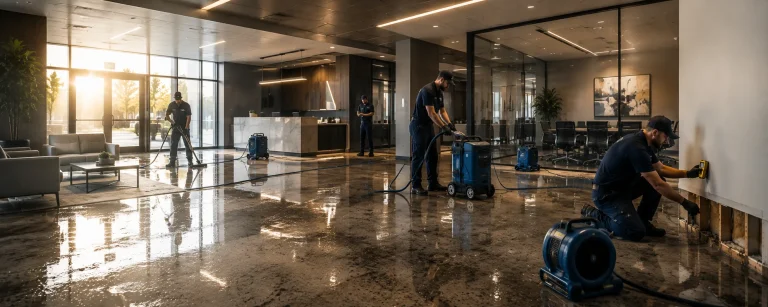
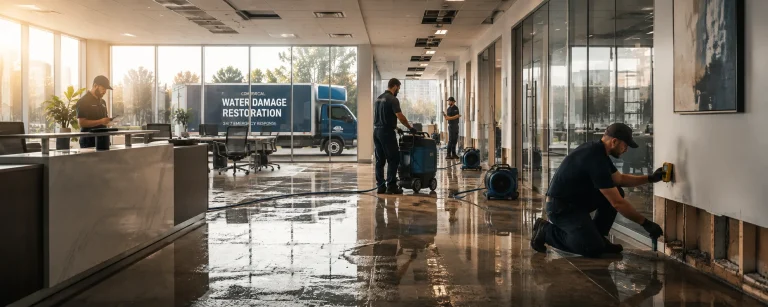
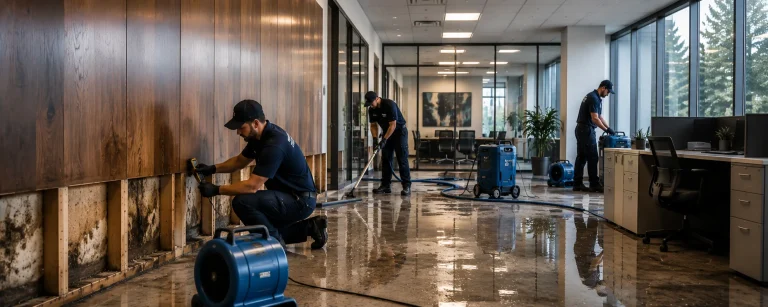
Commercial Water Extraction Is the First Critical Step
Standing water can cause significant damage long before visible signs appear throughout a commercial building.
Water begins migrating immediately into flooring systems, wall cavities, insulation, structural framing, elevator shafts, and mechanical spaces. The purpose of commercial water extraction is to remove as much water as possible before the drying and restoration process begins.
Commercial Water Damage provides educational resources to help facility managers, property managers, building owners, and general contractors understand how water extraction fits into the overall recovery process.
Water Extraction vs. Water Removal
Although the terms sound similar, commercial projects often involve much more than simply pumping out water.
Commercial water extraction may include:
- Removing standing water
- Extracting water from carpeting and flooring
- Recovering water from wall cavities
- Removing water trapped beneath flooring systems
- Protecting unaffected building areas
- Preparing the property for structural drying
The objective is to reduce the amount of moisture that remains inside the building before restoration begins.
Where Water Travels Inside Commercial Buildings
Water rarely stays in one location.
Depending on the building, it may migrate through:
- Carpet and carpet padding
- Luxury vinyl flooring
- Concrete slabs
- Wall assemblies
- Ceiling systems
- Structural steel
- Wood framing
- Elevator pits
- Electrical rooms
- Mechanical equipment spaces
Because commercial buildings contain interconnected systems, water often spreads much farther than occupants initially realize.
Common Commercial Water Losses
Commercial extraction is frequently required after:
- Burst water lines
- Roof leaks
- Fire sprinkler activations
- HVAC condensate failures
- Sewer backups
- Appliance and equipment leaks
- Storm flooding
- Overflowing restrooms
- Mechanical room failures
Each situation presents different challenges depending on the amount of water, contamination level, and building occupancy.
Large Commercial Water Losses
Large-loss projects often involve thousands of square feet across multiple areas of a property.
Planning may include:
- Multiple extraction crews
- Large-capacity extraction equipment
- Multi-floor coordination
- Equipment staging
- Safety planning
- Occupied tenant spaces
- Continuous moisture monitoring
- Insurance documentation
Large commercial buildings typically require a coordinated approach that balances emergency response with ongoing business operations.
Working Around Occupied Buildings
Many commercial properties cannot temporarily close during recovery.
Extraction plans may be designed around:
- Office hours
- Retail traffic
- Hospital operations
- Manufacturing schedules
- School activities
- Hotel guests
- Tenant access
- Loading dock operations
Careful scheduling helps reduce disruptions while allowing water removal to begin as quickly as possible.
Water Extraction Supports Structural Drying
Extraction alone does not completely dry a building.
Once standing water has been removed, restoration generally continues with:
- Moisture mapping
- Commercial dehumidification
- Air movement
- Daily moisture monitoring
- Structural drying
- Humidity control
- Verification testing
Removing bulk water first allows drying equipment to work more efficiently throughout the remainder of the project.
Questions Commercial Property Owners Should Ask
Before water extraction begins, consider discussing:
- How much water has actually entered the structure?
- Which building materials are most affected?
- Has hidden moisture been evaluated?
- Can occupied areas remain operational?
- How will equipment placement affect tenants?
- What documentation will be provided?
- How long is extraction expected to take?
- When can drying begin?
- What additional restoration work may follow?
These discussions help establish realistic expectations during the earliest phase of recovery.
Documentation Throughout the Extraction Process
Commercial projects often require detailed records from the very beginning.
Typical documentation may include:
- Initial site assessments
- Water source identification
- Moisture measurements
- Photographic documentation
- Equipment usage
- Daily progress updates
- Building observations
- Insurance support records
Accurate documentation improves communication between property owners, restoration teams, contractors, and insurance representatives.
Extraction Is Only One Phase of Recovery
Commercial water extraction helps stabilize the property, but it represents only the beginning of the recovery process.
Most projects continue with:
- Structural drying
- Environmental monitoring
- Water damage restoration
- Building repairs
- Interior reconstruction
- Final inspections
- Long-term preventive maintenance
Each phase builds on the success of the previous one to restore the property safely and efficiently.
Why Commercial Water Damage Focuses on Water Extraction
Commercial water extraction plays a vital role in protecting buildings, reducing long-term damage, and preparing commercial properties for successful restoration.
Commercial Water Damage provides educational resources that help facility managers, property managers, building owners, developers, and commercial contractors better understand extraction methods, moisture management, business continuity planning, insurance coordination, and long-term property performance.
Whether responding to a localized plumbing leak or a major flood affecting an entire facility, informed extraction planning helps create a faster, safer, and more organized recovery.
Water Emergency?
Our commercial response team is available 24/7 for water extraction, structural drying and restoration.
Our Services
Talk To A Specialist
Need help with a water loss right now?
Call our commercial team for extraction, drying and restoration planning built around your building and your operations.