Water emergency? Our commercial crews respond 24/7.
Home / Commercial Water Mitigation
Commercial Water Mitigation
- 24/7 Response
- Extraction
- Structural Drying
- Restoration
What happens when you call
24/7 dispatch
Call any hour. Crews mobilize for commercial losses, including nights and weekends.
Extraction & drying
Standing water removed, then structural drying with monitored moisture readings.
Insurance-ready records
Readings, photos and scope notes documented for your carrier from day one.
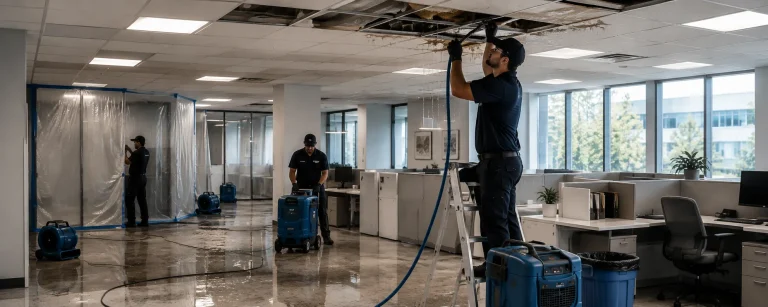
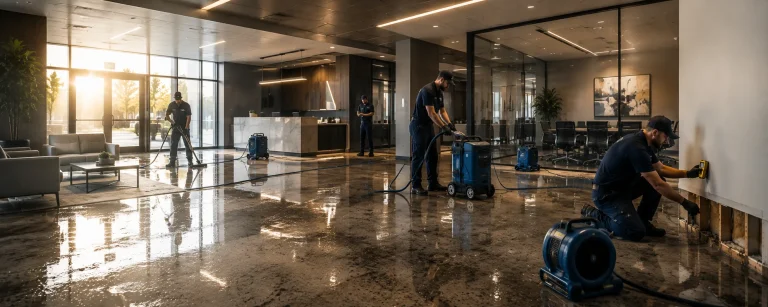
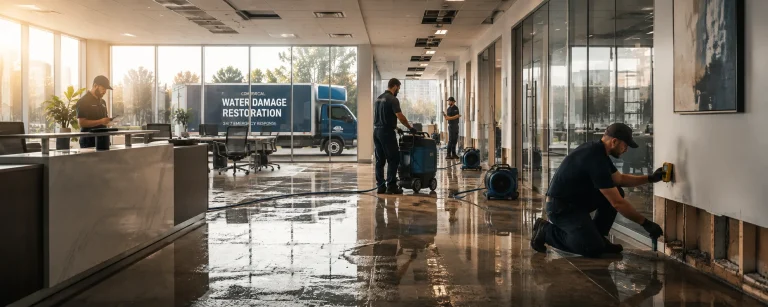
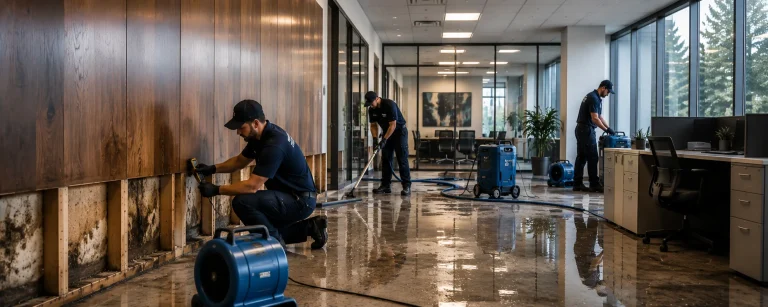
Commercial Water Mitigation Helps Limit Damage Before It Grows
A water loss doesn’t stop when the leak is repaired.
Moisture continues moving through building materials, humidity rises, and damage can spread into areas that were never directly exposed to water. Commercial water mitigation focuses on reducing those risks as quickly as possible while protecting the building and supporting future restoration efforts.
Commercial Water Damage provides educational resources designed for facility managers, property managers, building owners, developers, and general contractors who need to make informed decisions during commercial water loss events.
What Is Commercial Water Mitigation?
Mitigation refers to the immediate actions taken to reduce additional damage after a water intrusion.
Typical mitigation activities include:
- Emergency response
- Water extraction
- Temporary leak control
- Moisture mapping
- Structural drying
- Dehumidification
- Protecting unaffected areas
- Initial documentation
The objective is simple: stabilize the property and prevent the loss from becoming larger and more expensive.
Mitigation vs. Restoration vs. Repair
Although closely connected, each phase has a different purpose.
Mitigation focuses on limiting further damage.
- Removing standing water
- Controlling moisture
- Protecting building contents
- Stabilizing affected areas
Restoration focuses on returning the structure to a dry, safe condition.
- Structural drying
- Moisture monitoring
- Environmental control
- Cleaning and sanitizing
Repair restores damaged building materials.
- Drywall
- Flooring
- Ceilings
- Interior finishes
- Painting
- Reconstruction
Understanding these differences helps commercial projects progress more efficiently from emergency response to final completion.
Commercial Buildings Require Faster Decision-Making
Unlike many residential properties, commercial buildings often support ongoing business operations.
Mitigation planning may involve:
- Office buildings
- Medical facilities
- Retail centers
- Industrial plants
- Hotels
- Schools
- Warehouses
- Multi-tenant properties
Every hour of delay can increase operational disruption, tenant concerns, and financial losses.
Protecting Occupied Commercial Spaces
Many commercial properties remain occupied during mitigation efforts.
Planning frequently includes:
- Establishing temporary work zones
- Maintaining emergency exits
- Protecting public walkways
- Reducing noise whenever possible
- Controlling dust and humidity
- Coordinating after-hours work
- Communicating with tenants
- Maintaining building security
Effective mitigation helps businesses continue operating while recovery begins.
Moisture Moves Beyond Visible Damage
One of the greatest challenges after a commercial water loss is the moisture that cannot be seen.
Hidden moisture may collect inside:
- Wall cavities
- Floor systems
- Ceiling plenums
- Insulation
- Structural framing
- Mechanical rooms
- Utility chases
- Elevator shafts
Without proper evaluation, these areas may continue deteriorating long after visible water disappears.
Large Loss Mitigation Requires Coordination
Major commercial losses often involve multiple stakeholders working together.
Projects may require coordination between:
- Property ownership
- Facility managers
- Restoration contractors
- General contractors
- Insurance adjusters
- Engineers
- Building occupants
- Local authorities
Clear communication often determines how efficiently a large commercial project moves forward.
Documentation Is Part of Mitigation
Good documentation begins immediately after the loss occurs.
Records commonly include:
- Initial inspections
- Moisture readings
- Water source identification
- Daily progress reports
- Equipment logs
- Photographs
- Material inventories
- Drying documentation
These records help guide restoration planning while supporting communication among everyone involved.
Questions Commercial Property Owners Should Ask
Before mitigation begins, consider discussing:
- Has the water source been completely controlled?
- Which building systems require immediate attention?
- How will hidden moisture be identified?
- What areas should be isolated first?
- Can the building remain operational?
- What documentation will be available?
- How will progress be monitored?
- When can reconstruction safely begin?
- How will tenants receive project updates?
Asking these questions early often leads to better planning and fewer surprises throughout the recovery process.
Mitigation Protects Long-Term Property Performance
Commercial water mitigation is about much more than responding to an emergency.
It helps preserve:
- Structural integrity
- Indoor air quality
- Occupant safety
- Tenant satisfaction
- Building operations
- Asset value
- Equipment performance
- Long-term maintenance planning
Reducing additional damage during the earliest stages of a project often improves every phase that follows.
Why Commercial Water Damage Focuses on Water Mitigation
Commercial water losses require thoughtful planning, timely action, and coordinated decision-making.
Commercial Water Damage provides educational resources that help commercial property owners understand mitigation strategies, moisture control, business continuity planning, restoration processes, insurance coordination, and long-term building recovery.
Whether the loss involves a burst pipe, storm damage, sprinkler discharge, or a major flood, effective mitigation creates the foundation for a safer, more efficient, and more successful commercial recovery.
Water Emergency?
Our commercial response team is available 24/7 for water extraction, structural drying and restoration.
Our Services
Talk To A Specialist
Need help with a water loss right now?
Call our commercial team for extraction, drying and restoration planning built around your building and your operations.