Water emergency? Our commercial crews respond 24/7.
Home / Commercial Restoration Contractor
Commercial Restoration Contractor
- 24/7 Response
- Extraction
- Structural Drying
- Restoration
What happens when you call
24/7 dispatch
Call any hour. Crews mobilize for commercial losses, including nights and weekends.
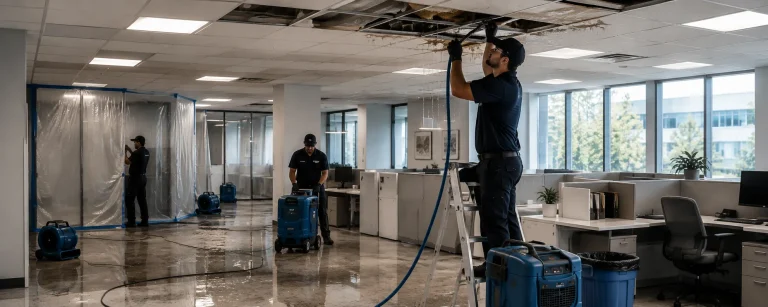
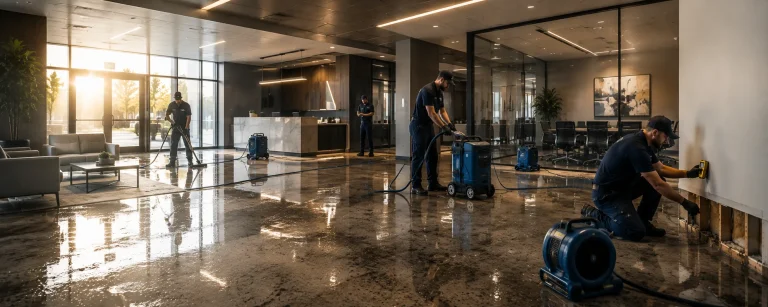
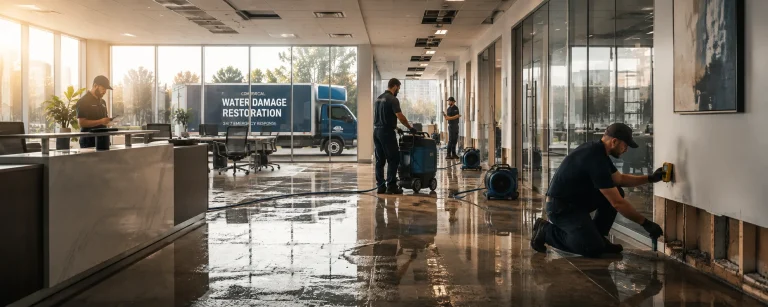
Extraction & drying
Standing water removed, then structural drying with monitored moisture readings.
Insurance-ready records
Readings, photos and scope notes documented for your carrier from day one.
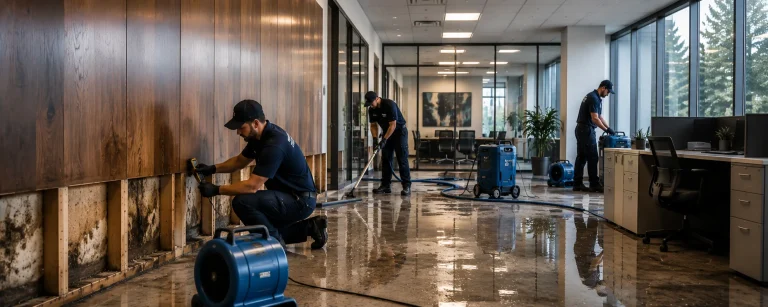
Choosing the Right Commercial Restoration Contractor
When a commercial property experiences water damage, fire damage, storm damage, or another unexpected event, selecting the right restoration contractor can influence every stage of the recovery process.
Commercial projects often involve occupied buildings, multiple stakeholders, insurance requirements, scheduling challenges, and business continuity concerns. A commercial restoration contractor must coordinate more than construction—they must help keep a complex project moving forward.
Commercial Water Damage provides educational resources to help facility managers, property managers, building owners, developers, and general contractors better understand what to look for when evaluating commercial restoration professionals.
Commercial Restoration Is Different
Commercial restoration requires planning beyond the physical repairs.
Projects frequently involve:
- Multi-tenant buildings
- Active businesses
- Public access
- Building codes
- Large project teams
- Insurance coordination
- Phased construction
- Ongoing facility operations
The larger and more complex the property, the more important communication and coordination become.
What Does a Commercial Restoration Contractor Do?
Depending on the project, restoration contractors may coordinate or perform work such as:
- Emergency response
- Water extraction
- Damage mitigation
- Structural drying
- Debris removal
- Cleaning and sanitation
- Temporary protection
- Moisture monitoring
- Reconstruction planning
- Project documentation
Every project is different, and the scope of work depends on the type and severity of the loss.
Beyond Water Damage
Commercial restoration contractors may respond to a variety of property emergencies.
Common examples include:
- Water damage
- Flood damage
- Fire damage
- Smoke damage
- Storm damage
- Wind damage
- Sewer backups
- Mold remediation
- Structural emergencies
Many commercial losses involve several of these issues at the same time.
Coordinating Occupied Buildings
One of the biggest differences between residential and commercial restoration is maintaining normal operations whenever possible.
Planning may include:
- Temporary work zones
- Safe pedestrian access
- Tenant communication
- Evening or weekend scheduling
- Noise management
- Dust containment
- Equipment staging
- Security coordination
Successful projects often balance recovery efforts with the daily needs of employees, customers, and tenants.
Large Loss Projects Require Organization
Commercial restoration projects frequently involve multiple companies working together.
Coordination may include:
- Building ownership
- Facility management
- Property management
- Insurance adjusters
- Engineers
- Architects
- Specialty subcontractors
- General contractors
- Building occupants
Keeping these groups informed often helps reduce delays and improve project efficiency.
Questions to Ask Before Hiring a Commercial Restoration Contractor
Every commercial property is different, but these questions can help guide conversations.
- How are large commercial projects managed?
- Can occupied buildings remain operational?
- How is hidden moisture identified?
- What documentation is provided?
- How are project updates communicated?
- How is tenant disruption minimized?
- What happens if additional damage is discovered?
- How is work coordinated with insurance representatives?
- What is the transition from restoration to repairs?
The answers often reveal how a project will be managed long before construction begins.
Documentation Matters
Commercial restoration projects typically generate extensive documentation throughout the recovery process.
Documentation may include:
- Initial assessments
- Moisture readings
- Daily progress reports
- Equipment logs
- Project photographs
- Drying verification
- Material inventories
- Insurance support records
Accurate records help improve communication between property owners, contractors, consultants, and insurance representatives.
Long-Term Recovery Planning
Commercial restoration should focus on more than returning a building to service.
Recovery planning may also help improve:
- Building performance
- Indoor air quality
- Occupant safety
- Operational efficiency
- Tenant confidence
- Asset preservation
- Maintenance planning
- Future emergency preparedness
A successful project supports both immediate recovery and long-term property performance.
The Value of Experience in Commercial Projects
Commercial restoration often requires balancing technical knowledge with project management.
Every decision can affect:
- Business interruption
- Construction scheduling
- Lease obligations
- Occupant safety
- Building systems
- Insurance timelines
- Long-term maintenance
- Property value
A well-managed project helps protect both the physical structure and the organizations operating inside it.
Why Commercial Water Damage Focuses on Commercial Restoration
Commercial restoration involves much more than repairing damage.
Commercial Water Damage provides educational resources that help commercial property owners, facility managers, property managers, developers, and general contractors better understand restoration planning, contractor selection, business continuity, insurance coordination, moisture management, and long-term building recovery.
Whether responding to a localized plumbing failure or a major catastrophe affecting an entire facility, selecting the right commercial restoration contractor helps create the foundation for a safer, more organized, and more successful recovery.
Water Emergency?
Our commercial response team is available 24/7 for water extraction, structural drying and restoration.
Our Services
Talk To A Specialist
Need help with a water loss right now?
Call our commercial team for extraction, drying and restoration planning built around your building and your operations.