Water emergency? Our commercial crews respond 24/7.
Home / Commercial Roof Leak Damage
Commercial Roof Leak Damage
- 24/7 Response
- Extraction
- Structural Drying
- Restoration
What happens when you call
24/7 dispatch
Call any hour. Crews mobilize for commercial losses, including nights and weekends.
Extraction & drying
Standing water removed, then structural drying with monitored moisture readings.
Insurance-ready records
Readings, photos and scope notes documented for your carrier from day one.
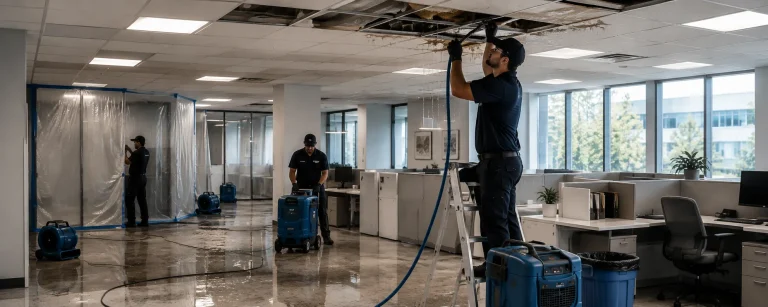
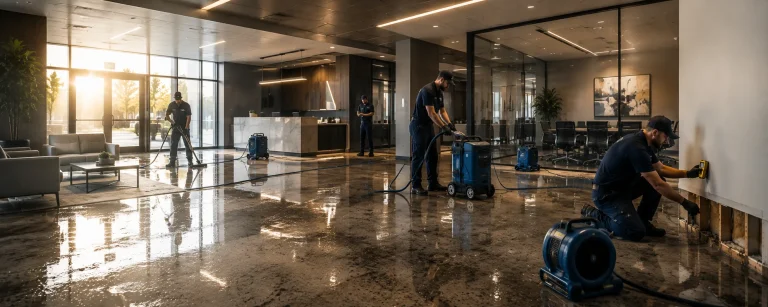
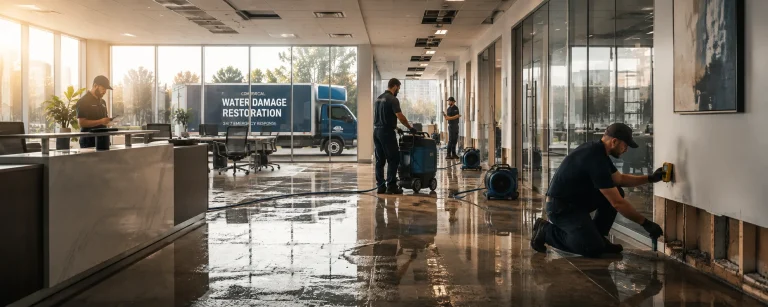
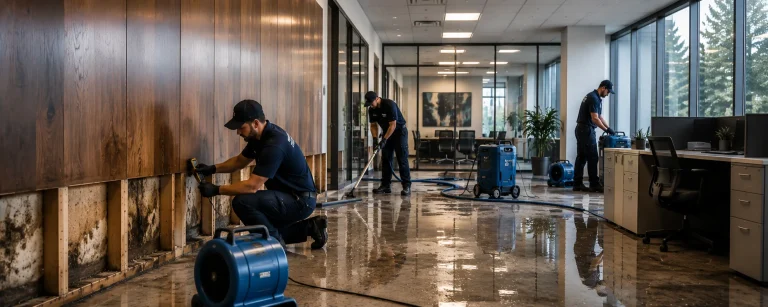
Commercial Roof Leak Damage Often Starts Small
Many commercial roof leaks begin with a small amount of water entering the building.
By the time stained ceiling tiles or dripping water become visible, moisture may have already traveled through insulation, structural components, electrical systems, ceiling spaces, and interior finishes. What appears to be a minor leak can quickly become a much larger property issue if not properly evaluated.
Commercial Water Damage provides educational resources that help facility managers, property managers, building owners, and commercial decision-makers understand the unique challenges associated with commercial roof leak damage.
Commercial Roofs Behave Differently Than Residential Roofs
Commercial roofing systems are designed very differently than residential roofs.
Common commercial roof types include:
- TPO roofing systems
- EPDM roofing
- PVC roofing
- Modified bitumen
- Built-up roofing (BUR)
- Metal roofing systems
- Coating systems
- Low-slope and flat roofs
Each system has different drainage patterns, maintenance requirements, and potential leak points.
Common Causes of Commercial Roof Leaks
Roof leaks can develop for many reasons.
Some of the most common include:
- Aging roofing materials
- Storm damage
- Wind-driven rain
- Damaged flashing
- Clogged roof drains
- HVAC rooftop equipment
- Expansion joints
- Skylights
- Roof penetrations
- Deferred maintenance
In many cases, water enters the building in one location but becomes visible somewhere entirely different.
Water Travels Far Beyond the Leak
One of the biggest challenges with commercial roof leaks is hidden moisture movement.
Water may spread through:
- Ceiling cavities
- Wall assemblies
- Insulation
- Structural steel
- Concrete decks
- Electrical pathways
- Mechanical rooms
- Tenant spaces
Finding the entry point is only one part of understanding the full extent of the damage.
Roof Leaks Can Affect Business Operations
Commercial roof damage is often more than a maintenance issue.
Property teams may need to address:
- Employee safety
- Customer access
- Inventory protection
- Computer equipment
- Manufacturing operations
- Healthcare services
- Retail displays
- Tenant satisfaction
Even relatively small leaks can disrupt normal business activities if they occur in critical areas of the building.
Large Commercial Properties Require Coordinated Response
Roof leaks affecting larger facilities often involve multiple departments and decision-makers.
Projects may include coordination between:
- Building ownership
- Facility managers
- Property managers
- Roofing contractors
- Restoration professionals
- Insurance representatives
- Engineers
- Building occupants
Working together helps reduce delays and keeps recovery efforts organized.
Water Damage Doesn’t End When the Rain Stops
Once water enters the building, the recovery process continues even after the weather improves.
Property teams may evaluate:
- Standing water
- Moisture migration
- Structural drying
- Ceiling damage
- Insulation performance
- Electrical safety
- Indoor air quality
- Restoration planning
Addressing only the visible leak may overlook moisture hidden inside the building envelope.
Questions Property Owners Should Ask
Commercial roof leak events often raise important questions.
Consider discussing:
- Where did the water actually enter?
- How far has moisture spread?
- Which building systems may be affected?
- Can tenants safely remain in the building?
- Has insulation become saturated?
- What documentation is being created?
- When can repairs safely begin?
- What preventive maintenance should follow?
- Could additional leaks develop elsewhere?
A comprehensive evaluation often prevents future surprises.
Preventing Future Roof Leak Damage
Routine maintenance plays a significant role in protecting commercial properties.
Many building owners schedule:
- Regular roof inspections
- Drain cleaning
- Flashing evaluations
- Sealant maintenance
- Rooftop equipment inspections
- Storm damage assessments
- Preventive maintenance programs
- Roof lifecycle planning
Small maintenance issues are often far less expensive than large-scale water damage projects.
Commercial Roof Leaks Affect Long-Term Asset Performance
Roof leaks can influence much more than today’s repair costs.
Long-term considerations include:
- Property value
- Tenant retention
- Building appearance
- Operational reliability
- Energy efficiency
- Insurance claims
- Future maintenance budgets
- Capital improvement planning
Protecting the roof helps protect nearly every system inside the building.
Why Commercial Water Damage Focuses on Roof Leak Damage
Commercial roof leaks require more than simply patching a roof.
Commercial Water Damage provides educational resources that help facility managers, property managers, building owners, developers, and commercial contractors better understand roof-related water intrusion, moisture migration, restoration planning, insurance coordination, business continuity, and long-term building performance.
Whether the leak is confined to a single tenant suite or affects an entire commercial facility, informed planning helps reduce downtime, protect valuable assets, and support a more efficient recovery from the first sign of water intrusion through final repairs.
Water Emergency?
Our commercial response team is available 24/7 for water extraction, structural drying and restoration.
Our Services
Talk To A Specialist
Need help with a water loss right now?
Call our commercial team for extraction, drying and restoration planning built around your building and your operations.