Water emergency? Our commercial crews respond 24/7.
Home / Storm Water Damage Repair
Storm Water Damage Repair
- 24/7 Response
- Extraction
- Structural Drying
- Restoration
What happens when you call
24/7 dispatch
Call any hour. Crews mobilize for commercial losses, including nights and weekends.
Extraction & drying
Standing water removed, then structural drying with monitored moisture readings.
Insurance-ready records
Readings, photos and scope notes documented for your carrier from day one.
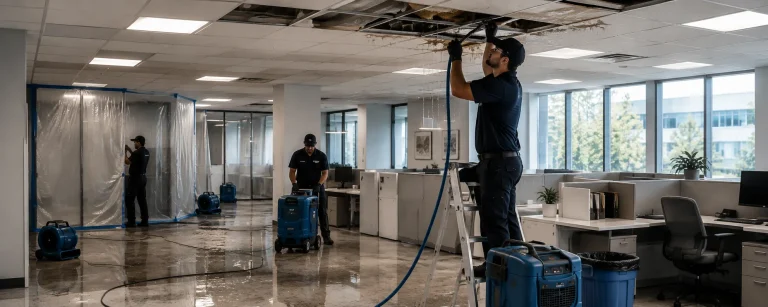
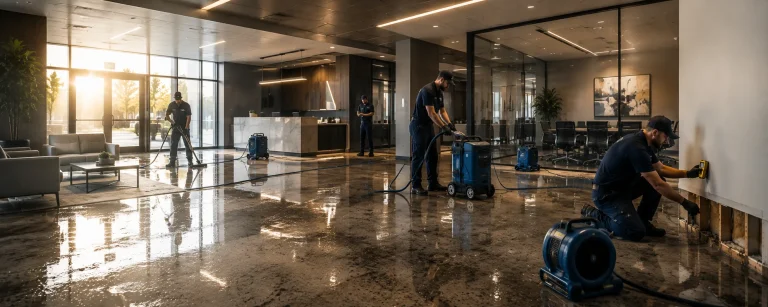
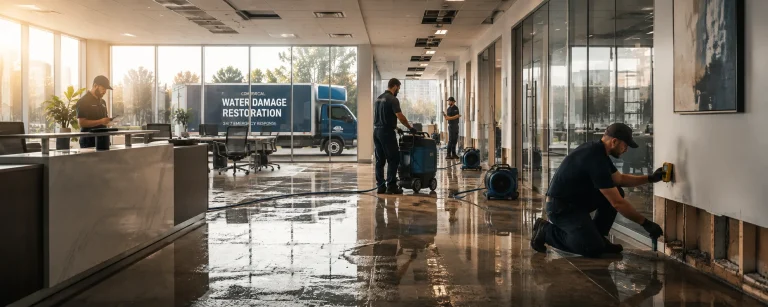
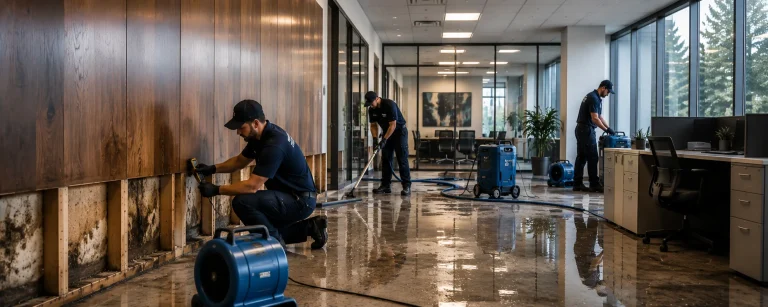
Storm Water Damage Repair Requires More Than Cleaning Up Water
Severe weather can affect an entire commercial property in just a few hours.
Heavy rainfall, wind-driven water, roof failures, overflowing drainage systems, and flooding can introduce moisture into areas that were never designed to withstand prolonged water exposure. Even after the storm passes, the damage may continue to spread if hidden moisture is not properly addressed.
Commercial Water Damage provides educational resources that help facility managers, property managers, building owners, developers, and general contractors understand storm-related water damage and the repair process that follows.
Every Storm Creates Different Challenges
No two commercial storm losses are exactly alike.
The extent of the damage depends on:
- Rainfall intensity
- Wind conditions
- Roof condition
- Building age
- Drainage performance
- Property location
- Existing maintenance issues
- Building occupancy
Every factor influences how repairs should be prioritized.
Common Types of Storm Water Damage
Storms can affect nearly every part of a commercial property.
Typical examples include:
- Roof leaks
- Wind-driven rain intrusion
- Flooded entrances
- Overflowing roof drains
- Damaged windows and glazing
- Foundation water intrusion
- Parking lot flooding
- Mechanical equipment exposure
- Saturated insulation
- Interior ceiling damage
Many losses involve several of these conditions occurring at the same time.
Water Doesn’t Stay Where It Enters
One of the most overlooked aspects of storm damage is how far water can travel after entering the building.
Moisture may migrate through:
- Ceiling systems
- Wall cavities
- Structural framing
- Floor assemblies
- Electrical spaces
- Mechanical rooms
- Elevator shafts
- Tenant improvements
Visible damage is often only a small portion of the overall water loss.
Commercial Repair Often Happens While Buildings Remain Open
Many businesses cannot suspend operations after a storm.
Recovery planning may include:
- Temporary weather protection
- Safe access routes
- Tenant communication
- Phased repairs
- Evening or weekend work
- Noise management
- Dust containment
- Ongoing building operations
Maintaining business continuity is frequently one of the highest priorities during commercial storm recovery.
Large Storm Events Require Coordination
Significant weather events often affect multiple buildings at the same time.
Projects may require coordination between:
- Property owners
- Facility managers
- Property management companies
- Restoration professionals
- Roofing contractors
- General contractors
- Insurance representatives
- Engineers
Clear communication becomes increasingly important when multiple systems have been affected.
Repair Begins After the Building Is Stabilized
Before permanent repairs begin, commercial properties are typically evaluated for:
- Remaining moisture
- Structural drying
- Hidden damage
- Roof performance
- Electrical safety
- Mechanical systems
- Indoor air quality
- Overall building condition
Repair decisions are most effective after the property has been properly stabilized.
Questions After a Major Storm
Commercial property owners often benefit from asking:
- Has the source of water intrusion been identified?
- Which building systems require immediate attention?
- How much hidden moisture remains?
- Can tenants continue occupying the building?
- What documentation supports the insurance claim?
- Are temporary repairs needed before permanent work?
- What long-term improvements should be considered?
- Could future storms create similar vulnerabilities?
- How should repairs be prioritized?
Answering these questions early often leads to a smoother recovery process.
Building for Future Storm Resilience
Many property owners use storm recovery as an opportunity to strengthen the building against future weather events.
Possible improvements include:
- Roof maintenance programs
- Drainage improvements
- Window and glazing upgrades
- Sealant replacement
- Waterproofing enhancements
- Emergency response planning
- Routine inspections
- Preventive maintenance schedules
Preparing before the next storm can reduce future property damage and operational disruption.
Storm Damage Can Affect Long-Term Property Performance
Storm-related water damage influences more than immediate repair costs.
Long-term considerations include:
- Tenant satisfaction
- Property value
- Building reliability
- Insurance history
- Maintenance planning
- Energy efficiency
- Equipment protection
- Business continuity
Looking beyond the immediate damage helps property owners make informed recovery decisions.
Why Commercial Water Damage Focuses on Storm Water Damage Repair
Storm recovery involves much more than repairing wet building materials.
Commercial Water Damage provides educational resources that help commercial property owners understand storm-related water intrusion, moisture management, restoration planning, insurance coordination, repair strategies, and long-term building performance.
Whether responding to a localized roof leak after heavy rain or a widespread storm affecting an entire commercial facility, informed planning helps reduce downtime, protect valuable assets, and support a safer, more efficient recovery.
Water Emergency?
Our commercial response team is available 24/7 for water extraction, structural drying and restoration.
Our Services
Talk To A Specialist
Need help with a water loss right now?
Call our commercial team for extraction, drying and restoration planning built around your building and your operations.