Water emergency? Our commercial crews respond 24/7.
Home / Emergency Water Extraction
Emergency Water Extraction
- 24/7 Response
- Extraction
- Structural Drying
- Restoration
What happens when you call
24/7 dispatch
Call any hour. Crews mobilize for commercial losses, including nights and weekends.
Extraction & drying
Standing water removed, then structural drying with monitored moisture readings.
Insurance-ready records
Readings, photos and scope notes documented for your carrier from day one.
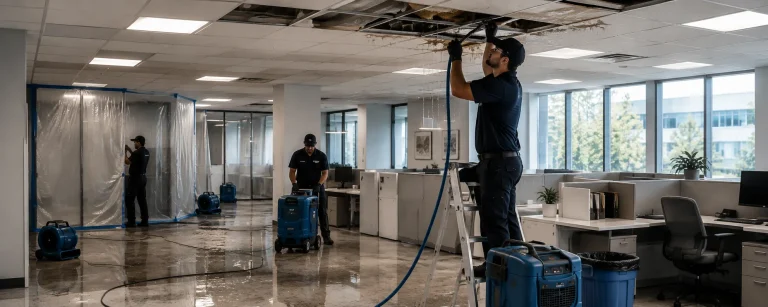
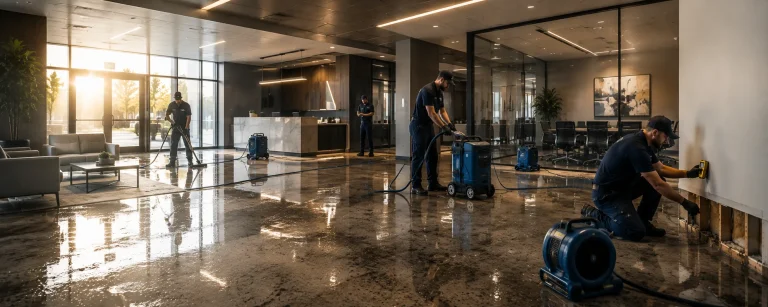
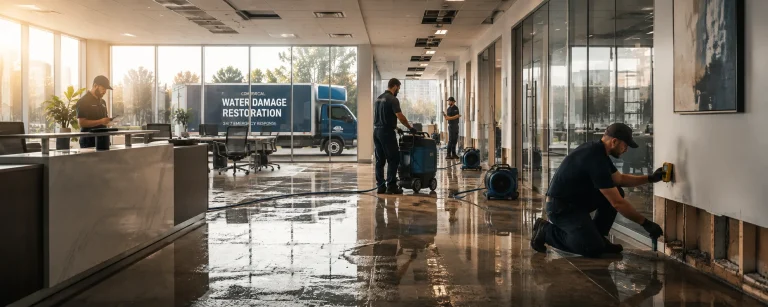
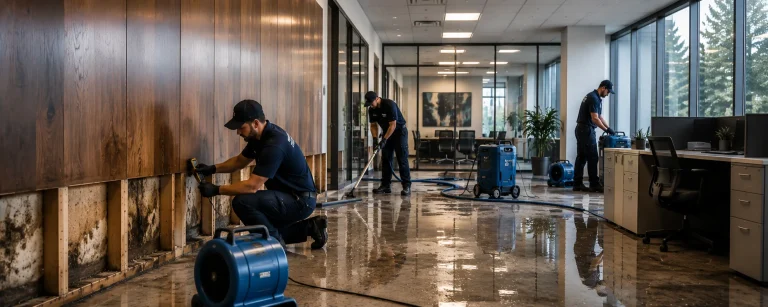
Emergency Water Extraction Helps Protect Commercial Properties From Further Damage
Water damage doesn’t wait until business hours.
Whether caused by a burst pipe, roof leak, sprinkler discharge, equipment failure, or severe weather, standing water can quickly spread throughout a commercial property. Every hour that water remains inside the building increases the potential for structural damage, operational disruption, and costly repairs.
Commercial Water Damage provides educational resources that help facility managers, property managers, building owners, developers, and commercial contractors better understand emergency water extraction and its role in protecting commercial buildings.
Why Immediate Water Extraction Matters
Removing standing water is one of the first priorities following a commercial water loss.
Rapid extraction helps reduce:
- Moisture migration
- Damage to building materials
- Business interruption
- Equipment exposure
- Tenant disruption
- Drying time
- Restoration costs
- Long-term maintenance concerns
Acting quickly creates a stronger foundation for every phase of the recovery process.
Common Commercial Water Emergencies
Emergency water extraction may be necessary after:
- Burst plumbing lines
- Fire sprinkler activation
- Roof leaks
- Storm flooding
- HVAC system failures
- Overflowing restrooms
- Sewer backups
- Mechanical equipment leaks
- Broken water supply lines
- Appliance failures
Although the source of the water may vary, the immediate objective remains the same—remove as much water as possible while protecting the property.
Water Moves Faster Than Many People Expect
Standing water is only part of the problem.
Moisture can quickly migrate into:
- Carpet systems
- Concrete slabs
- Wall cavities
- Ceiling assemblies
- Structural framing
- Electrical spaces
- Mechanical rooms
- Elevator pits
Without prompt extraction, hidden moisture may continue spreading even after visible water has disappeared.
Emergency Response in Occupied Buildings
Many commercial facilities must remain operational during an emergency.
Recovery planning often includes:
- Safe access for occupants
- Temporary containment
- Equipment staging
- Protection of unaffected areas
- Tenant communication
- After-hours scheduling
- Business continuity planning
- Ongoing safety monitoring
Reducing operational disruption is often just as important as removing the water itself.
Large Commercial Water Emergencies
Major losses frequently involve much more than water removal.
Large projects may require coordination between:
- Facility managers
- Property managers
- Building ownership
- Restoration professionals
- General contractors
- Engineers
- Insurance representatives
- Building occupants
Organized communication helps keep emergency response efforts moving efficiently.
Emergency Extraction Is the Beginning of Recovery
Removing standing water is only the first step.
Commercial recovery often continues with:
- Moisture mapping
- Structural drying
- Dehumidification
- Damage mitigation
- Restoration
- Building repairs
- Interior reconstruction
- Final inspections
Each phase depends on a successful emergency response.
Questions Commercial Property Owners Should Ask
During the first hours after a water loss, important questions include:
- Has the water source been stopped?
- Which building systems have been affected?
- How much hidden moisture is likely present?
- Can tenants safely remain inside?
- How will progress be documented?
- What areas require immediate priority?
- When will structural drying begin?
- How will repairs be coordinated?
- What preventive improvements should follow?
Thoughtful planning during the emergency stage often improves the entire recovery process.
Documentation Begins Immediately
Commercial emergency response typically includes extensive project documentation.
Records may include:
- Initial damage assessments
- Water source identification
- Moisture readings
- Daily progress reports
- Equipment logs
- Project photographs
- Material inventories
- Insurance support documentation
Accurate documentation helps improve communication among property owners, contractors, consultants, and insurance representatives.
Preparing for Future Emergencies
Many organizations review emergency preparedness after experiencing a water loss.
Common improvements include:
- Updated response procedures
- Preventive plumbing maintenance
- Roof inspections
- Water detection technology
- Emergency vendor relationships
- Building documentation
- Staff response planning
- Preventive maintenance programs
Preparation today can significantly reduce the impact of tomorrow’s emergency.
Why Commercial Water Damage Focuses on Emergency Water Extraction
Emergency water extraction is about far more than removing standing water.
Commercial Water Damage provides educational resources that help commercial property owners understand emergency response, water extraction, moisture management, restoration planning, insurance coordination, business continuity, and long-term building protection.
Whether responding to a single flooded office suite or a large commercial facility affected by a major water event, informed emergency planning helps reduce downtime, protect valuable assets, and support a faster, more organized recovery.
Water Emergency?
Our commercial response team is available 24/7 for water extraction, structural drying and restoration.
Our Services
Talk To A Specialist
Need help with a water loss right now?
Call our commercial team for extraction, drying and restoration planning built around your building and your operations.