Water emergency? Our commercial crews respond 24/7.
Home / Moisture Mapping Services
Moisture Mapping Services
- 24/7 Response
- Extraction
- Structural Drying
- Restoration
What happens when you call
24/7 dispatch
Call any hour. Crews mobilize for commercial losses, including nights and weekends.
Extraction & drying
Standing water removed, then structural drying with monitored moisture readings.
Insurance-ready records
Readings, photos and scope notes documented for your carrier from day one.
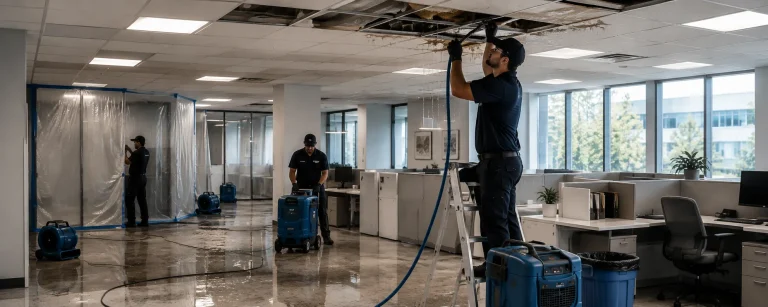
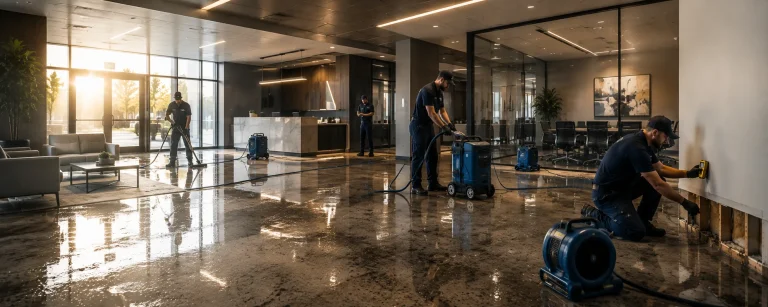
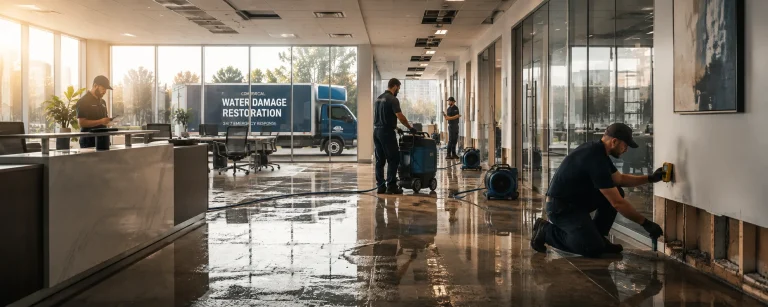
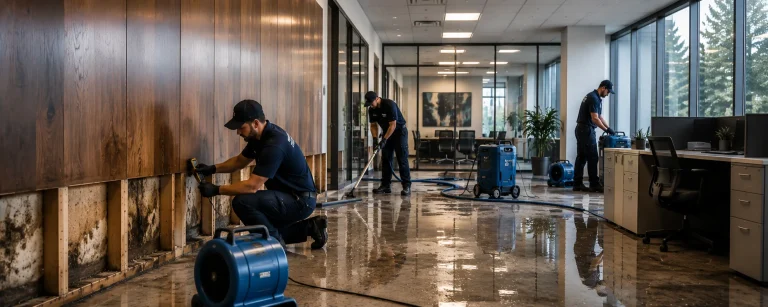
Moisture Mapping Services Help Reveal What Can’t Be Seen
Visible water is only part of a commercial water damage event.
Long after standing water has been removed, moisture may remain hidden behind walls, beneath flooring systems, above suspended ceilings, inside concrete slabs, and throughout structural assemblies. Moisture mapping helps identify where water has traveled so commercial recovery efforts can be planned with greater accuracy.
Commercial Water Damage provides educational resources that help facility managers, property managers, building owners, developers, and general contractors understand the role of moisture mapping during commercial water damage recovery.
What Is Moisture Mapping?
Moisture mapping is the process of evaluating and documenting moisture conditions throughout a commercial property.
Rather than relying solely on visible damage, moisture mapping helps determine:
- Where moisture has migrated
- Which materials have been affected
- Areas requiring additional drying
- Spaces that remain unaffected
- Drying progress over time
- Readiness for restoration
- Readiness for repairs
- Long-term recovery planning
This information supports better project decisions from beginning to end.
Why Commercial Buildings Require Moisture Mapping
Water often travels much farther than expected.
Commercial properties may contain:
- Multi-layer flooring systems
- Concrete slabs
- Large wall assemblies
- Ceiling plenums
- Mechanical rooms
- Elevator shafts
- Utility corridors
- Shared tenant spaces
- Structural framing
Because these systems are interconnected, hidden moisture can spread well beyond the original source of the leak.
Moisture Isn’t Always Visible
One of the biggest misconceptions after a commercial water loss is assuming the building is dry because surfaces appear dry.
Moisture may remain inside:
- Drywall
- Concrete
- Insulation
- Steel framing
- Wood framing
- Ceiling systems
- Floor assemblies
- Mechanical spaces
Without proper evaluation, reconstruction may begin before the structure has fully dried.
Moisture Mapping Supports Every Phase of Recovery
Commercial recovery generally follows a logical sequence.
Typical project phases include:
- Emergency response
- Water extraction
- Damage mitigation
- Moisture mapping
- Structural drying
- Dehumidification
- Restoration
- Building repairs
- Final verification
Accurate moisture information helps guide decisions throughout each phase.
Large Commercial Projects Require Detailed Documentation
Major commercial losses often involve multiple stakeholders.
Documentation generated during moisture mapping may assist:
- Facility managers
- Property managers
- Building ownership
- Restoration contractors
- General contractors
- Engineers
- Insurance representatives
- Consultants
Clear documentation improves communication while helping project teams track recovery progress.
Occupied Buildings Present Additional Challenges
Many commercial properties continue operating during recovery.
Moisture mapping may help property teams:
- Prioritize affected areas
- Phase restoration activities
- Limit disruption
- Protect tenant operations
- Schedule repairs
- Monitor progress
- Reduce unnecessary demolition
- Support business continuity
Careful planning allows recovery efforts to move forward while portions of the building remain in service whenever practical.
Questions Commercial Property Owners Should Ask
Understanding moisture conditions often begins with the right questions.
- Where has water actually traveled?
- Which building materials remain wet?
- How frequently are moisture readings updated?
- What areas have fully dried?
- Can repairs begin in certain locations before others?
- How is hidden moisture verified?
- What documentation is available?
- How does moisture mapping support insurance documentation?
- What long-term risks are being reduced?
These conversations help improve project planning and communication.
Moisture Mapping Helps Reduce Unnecessary Repairs
Good information often leads to better decisions.
Accurate moisture mapping may help:
- Focus drying efforts
- Prioritize repairs
- Reduce unnecessary demolition
- Improve restoration planning
- Shorten project timelines
- Protect unaffected materials
- Improve communication
- Support long-term building performance
Understanding exactly where moisture exists allows commercial recovery to become more efficient.
Building Recovery Continues After Moisture Mapping
Moisture mapping is one part of a larger commercial recovery strategy.
Projects commonly continue with:
- Structural drying
- Industrial dehumidification
- Water damage restoration
- Building repairs
- Interior reconstruction
- Final inspections
- Preventive maintenance planning
Each phase benefits from accurate information gathered during the moisture mapping process.
Why Commercial Water Damage Focuses on Moisture Mapping Services
Successful commercial recovery depends on understanding what cannot always be seen.
Commercial Water Damage provides educational resources that help facility managers, property managers, building owners, developers, and commercial contractors better understand moisture migration, structural drying, restoration planning, insurance coordination, business continuity, and long-term property performance.
Whether responding to a localized plumbing leak or a large commercial flood, moisture mapping helps guide informed decisions, reduce unnecessary disruption, and support a safer, more efficient recovery from emergency response through final repairs.
Water Emergency?
Our commercial response team is available 24/7 for water extraction, structural drying and restoration.
Our Services
Talk To A Specialist
Need help with a water loss right now?
Call our commercial team for extraction, drying and restoration planning built around your building and your operations.