Water emergency? Our commercial crews respond 24/7.
Home / Office Water Damage Repair
Office Water Damage Repair
- 24/7 Response
- Extraction
- Structural Drying
- Restoration
What happens when you call
24/7 dispatch
Call any hour. Crews mobilize for commercial losses, including nights and weekends.
Extraction & drying
Standing water removed, then structural drying with monitored moisture readings.
Insurance-ready records
Readings, photos and scope notes documented for your carrier from day one.
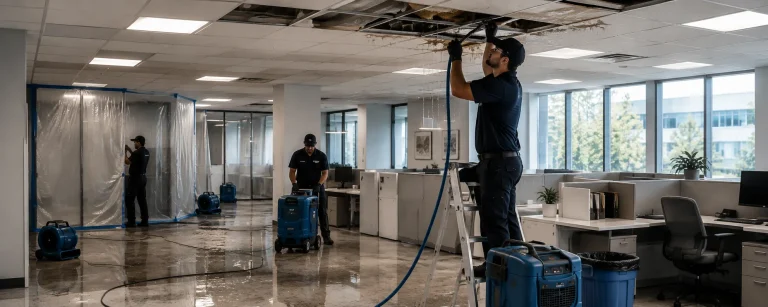
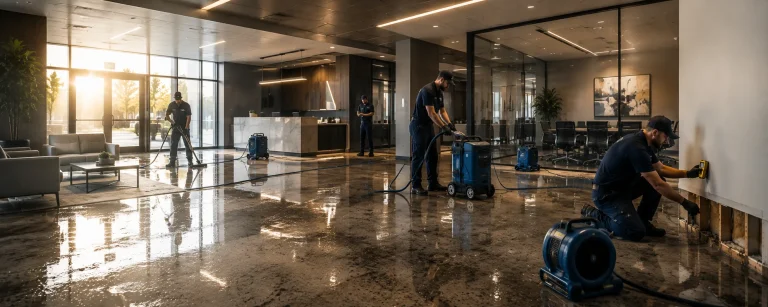
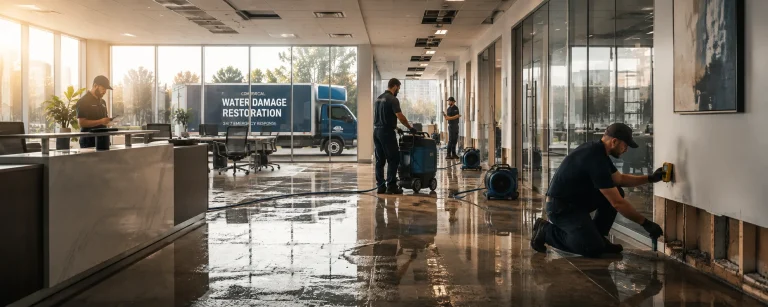
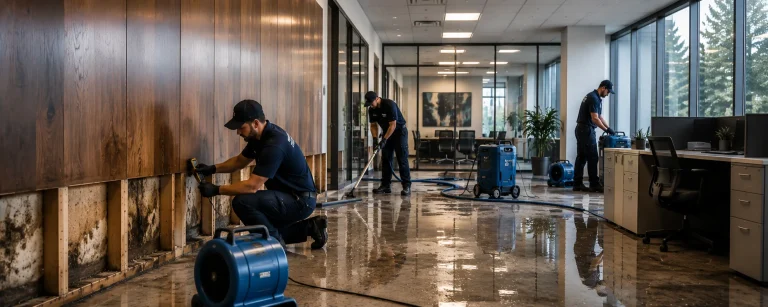
Office Water Damage Repair Is About More Than Fixing Wet Building Materials
Water damage inside an office building can interrupt daily operations within minutes.
Beyond damaged drywall or flooring, water may affect employees, computer systems, conference rooms, tenant suites, electrical infrastructure, and business continuity. Every decision made during recovery can influence productivity, tenant satisfaction, and long-term property performance.
Commercial Water Damage provides educational resources that help office building owners, facility managers, property managers, asset managers, and commercial contractors better understand office water damage repair and the planning required to restore professional work environments.
Office Buildings Present Unique Recovery Challenges
Unlike many other commercial properties, office buildings often house multiple businesses operating under one roof.
Recovery planning may involve:
- Executive offices
- Open workspaces
- Conference rooms
- Reception areas
- Shared amenities
- Data and server rooms
- Break rooms
- Multi-tenant office suites
Each area may have different priorities depending on occupancy, technology, and business operations.
Common Causes of Office Water Damage
Office environments experience water losses from many different sources.
Typical causes include:
- Burst plumbing lines
- Roof leaks
- HVAC condensate failures
- Fire sprinkler activations
- Restroom overflows
- Mechanical equipment leaks
- Window and building envelope failures
- Storm-related water intrusion
- Supply line failures
- Overflowing appliances
Regardless of the source, prompt planning helps reduce additional damage and operational disruption.
Water Can Affect More Than Office Finishes
Visible water often represents only part of the overall loss.
Moisture may migrate into:
- Wall cavities
- Ceiling systems
- Raised flooring
- Carpet systems
- Electrical infrastructure
- Structural framing
- Utility spaces
- Communication and data pathways
Hidden moisture should be addressed before reconstruction begins.
Protecting Employees and Business Operations
Many office buildings remain partially occupied throughout the recovery process.
Planning frequently includes:
- Temporary work areas
- Safe employee access
- Tenant communication
- Equipment protection
- Noise management
- Dust containment
- After-hours scheduling
- Business continuity planning
Maintaining normal business operations whenever practical is often one of the primary objectives.
Office Technology Requires Additional Consideration
Modern offices depend on technology to operate efficiently.
Water damage may affect:
- Computer workstations
- Network equipment
- Server rooms
- Telephone systems
- Security systems
- Audio-visual equipment
- Building automation systems
- Electrical panels
Evaluating these systems early helps property teams prioritize repairs and reduce unnecessary downtime.
Coordinating Repairs in Multi-Tenant Office Buildings
Office properties often require communication among multiple groups.
Projects may involve:
- Building ownership
- Property managers
- Facility managers
- Individual tenants
- Restoration professionals
- General contractors
- Insurance representatives
- Building engineers
Organized communication helps keep tenants informed while supporting efficient project management.
Questions Office Property Managers Should Ask
Every office building has different operational priorities.
Important questions include:
- Which tenant spaces are affected?
- Can portions of the building remain open?
- Has hidden moisture been evaluated?
- How will employee safety be maintained?
- What documentation will be provided?
- When can repairs safely begin?
- How will technology systems be protected?
- What long-term improvements should be considered?
- How will project updates be communicated?
These discussions often improve both recovery planning and tenant confidence.
Office Water Damage Recovery Happens in Phases
Commercial office projects generally progress through several connected stages.
Recovery may include:
- Emergency water extraction
- Damage mitigation
- Structural drying
- Moisture mapping
- Water damage restoration
- Building repairs
- Interior reconstruction
- Final inspections
Each phase supports a safe and efficient return to normal office operations.
Looking Beyond the Immediate Repair
Many office property owners use water damage events to strengthen future preparedness.
Possible improvements include:
- Preventive plumbing maintenance
- Roof inspections
- Water detection technology
- HVAC maintenance
- Emergency response planning
- Vendor relationships
- Building documentation
- Preventive maintenance schedules
Taking a proactive approach can help reduce the impact of future water losses.
Why Commercial Water Damage Focuses on Office Water Damage Repair
Office buildings require a specialized approach to water damage recovery because they combine occupied workspaces, technology infrastructure, tenant relationships, and ongoing business operations.
Commercial Water Damage provides educational resources that help office building owners, facility managers, property managers, developers, and commercial contractors better understand water mitigation, extraction, restoration, repair planning, insurance coordination, and long-term building performance.
Whether addressing a localized plumbing leak in a single office suite or coordinating repairs across a multi-story office building, informed planning helps reduce downtime, protect valuable assets, and support a faster, more organized recovery.
Water Emergency?
Our commercial response team is available 24/7 for water extraction, structural drying and restoration.
Our Services
Talk To A Specialist
Need help with a water loss right now?
Call our commercial team for extraction, drying and restoration planning built around your building and your operations.