Water emergency? Our commercial crews respond 24/7.
Home / Industrial Water Damage Repair
Industrial Water Damage Repair
- 24/7 Response
- Extraction
- Structural Drying
- Restoration
What happens when you call
24/7 dispatch
Call any hour. Crews mobilize for commercial losses, including nights and weekends.
Extraction & drying
Standing water removed, then structural drying with monitored moisture readings.
Insurance-ready records
Readings, photos and scope notes documented for your carrier from day one.
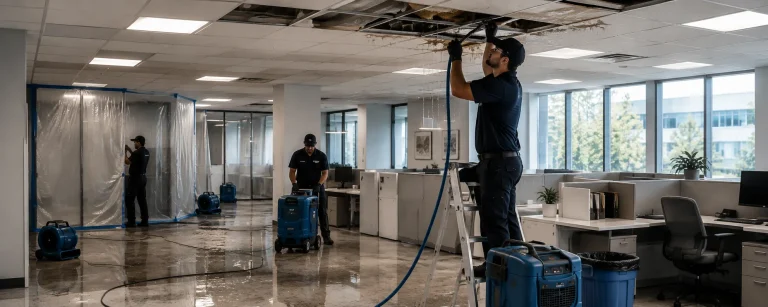
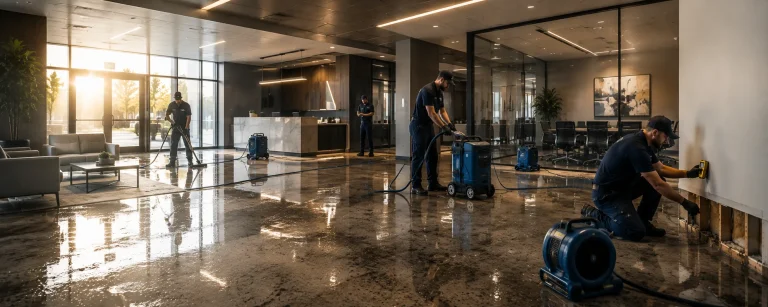
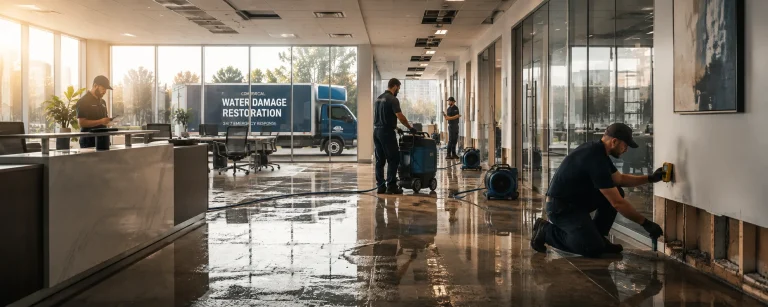
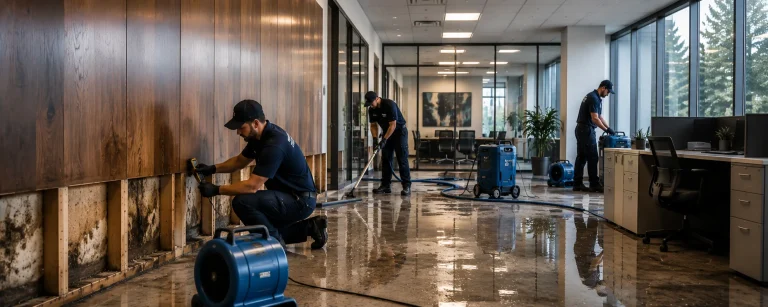
Industrial Water Damage Repair Protects Critical Operations and Facility Performance
Industrial facilities rely on continuous operations, specialized equipment, and carefully coordinated production schedules. When water damage occurs, the impact extends far beyond wet building materials.
A single water loss can interrupt manufacturing, damage machinery, delay production, affect employee safety, and disrupt supply chains. Recovering efficiently requires planning that addresses both the facility and the operations taking place inside it.
Commercial Water Damage provides educational resources that help plant managers, facility managers, property owners, operations teams, engineers, and commercial contractors better understand industrial water damage repair and long-term recovery planning.
Industrial Facilities Present Unique Challenges
Industrial buildings often contain systems that are not found in traditional commercial properties.
Recovery planning may involve:
- Manufacturing plants
- Processing facilities
- Fabrication shops
- Distribution and logistics centers
- Food production facilities
- Pharmaceutical facilities
- Research laboratories
- Heavy industrial operations
Every facility has different production requirements, safety standards, and operational priorities.
Common Causes of Industrial Water Damage
Industrial water losses may result from a variety of conditions.
Typical causes include:
- Process water line failures
- Burst plumbing systems
- Fire sprinkler activation
- Roof leaks
- Storm-related flooding
- Mechanical equipment failures
- Cooling system leaks
- Boiler or piping failures
- Drainage issues
- Foundation water intrusion
Rapid response helps reduce additional damage while limiting production downtime.
Water Can Affect Much More Than the Building
Industrial water damage often extends into critical operating systems.
Moisture may affect:
- Production equipment
- Electrical infrastructure
- Control panels
- Mechanical systems
- Concrete slabs
- Structural framing
- Utility corridors
- Finished products
Protecting these systems is often as important as repairing the building itself.
Business Continuity Is a Primary Objective
Many industrial facilities cannot completely shut down after a water loss.
Recovery planning frequently includes:
- Phased repair schedules
- Temporary production areas
- Equipment protection
- Safe employee access
- Utility coordination
- Dust and moisture control
- After-hours work
- Operational continuity planning
Maintaining production whenever practical helps reduce financial and operational impacts.
Large Industrial Projects Require Coordination
Industrial recovery often involves numerous stakeholders.
Projects may include:
- Plant management
- Facility managers
- Maintenance teams
- Safety personnel
- Property ownership
- Restoration professionals
- General contractors
- Engineers
- Insurance representatives
Clear communication helps coordinate repairs while supporting safe facility operations.
Hidden Moisture Can Create Long-Term Problems
Visible water rarely tells the entire story.
Moisture may remain inside:
- Wall assemblies
- Structural steel
- Concrete floor systems
- Mechanical spaces
- Pipe chases
- Electrical rooms
- Insulation
- Equipment platforms
Identifying hidden moisture helps reduce future maintenance issues and supports successful reconstruction.
Questions Industrial Facility Managers Should Ask
Every industrial operation has unique priorities.
Consider discussing:
- Which production areas have been affected?
- Can operations continue during repairs?
- Has moisture migrated into critical equipment areas?
- How will employee safety be maintained?
- What documentation will be available?
- How will project updates be communicated?
- When can repairs safely begin?
- What preventive improvements should follow?
- How will future water risks be reduced?
These discussions help guide informed recovery decisions.
Recovery Occurs in Multiple Phases
Industrial water damage recovery typically progresses through several connected stages.
Recovery may include:
- Emergency water extraction
- Damage mitigation
- Moisture mapping
- Structural drying
- Industrial dehumidification
- Water damage restoration
- Building repairs
- Final inspections
Each phase contributes to restoring safe and reliable facility operations.
Planning Beyond the Immediate Emergency
Many industrial organizations use recovery projects to strengthen long-term resilience.
Potential improvements include:
- Preventive maintenance programs
- Mechanical system inspections
- Roof evaluations
- Water detection technologies
- Utility upgrades
- Emergency response procedures
- Vendor partnerships
- Facility documentation
Proactive planning can help reduce future downtime and improve operational reliability.
Why Commercial Water Damage Focuses on Industrial Water Damage Repair
Industrial facilities require a specialized recovery strategy because they combine complex building systems, production equipment, employee safety requirements, and business continuity concerns.
Commercial Water Damage provides educational resources that help plant managers, facility managers, property owners, engineers, developers, and commercial contractors better understand water mitigation, emergency response, restoration planning, insurance coordination, moisture management, and long-term industrial facility performance.
Whether responding to a localized equipment leak or a large-scale water event affecting an entire manufacturing plant, informed planning helps reduce downtime, protect valuable assets, and support a safer, more efficient recovery.
Water Emergency?
Our commercial response team is available 24/7 for water extraction, structural drying and restoration.
Our Services
Talk To A Specialist
Industrial water damage in Dallas-Fort Worth
Manufacturing and industrial water damage response in Garland, Grand Prairie and Fort Worth.
Need help with a water loss right now?
Call our commercial team for extraction, drying and restoration planning built around your building and your operations.