Water emergency? Our commercial crews respond 24/7.
Home / Commercial Moisture Control
Commercial Moisture Control
- 24/7 Response
- Extraction
- Structural Drying
- Restoration
What happens when you call
24/7 dispatch
Call any hour. Crews mobilize for commercial losses, including nights and weekends.
Extraction & drying
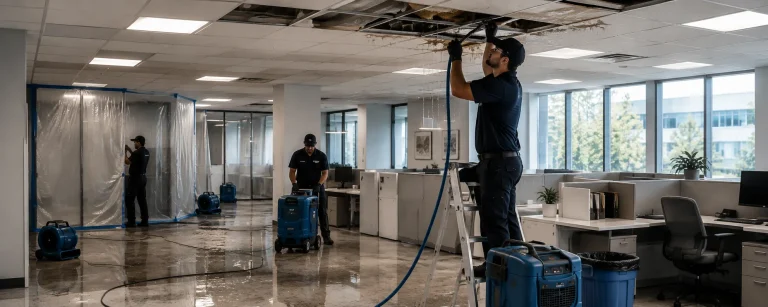
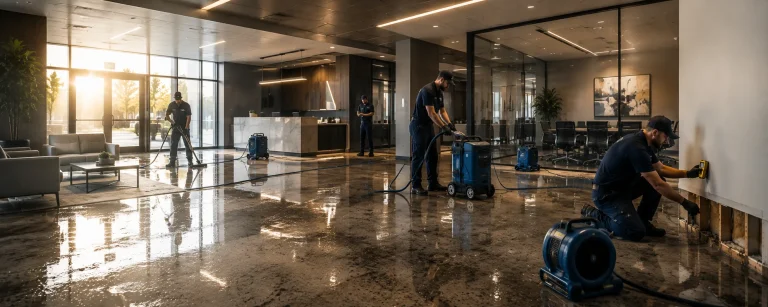
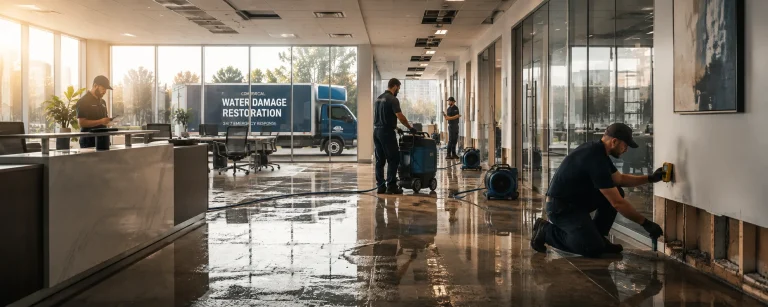
Standing water removed, then structural drying with monitored moisture readings.
Insurance-ready records
Readings, photos and scope notes documented for your carrier from day one.
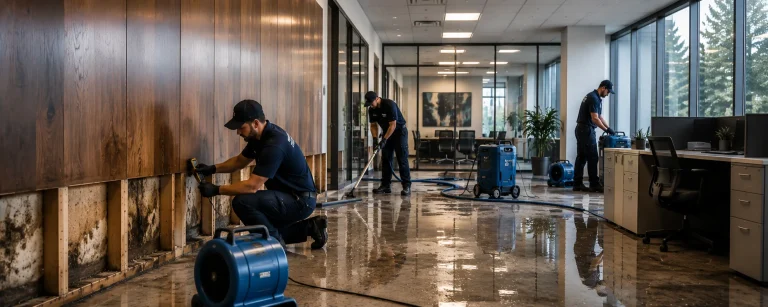
Commercial Moisture Control Protects Buildings Long After Water Damage
Moisture affects commercial buildings in ways that are not always immediately visible.
Even after standing water has been removed and surfaces appear dry, excess moisture may remain inside structural materials, mechanical spaces, flooring systems, and wall assemblies. Managing moisture is an important part of protecting building performance, reducing long-term maintenance issues, and supporting a successful recovery.
Commercial Water Damage provides educational resources that help facility managers, property managers, building owners, developers, and commercial contractors better understand moisture control before, during, and after commercial water damage events.
Moisture Is More Than Standing Water
Commercial moisture control addresses both visible and hidden moisture throughout a building.
Areas commonly evaluated include:
- Wall cavities
- Concrete slabs
- Ceiling systems
- Structural framing
- Insulation
- Mechanical rooms
- Utility corridors
- Floor assemblies
Understanding where moisture remains helps guide better recovery decisions.
Why Moisture Control Matters
Managing moisture supports much more than the drying process.
Effective moisture control may help:
- Reduce drying time
- Protect structural materials
- Improve indoor air quality
- Support restoration planning
- Reduce future maintenance concerns
- Protect building systems
- Improve occupant comfort
- Preserve long-term property value
Moisture management is one of the most important factors in commercial building recovery.
Commercial Buildings Present Unique Challenges
Large commercial facilities respond differently than residential structures.
Moisture control strategies often vary depending on:
- Building size
- Occupancy levels
- Construction materials
- HVAC systems
- Ceiling height
- Ventilation
- Building age
- Daily operations
Each factor influences how moisture behaves throughout the structure.
Moisture Can Travel Beyond the Original Water Loss
Water frequently migrates into areas that appear unaffected.
Hidden moisture may collect inside:
- Wall systems
- Ceiling plenums
- Structural steel
- Wood framing
- Concrete floor systems
- Elevator shafts
- Pipe chases
- Equipment rooms
Understanding moisture movement helps reduce the risk of overlooked damage.
Supporting Occupied Commercial Buildings
Many commercial properties continue operating while moisture control efforts are underway.
Planning often includes:
- Temporary work zones
- Safe occupant access
- Equipment placement
- Noise management
- Tenant communication
- After-hours scheduling
- Environmental monitoring
- Business continuity planning
Balancing recovery with normal operations is often a key objective.
Monitoring Moisture Conditions
Commercial moisture control relies on measurement rather than assumptions.
Project monitoring may include:
- Moisture mapping
- Relative humidity readings
- Material moisture testing
- Temperature monitoring
- Daily progress reports
- Environmental observations
- Equipment adjustments
- Drying verification
Accurate information helps project teams determine when the building is ready for restoration and repairs.
Questions Commercial Property Owners Should Ask
Understanding moisture conditions begins with asking informed questions.
- Which materials remain wet?
- How is hidden moisture being identified?
- How often are conditions being monitored?
- Can occupied areas remain operational?
- What documentation will be available?
- When can repairs safely begin?
- What long-term risks are being reduced?
- How can future moisture problems be prevented?
- What maintenance improvements should be considered?
These discussions help support more informed recovery planning.
Moisture Control Supports Long-Term Building Performance
Managing moisture benefits commercial properties long after restoration is complete.
Potential long-term advantages include:
- Better structural performance
- Improved indoor air quality
- Reduced maintenance costs
- Greater tenant confidence
- More reliable repairs
- Improved operational efficiency
- Stronger asset preservation
- Better lifecycle planning
Effective moisture control helps protect both the building and the investment it represents.
Recovery Continues Beyond Moisture Control
Commercial recovery typically progresses through several connected phases.
Projects often continue with:
- Water damage restoration
- Building repairs
- Interior reconstruction
- Finish work
- Final inspections
- Preventive maintenance planning
Each phase benefits from a building that has been properly evaluated and brought back to appropriate moisture conditions.
Why Commercial Water Damage Focuses on Commercial Moisture Control
Commercial moisture control is about protecting the entire building—not simply drying wet materials.
Commercial Water Damage provides educational resources that help facility managers, property managers, building owners, developers, and commercial contractors better understand moisture management, structural drying, restoration planning, insurance coordination, business continuity, and long-term property performance.
Whether recovering from a burst pipe, roof leak, storm event, or major flood, effective moisture control helps reduce downtime, protect valuable assets, and support a safer, more efficient commercial recovery.
Water Emergency?
Our commercial response team is available 24/7 for water extraction, structural drying and restoration.
Our Services
Talk To A Specialist
Need help with a water loss right now?
Call our commercial team for extraction, drying and restoration planning built around your building and your operations.