Water emergency? Our commercial crews respond 24/7.
Home / Sprinkler System Water Damage
Sprinkler System Water Damage
- 24/7 Response
- Extraction
- Structural Drying
- Restoration
What happens when you call
24/7 dispatch
Call any hour. Crews mobilize for commercial losses, including nights and weekends.
Extraction & drying
Standing water removed, then structural drying with monitored moisture readings.
Insurance-ready records
Readings, photos and scope notes documented for your carrier from day one.
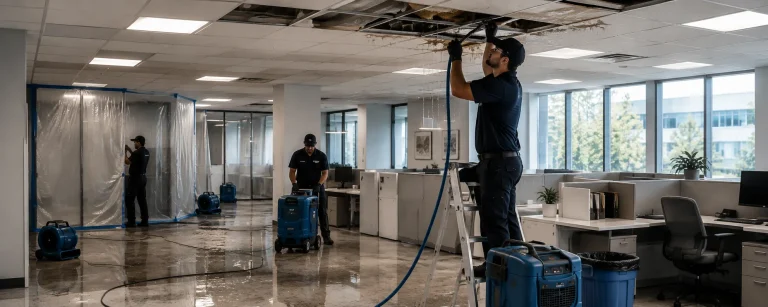
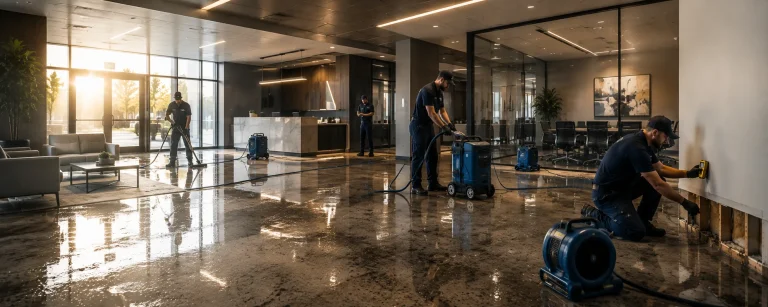
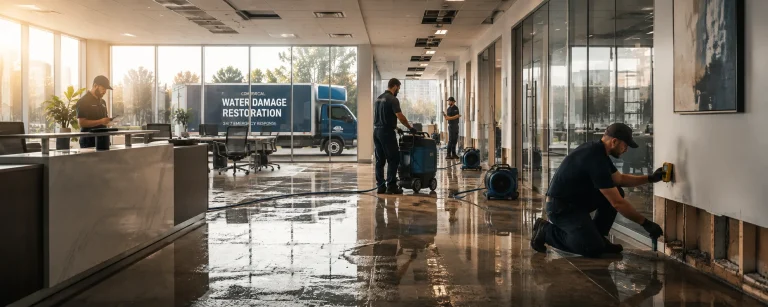
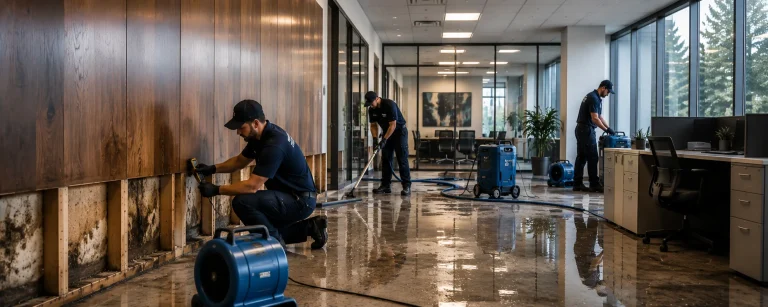
Sprinkler System Water Damage Can Affect an Entire Commercial Building
Fire sprinkler systems save lives and protect commercial properties, but when they activate unexpectedly or are damaged, they can release large volumes of water in a very short period of time.
A single sprinkler head, broken pipe, frozen fire line, or accidental discharge can affect offices, retail spaces, warehouses, manufacturing facilities, healthcare buildings, hotels, and multi-tenant commercial properties. While the fire protection system performs an important safety function, the resulting water damage often requires immediate attention.
Commercial Water Damage provides educational resources that help facility managers, property managers, building owners, developers, and commercial contractors better understand sprinkler system water damage and the commercial recovery process.
Common Causes of Sprinkler System Water Damage
Not every sprinkler-related water loss occurs during a fire.
Commercial properties may experience water damage from:
- Accidental sprinkler discharge
- Broken sprinkler heads
- Frozen sprinkler piping
- Mechanical impact
- Pipe corrosion
- Fire suppression testing
- Valve failures
- Renovation activities
- Equipment malfunctions
Understanding the source of the discharge helps guide recovery planning and future preventive maintenance.
Water Can Spread Quickly Throughout the Building
Commercial sprinkler systems are capable of releasing significant amounts of water in a short period of time.
Water may affect:
- Ceiling systems
- Wall assemblies
- Flooring
- Office furniture
- Merchandise
- Inventory
- Electrical equipment
- Mechanical rooms
- Common areas
- Tenant improvements
Prompt action helps reduce additional damage and supports a more efficient recovery.
Occupied Buildings Require Careful Coordination
Many commercial facilities remain partially operational after a sprinkler discharge.
Recovery planning often includes:
- Temporary work areas
- Safe occupant access
- Tenant communication
- Equipment protection
- Business continuity planning
- After-hours work
- Dust and moisture control
- Ongoing safety monitoring
Keeping portions of the property operational whenever practical helps reduce disruption to daily business activities.
Hidden Moisture Can Develop Quickly
Even after visible water has been removed, moisture may remain inside the building.
Areas requiring evaluation include:
- Wall cavities
- Ceiling plenums
- Structural framing
- Concrete slabs
- Insulation
- Utility chases
- Mechanical spaces
- Elevator equipment rooms
Identifying hidden moisture early helps reduce future repair costs and supports successful restoration.
Commercial Recovery Involves Multiple Phases
Sprinkler-related water damage recovery often includes:
- Emergency water extraction
- Water mitigation
- Moisture mapping
- Structural drying
- Industrial dehumidification
- Water damage restoration
- Building repairs
- Interior reconstruction
Each phase builds on the previous one to restore safe and reliable building operations.
Large Commercial Facilities Require Team Coordination
Recovery projects frequently involve numerous stakeholders.
Commercial coordination may include:
- Facility managers
- Property managers
- Building ownership
- Fire protection contractors
- Restoration professionals
- General contractors
- Insurance representatives
- Building engineers
Well-organized communication helps reduce delays while supporting informed decision-making.
Questions Commercial Property Owners Should Ask
Following a sprinkler system water loss, important questions include:
- Has the sprinkler system been inspected and stabilized?
- Which building areas have been affected?
- Has hidden moisture been evaluated?
- Can occupied areas remain open?
- What documentation will support insurance?
- How will repairs be prioritized?
- When can reconstruction begin?
- What preventive improvements should be considered?
- How will tenants receive project updates?
Early planning often improves both project organization and long-term outcomes.
Preparing for Future Sprinkler-Related Water Losses
Many organizations review their fire protection and emergency response procedures after a water loss.
Potential improvements include:
- Routine sprinkler inspections
- Freeze protection measures
- Valve maintenance
- Staff emergency response procedures
- Water detection systems
- Building documentation
- Preventive maintenance schedules
- Contractor coordination plans
Preparation helps reduce the impact of future sprinkler-related incidents.
Protecting Long-Term Building Performance
Recovering from sprinkler system water damage involves more than replacing damaged materials.
Long-term considerations include:
- Structural integrity
- Indoor air quality
- Occupant safety
- Business continuity
- Tenant confidence
- Property value
- Preventive maintenance
- Asset preservation
A thoughtful recovery strategy helps protect both the building and the organizations operating within it.
Why Commercial Water Damage Focuses on Sprinkler System Water Damage
Commercial sprinkler discharges require a specialized response because they combine emergency water removal, moisture management, fire protection systems, occupied buildings, and business continuity planning.
Commercial Water Damage provides educational resources that help facility managers, property managers, building owners, developers, and commercial contractors better understand sprinkler-related water damage, restoration planning, insurance coordination, moisture control, and long-term building performance.
Whether a single sprinkler head affects one office suite or a fire protection system impacts an entire commercial facility, informed planning helps reduce downtime, protect valuable assets, and support a faster, more organized recovery.
Water Emergency?
Our commercial response team is available 24/7 for water extraction, structural drying and restoration.
Our Services
Talk To A Specialist
Need help with a water loss right now?
Call our commercial team for extraction, drying and restoration planning built around your building and your operations.