Water emergency? Our commercial crews respond 24/7.
Commercial Water Damage in Dallas, TX
- 24/7 Response
- Extraction
- Structural Drying
- Restoration
What happens when you call
24/7 dispatch
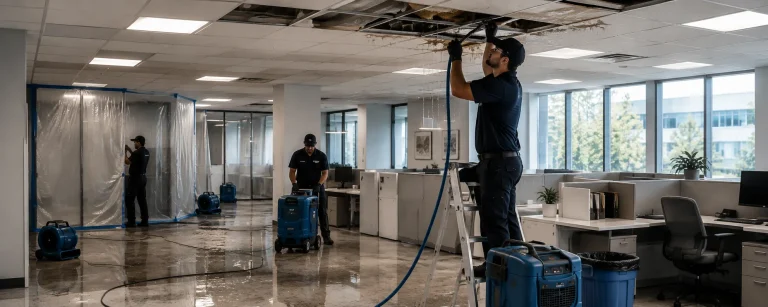
Call any hour. Crews mobilize for commercial losses, including nights and weekends.
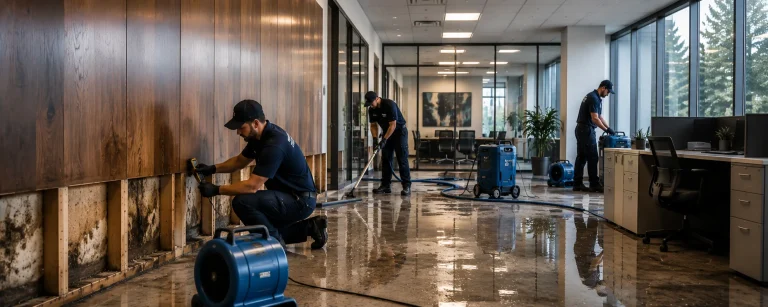
Extraction & drying
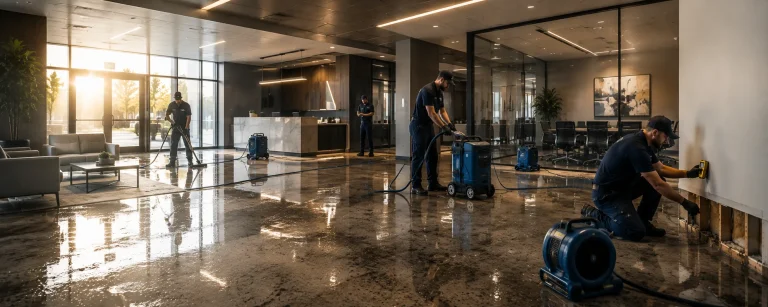
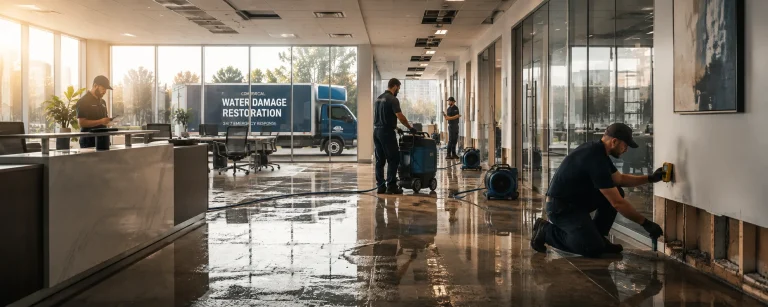
Standing water removed, then structural drying with monitored moisture readings.
Insurance-ready records
Readings, photos and scope notes documented for your carrier from day one.
Dallas, TX
Commercial Water Damage in Dallas Requires Fast Recovery for a Rapidly Growing Business Environment
Dallas has become one of the country’s fastest-growing commercial markets. Corporate headquarters, Class A office towers, mixed-use developments, distribution centers, healthcare campuses, industrial facilities, hotels, and retail destinations continue to reshape the North Texas landscape.
When water damage occurs, the priority is rarely limited to repairing the building. Business continuity, tenant satisfaction, operational efficiency, and long-term asset protection all become part of the recovery strategy.
Commercial Water Damage provides educational resources that help facility managers, property managers, building owners, developers, and commercial contractors better understand commercial water damage throughout the Dallas metropolitan area.
Modern Commercial Buildings Are Worth Preserving
Commercial construction throughout Dallas has accelerated over the past two decades.
Many newer buildings feature:
- Premium architectural glass
- Smart building technology
- Energy-efficient mechanical systems
- Luxury office interiors
- Modern healthcare facilities
- High-performance roofing systems
- Custom tenant improvements
- Advanced security and building automation
Replacing these systems after a significant water loss can be expensive and time-consuming.
As construction costs continue to rise, restoration has become an increasingly valuable strategy for protecting commercial investments while minimizing disruption.
North Texas Weather Creates Multiple Water Damage Risks
Although Dallas is known for its business growth, the region also experiences weather conditions that can quickly affect commercial properties.
Common causes of water damage include:
- Severe thunderstorms
- Hail-related roof damage
- Flash flooding
- Burst plumbing lines
- Fire sprinkler discharges
- HVAC system failures
- Roof leaks
- Drainage system backups
- Mechanical equipment leaks
- Water supply failures
Commercial buildings must be prepared for both sudden storm events and everyday infrastructure failures.
Water Travels Beyond the Initial Leak
Commercial water losses often extend well beyond the visible damage.
Moisture may migrate through:
- Ceiling systems
- Wall cavities
- Structural steel
- Concrete floor slabs
- Mechanical rooms
- Electrical pathways
- Utility chases
- Tenant improvement spaces
Successful recovery depends on understanding how moisture moves throughout the building rather than focusing only on the original source.
Dallas Businesses Need to Stay Open
Many commercial properties cannot suspend operations during restoration.
Recovery planning frequently includes:
- Phased repairs
- Temporary workspaces
- Occupant safety planning
- Customer access
- After-hours scheduling
- Equipment protection
- Dust containment
- Business continuity planning
Keeping offices, retail centers, healthcare facilities, and industrial operations functioning is often one of the highest priorities.
Every Dallas Property Has Different Recovery Priorities
Commercial restoration strategies vary depending on the facility.
Projects may involve:
- Corporate headquarters
- Financial offices
- Distribution centers
- Healthcare campuses
- Manufacturing facilities
- Hotels
- Retail developments
- Mixed-use properties
- Multi-tenant office buildings
Each environment requires a recovery plan that reflects its building systems, occupancy, and operational goals.
Restoration Helps Protect Long-Term Property Value
Modern commercial restoration focuses on preserving valuable building components whenever practical.
Recovery efforts often emphasize:
- Moisture mapping
- Structural drying
- Industrial dehumidification
- Material preservation
- Controlled demolition
- Building system protection
- Targeted reconstruction
- Long-term asset management
Rather than automatically replacing every affected material, restoration planning seeks to reduce downtime while protecting the property’s long-term performance.
Questions Dallas Property Owners Frequently Ask
Commercial recovery often involves balancing today’s emergency with tomorrow’s operational goals.
Important questions include:
- How far has moisture migrated?
- Can tenant operations continue during repairs?
- Which building systems require immediate attention?
- Can existing finishes or infrastructure be restored?
- How will insurance documentation support the project?
- What improvements should be considered during reconstruction?
- How can future weather-related damage be reduced?
- What strategy best protects long-term property value?
- How will project communication be managed?
These conversations help establish a more organized and efficient recovery process.
Planning Beyond the Immediate Water Loss
Many Dallas property owners use recovery projects to improve future resilience.
Potential improvements include:
- Roof maintenance programs
- Stormwater drainage evaluations
- Plumbing inspections
- Water detection technology
- Preventive HVAC maintenance
- Building envelope improvements
- Emergency response planning
- Capital improvement strategies
Investing in preparedness can reduce future operational interruptions and maintenance costs.
Why Commercial Water Damage Focuses on Dallas
Dallas combines rapid commercial growth, modern architecture, major corporate campuses, industrial expansion, and an increasingly valuable commercial real estate market.
Commercial Water Damage provides educational resources that help facility managers, property managers, building owners, developers, and commercial contractors better understand moisture migration, water mitigation, restoration planning, repair strategies, insurance coordination, and long-term building performance.
Whether responding to storm damage in Plano, a roof leak in Downtown Dallas, water intrusion at a Las Colinas office campus, or a major water event inside a distribution facility near DFW International Airport, informed planning helps reduce downtime, preserve valuable assets, and support a faster, more efficient commercial recovery.
Water Emergency?
Our commercial response team is available 24/7 for water extraction, structural drying and restoration.
Our Services
Talk To A Specialist
Commercial water losses we handle in Dallas
The water events Dallas facility teams call about most. Facing a leak right now? Use the commercial water emergency checklist.
Frozen and burst pipes
Hard freezes, like the February 2021 winter storm, split sprinkler and supply lines in buildings that are not built for sustained cold.
Storm and hail roof leaks
Hail and wind open up roofs and rooftop units, and water reaches ceilings, insulation and tenant spaces below.
Flash flooding
Heavy spring rain overwhelms drainage, flooding ground floors, parking levels and loading docks.
Sprinkler and supply line failures
Fire sprinkler discharges and failed supply lines in offices, hotels and multifamily buildings.
Warehouse and industrial flooding
Distribution centers and industrial buildings where inventory, racking and equipment must be protected fast.
Sewage backups
Category 3 water that needs containment, safe removal and sanitizing before any rebuild.
Request commercial water damage help in Dallas
For active water, call 866 349 2070 now. For an assessment or a quote, send the details below and our commercial team will follow up.
Water damage response across Dallas-Fort Worth
Choose your city for local property types and common causes of water damage.
Need help with a water loss right now?
Call our commercial team for extraction, drying and restoration planning built around your building and your operations.