Water emergency? Our commercial crews respond 24/7.
Commercial Water Damage
- 24/7 Response
- Extraction
- Structural Drying
- Restoration
What happens when you call
24/7 dispatch
Call any hour. Crews mobilize for commercial losses, including nights and weekends.
Extraction & drying
Standing water removed, then structural drying with monitored moisture readings.
Insurance-ready records
Readings, photos and scope notes documented for your carrier from day one.
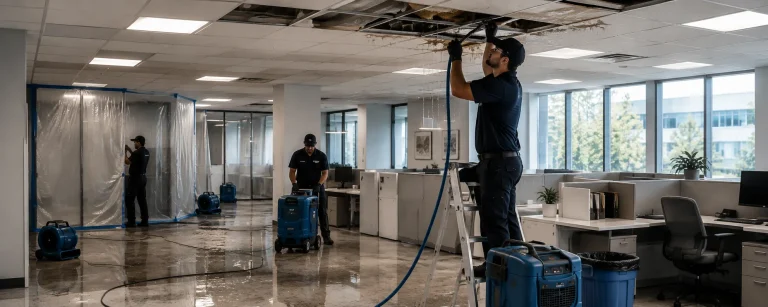
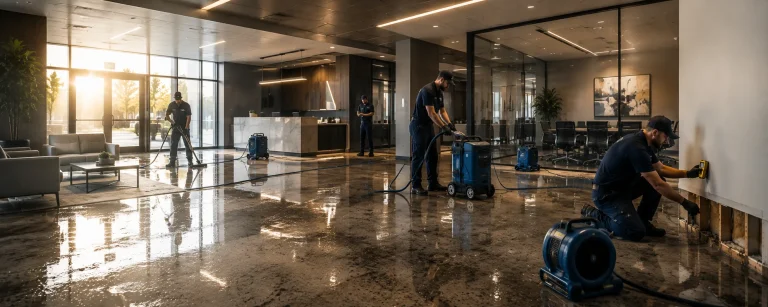
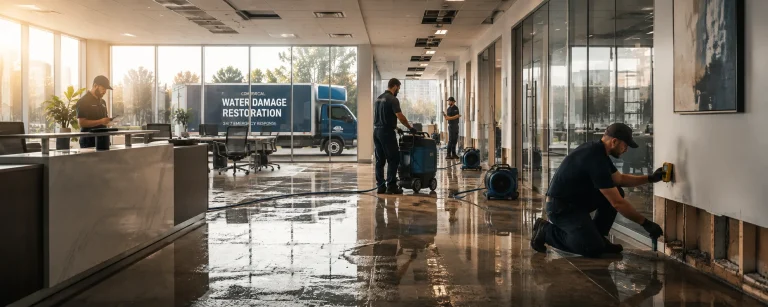
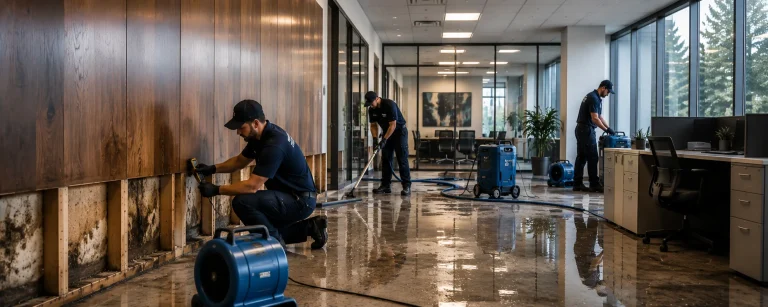
Salt Lake City, UT
Commercial Water Damage in Salt Lake City Requires Protecting Rapidly Growing Commercial Properties and Mission-Critical Facilities
Salt Lake City has become one of the fastest-growing commercial markets in the western United States. Technology companies, healthcare systems, financial institutions, distribution centers, advanced manufacturing, life sciences, higher education, and corporate headquarters continue to drive commercial development throughout the Wasatch Front.
As commercial buildings become larger, more technologically advanced, and more valuable, water damage recovery has shifted from simple replacement toward preserving building systems, minimizing downtime, and restoring commercial assets whenever practical.
Commercial Water Damage provides educational resources that help facility managers, property managers, building owners, developers, and commercial contractors better understand commercial water damage throughout the Salt Lake City metropolitan area.
Restoration Has Become More Valuable Than Replacement
Modern commercial facilities represent significant long-term investments.
Many Salt Lake City commercial properties feature:
- Smart building automation
- High-performance HVAC systems
- Premium office interiors
- Data and communications infrastructure
- Healthcare facilities
- Advanced manufacturing systems
- Energy-efficient building envelopes
- Custom tenant improvements
Replacing these systems following a major water event often requires specialized contractors, extended construction schedules, and substantial capital investment.
For many commercial property owners, restoration provides a practical strategy for preserving valuable building systems while reducing operational disruption and protecting long-term property value.
Mountain Weather Creates Unique Water Damage Risks
Salt Lake City’s four-season climate creates water damage challenges throughout the year.
Commercial water damage commonly results from:
- Heavy snow accumulation
- Rapid snowmelt
- Frozen plumbing lines
- Fire sprinkler pipe failures
- Roof leaks
- Severe thunderstorms
- Flash flooding
- HVAC condensate failures
- Mechanical equipment leaks
- Drainage system backups
Although Utah has a relatively dry climate, significant water losses frequently originate from plumbing failures, mechanical systems, roof damage, and seasonal weather events.
Water Can Travel Well Beyond the Original Leak
Commercial water damage often extends far beyond where water first becomes visible.
Moisture may migrate through:
- Concrete floor systems
- Structural steel
- Wall assemblies
- Ceiling plenums
- Mechanical rooms
- Utility corridors
- Electrical infrastructure
- Multi-tenant office and industrial spaces
Professional moisture mapping helps identify hidden moisture before reconstruction begins, reducing unnecessary demolition while supporting more effective restoration.
Salt Lake City’s Economy Requires Specialized Recovery Planning
Commercial restoration projects frequently involve:
- Technology campuses
- Healthcare systems
- Distribution centers
- Manufacturing facilities
- Financial institutions
- Universities
- Corporate headquarters
- Mixed-use developments
Each property presents different operational priorities, occupancy requirements, and building systems that influence recovery planning.
Business Continuity Is Essential
Many Salt Lake City businesses cannot afford extended operational interruptions.
Recovery planning often includes:
- Temporary workspaces
- Equipment protection
- Safe employee and customer access
- Phased restoration
- Overnight scheduling
- Weekend work
- Tenant communication
- Business continuity planning
Maintaining operations whenever practical helps reduce financial losses while protecting productivity and tenant confidence.
Modern Restoration Protects Valuable Commercial Assets
Today’s commercial restoration strategies focus on preserving existing building systems whenever appropriate.
Recovery efforts often include:
- Moisture mapping
- Structural drying
- Industrial dehumidification
- Material preservation
- Controlled demolition
- Building system protection
- Targeted reconstruction
- Long-term asset management
Rather than replacing every affected material, restoration planning seeks to preserve valuable commercial investments while reducing recovery timelines and minimizing disruption.
Questions Salt Lake City Property Owners Frequently Ask
Commercial recovery often involves balancing immediate repairs with long-term building performance.
Important questions often include:
- How far has moisture migrated?
- Which building systems require immediate attention?
- Can operations continue safely during restoration?
- Can valuable building materials be restored instead of replaced?
- How will insurance documentation support the project?
- What preventive improvements should be completed before winter?
- How can future weather-related water losses be reduced?
- What strategy best protects long-term property value?
- How will project communication be managed?
These discussions often lead to more efficient recovery while improving future building resilience.
Preparing Commercial Buildings for Future Water Events
Many Salt Lake City property owners strengthen their facilities following restoration work.
Potential improvements include:
- Freeze protection planning
- Roof maintenance programs
- Plumbing inspections
- Water detection technology
- Building envelope evaluations
- Preventive HVAC maintenance
- Emergency response planning
- Long-term capital improvement strategies
Preparing before the next winter season or spring thaw helps reduce future operational disruptions while protecting valuable commercial assets.
Why Commercial Water Damage Focuses on Salt Lake City
Salt Lake City combines technology, healthcare, financial services, manufacturing, logistics, higher education, and one of the fastest-growing commercial real estate markets in the Intermountain West into a unique business environment where protecting existing assets is increasingly more valuable than replacing them.
Commercial Water Damage provides educational resources that help facility managers, property managers, building owners, developers, and commercial contractors better understand moisture migration, water mitigation, restoration planning, repair strategies, insurance coordination, and long-term building performance.
Whether responding to a frozen sprinkler line in Downtown Salt Lake City, a roof leak following a winter snowstorm, water damage at a healthcare campus, flooding inside a distribution center west of the city, or a plumbing failure affecting a technology office along the Wasatch Front, informed planning helps reduce downtime, preserve valuable assets, and support a faster, more efficient commercial recovery.
Water Emergency?
Our commercial response team is available 24/7 for water extraction, structural drying and restoration.
Our Services
Talk To A Specialist
Need help with a water loss right now?
Call our commercial team for extraction, drying and restoration planning built around your building and your operations.