Water emergency? Our commercial crews respond 24/7.
Home / Commercial Water Damage Colorado Denver
Commercial Water Damage
- 24/7 Response
- Extraction
- Structural Drying
- Restoration
What happens when you call
24/7 dispatch
Call any hour. Crews mobilize for commercial losses, including nights and weekends.
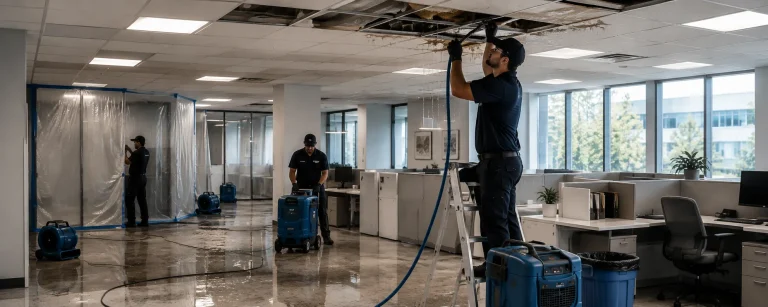
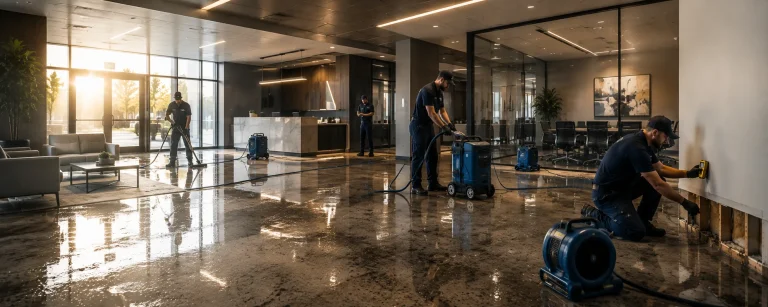
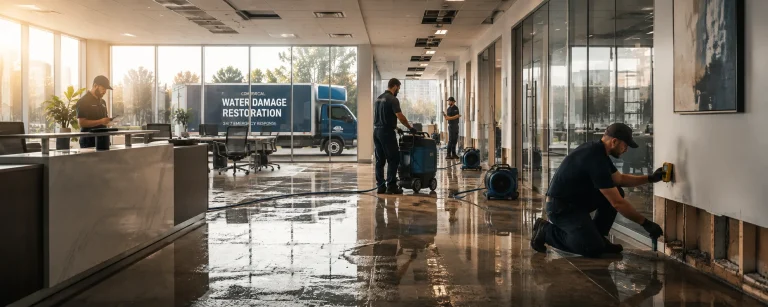
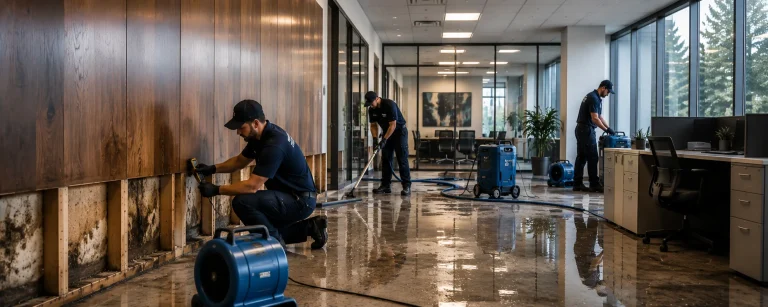
Extraction & drying
Standing water removed, then structural drying with monitored moisture readings.
Insurance-ready records
Readings, photos and scope notes documented for your carrier from day one.
Colorado — Denver
Freeze-Thaw, Hail, and Rapid Snowmelt Make Denver a Distinctly Seasonal Water Damage Market
Denver sits at the intersection of rapid commercial growth and genuinely difficult building weather. Corporate headquarters, aerospace and defense facilities, healthcare campuses, technology offices, distribution centers near Denver International Airport, hotels, and mixed-use developments continue to expand across the Front Range at pace.
What makes commercial water damage in Denver distinct is not the volume of water but the timing. Losses cluster hard around specific seasonal events, and buildings that perform well for ten months of the year can fail predictably in the other two.
Commercial Water Damage provides educational resources that help facility managers, property managers, building owners, developers, and commercial contractors better understand commercial water damage throughout the Denver metropolitan area.
The Freeze-Thaw Cycle Is the Defining Local Risk
Denver routinely swings across the freezing point within a single day. A building can be well below freezing at dawn and comfortably above it by mid-afternoon, repeatedly, for weeks.
That cycle produces failures in:
- Domestic water lines in unheated or poorly insulated spaces
- Wet-pipe fire sprinkler systems in attics, parking structures, and loading docks
- Rooftop mechanical units and condensate lines
- Backflow preventers and exterior hose bibs
- Roof drains and internal leaders that ice over
- Sealant joints and flashing that fatigue with expansion
- Irrigation and site utility connections
Frozen pipe failures also share an unfortunate characteristic: they often occur overnight or over a holiday weekend, when the building is unoccupied and the discharge runs for hours before anyone notices.
Hail and Snowmelt Attack the Building From Above
The Front Range is one of the most hail-exposed corridors in the country. Hail damage to a commercial roof frequently does not leak immediately; it bruises the membrane, and the leak appears during the next major melt or storm months later.
Roof-related water damage in Denver commonly involves:
✓ Hail-bruised single-ply and modified bitumen membranes
✓ Heavy snow load and ponding at low slopes
✓ Ice damming at parapets and roof edges
✓ Blocked or frozen roof drains and scuppers
✓ Failed penetrations at rooftop equipment curbs
✓ Rapid spring snowmelt overwhelming drainage
✓ Wind-driven rain during severe thunderstorms
✓ Skylight and clerestory seal failures
Water Can Travel Well Beyond the Initial Leak
Commercial water damage rarely remains confined to the original point of entry.
Moisture may migrate through:
- Concrete floor systems and slab edges
- Structural steel and metal deck
- Wall assemblies and insulation cavities
- Ceiling plenums and return air pathways
- Mechanical and electrical rooms
- Utility corridors and cable trays
- Elevator shafts and stairwells
- Multi-tenant office demising walls
Denver’s dry ambient air is genuinely helpful during drying, but it can also mask a problem: surfaces feel dry while concealed cavities and insulation remain saturated. Understanding moisture migration is essential before restoration and permanent repairs begin.
Denver’s Commercial Economy Creates Diverse Recovery Needs
Commercial restoration projects throughout the region may involve:
✓ Downtown and LoDo office towers
✓ Healthcare campuses and surgical centers
✓ Aerospace and defense facilities
✓ Technology and coworking offices
✓ DIA-corridor distribution and logistics centers
✓ Breweries and food production facilities
✓ Hotels and event venues
✓ Mixed-use and RiNo redevelopment properties
Each property presents different operational priorities, building systems, and occupancy requirements that influence recovery planning.
Business Continuity Is Critical
Many Denver businesses continue operating while restoration work is underway.
Recovery planning often includes:
- Floor-by-floor phasing in multi-tenant towers
- Temporary workspace and relocation planning
- Equipment and inventory protection
- Safe employee and customer access
- Overnight and weekend scheduling
- Heat and power continuity during winter work
- Tenant and ownership communication
- Documented business continuity planning
Maintaining operations whenever practical helps reduce financial losses while protecting tenant relationships.
Modern Restoration Protects Valuable Commercial Assets
Today’s commercial recovery strategies emphasize preserving existing building systems whenever appropriate.
Commercial restoration frequently includes:
✓ Moisture mapping and thermal imaging
✓ Structural drying with documented targets
✓ Industrial dehumidification
✓ Material preservation and selective salvage
✓ Controlled demolition
✓ Building system and equipment protection
✓ Targeted reconstruction
✓ Long-term asset management
Rather than replacing every affected material, restoration planning focuses on protecting valuable commercial investments while minimizing recovery time.
Questions Denver Property Owners Frequently Ask
- How far has moisture migrated behind walls and above ceilings?
- Was this a sudden freeze failure or a long-term maintenance issue?
- Which building systems require immediate attention?
- Can operations continue safely during restoration?
- Can valuable materials be restored instead of replaced?
- How should hail damage be documented separately from wear?
- What improvements should be made before the next winter season?
- What strategy best protects long-term property value?
Thoughtful planning early in the project often results in a more efficient recovery.
Preparing Commercial Buildings for the Next Winter
Many Denver property owners strengthen their facilities following a water damage event.
Potential improvements include:
✓ Pre-winter freeze protection audits
✓ Heat trace inspection and low-temperature alarms
✓ Roof and drain maintenance programs
✓ Post-hail roof inspections and documentation
✓ Automatic water shutoff and leak detection
✓ Sprinkler system freeze protection review
✓ Holiday and after-hours monitoring procedures
✓ Long-term capital improvement strategies
Preparing for changing weather conditions helps reduce future operational disruptions while improving long-term resilience.
Why Commercial Water Damage Focuses on Denver
Denver combines technology, aerospace, healthcare, logistics, corporate headquarters, and rapid commercial development with a mountain climate that presents unique water damage challenges throughout the year.
Commercial Water Damage provides educational resources that help facility managers, property managers, building owners, developers, and commercial contractors better understand moisture migration, water mitigation, restoration planning, repair strategies, insurance coordination, and long-term building performance.
Whether responding to a frozen pipe in Downtown Denver, a roof leak following a Front Range hailstorm, water damage at a healthcare campus, flooding inside a distribution center near Denver International Airport, or a plumbing failure affecting a technology office, informed planning helps reduce downtime, preserve valuable assets, and support a faster, more efficient commercial recovery.
Water Emergency?
Our commercial response team is available 24/7 for water extraction, structural drying and restoration.
Our Services
Talk To A Specialist
Need help with a water loss right now?
Call our commercial team for extraction, drying and restoration planning built around your building and your operations.