Water emergency? Our commercial crews respond 24/7.
Home / Commercial Water Damage Nevada Reno
Commercial Water Damage
- 24/7 Response
- Extraction
- Structural Drying
- Restoration
What happens when you call
24/7 dispatch
Call any hour. Crews mobilize for commercial losses, including nights and weekends.
Extraction & drying
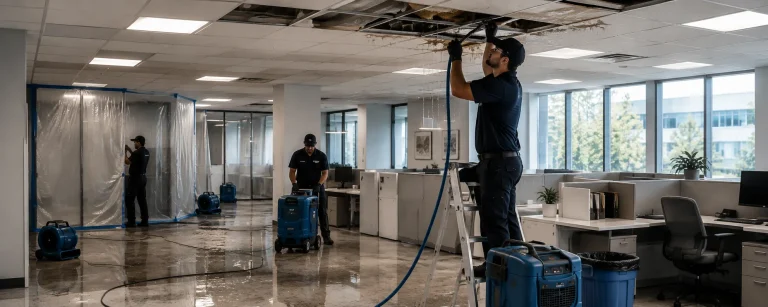
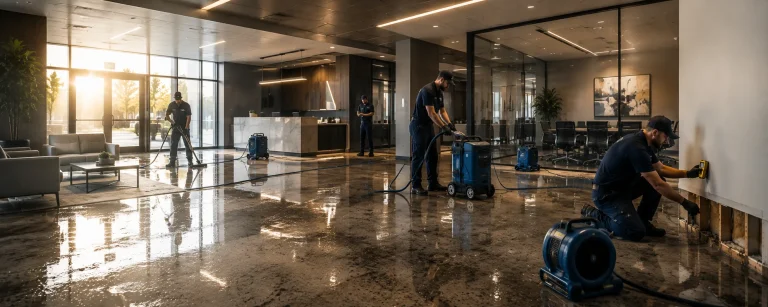
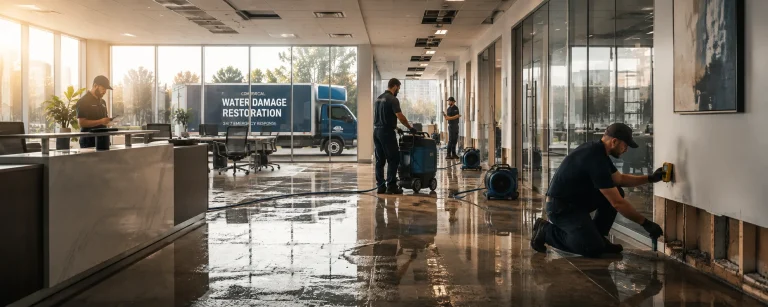
Standing water removed, then structural drying with monitored moisture readings.
Insurance-ready records
Readings, photos and scope notes documented for your carrier from day one.
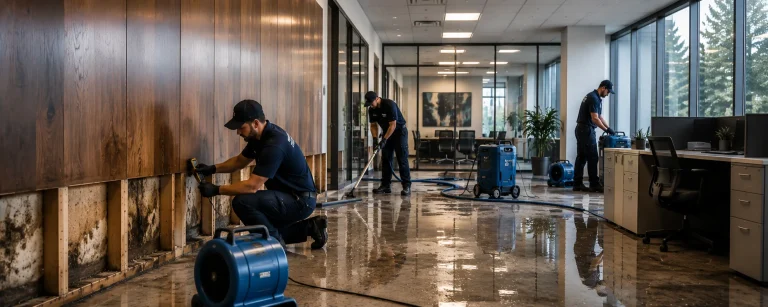
Nevada — Reno
High Desert Freeze Risk Meets a Logistics and Manufacturing Boom in Northern Nevada
Reno has changed substantially. What was once primarily a gaming and tourism market now anchors one of the fastest-growing industrial corridors in the western United States, with data centers, advanced manufacturing, battery and energy storage production, and enormous distribution facilities spread east along I-80 toward the Tahoe Reno Industrial Center.
That growth has created a commercial building stock with two very different profiles: large, newly built industrial facilities on one hand, and older downtown casino, hotel, and office properties on the other. Each fails in different ways.
Commercial Water Damage provides educational resources that help facility managers, property managers, building owners, developers, and commercial contractors better understand commercial water damage throughout the Reno and Sparks metropolitan area.
High Desert Climate Creates Freeze Risk in a Dry Market
Reno sits at roughly 4,500 feet, which produces something many people do not expect from Nevada: real winters, with hard overnight freezes and significant daily temperature swings.
Commercial water damage commonly results from:
- Frozen pipes in unheated warehouse and dock areas
- Wet-pipe sprinkler freezing in large industrial buildings
- Sierra snowmelt and Truckee River flooding
- Roof snow load and ice damming
- Flash flooding from intense summer thunderstorms
- Roof membrane degradation from high-altitude UV exposure
- Aging plumbing in older downtown properties
- HVAC and evaporative cooling system failures
- Fire sprinkler discharges
The freeze-thaw pattern here resembles Denver more than it resembles Las Vegas, and buildings designed with a desert assumption often lack the freeze protection the climate actually requires.
Large-Format Industrial Buildings Change the Math
A water event inside a one-million-square-foot distribution center is a different problem than a leak in an office building.
Industrial water losses involve:
- Enormous open floor plates with few natural containment barriers
- Racked inventory that must be relocated before drying
- Conveyor, sortation, and automation equipment
- Concrete slabs that hold moisture and delay flooring work
- Battery, chemical, and hazardous material storage areas
- Data center and server room exposure
- Cold storage and temperature-controlled zones
Inventory loss and operational interruption frequently exceed the cost of the building repair by a wide margin.
Water Can Travel Well Beyond the Initial Leak
Moisture may migrate through:
- Concrete slabs and control joints
- Tilt-up wall panel joints
- Insulated metal panel assemblies
- Mezzanine and office build-out areas
- Electrical rooms and equipment pads
- Ceiling plenums in hotel and office properties
- Elevator pits and utility trenches
Northern Nevada Commercial Property Types
Commercial restoration projects throughout the region may involve:
✓ Distribution and fulfillment centers
✓ Data centers and technology facilities
✓ Advanced manufacturing and battery production
✓ Downtown casino and hotel properties
✓ Healthcare campuses and medical offices
✓ University and institutional buildings
✓ Cold storage and food distribution
✓ Retail centers and mixed-use developments
Business Continuity Is Critical
Recovery planning often includes:
- Zone isolation so unaffected operations continue
- Inventory relocation and salvage assessment
- Automation and equipment protection
- Guest relocation at hotel properties
- Shift-based and overnight scheduling
- Cold chain and temperature continuity
- Tenant and corporate communication
- Documented business continuity planning
Modern Restoration Protects Valuable Commercial Assets
Commercial restoration frequently includes:
✓ Moisture mapping and thermal imaging
✓ Large-volume extraction and containment
✓ Structural and concrete slab drying
✓ Industrial dehumidification at scale
✓ Equipment and electronics stabilization
✓ Inventory salvage documentation
✓ Controlled demolition and targeted reconstruction
✓ Verification before operations resume
The dry high desert air helps drying considerably, but only once moisture trapped in slabs, panel joints, and insulation has actually been located.
Questions Reno Property Owners Frequently Ask
- Was this a freeze failure, and are other pipe runs at risk?
- How much inventory is salvageable?
- Can part of the facility keep operating during drying?
- How long will the concrete slab take to reach flooring tolerance?
- Was automation or server equipment exposed?
- Does the building have adequate freeze protection for this elevation?
- How should business interruption be documented?
- What improvements reduce exposure before next winter?
Preparing Commercial Buildings for Future Events
Potential improvements include:
✓ Freeze protection audits for warehouse and dock areas
✓ Dry-pipe sprinkler evaluation in unheated space
✓ Heat trace and low-temperature alarms
✓ Leak detection in server and automation areas
✓ Roof and drainage maintenance programs
✓ Site grading and flash flood management
✓ Racking layout that supports rapid inventory relocation
✓ After-hours monitoring and escalation procedures
Why Commercial Water Damage Focuses on Reno
Reno and Sparks combine large-format logistics, advanced manufacturing, data centers, and established gaming and hospitality with a high desert climate that produces genuine freeze risk alongside snowmelt and flash flooding.
Commercial Water Damage provides educational resources that help facility managers, property managers, building owners, developers, and commercial contractors better understand moisture migration, water mitigation, restoration planning, repair strategies, insurance coordination, and long-term building performance.
Whether responding to a frozen sprinkler line at a Tahoe Reno Industrial Center warehouse, snowmelt flooding near the Truckee River, a plumbing failure in a downtown hotel tower, or a roof leak above a data center, informed planning helps reduce downtime, preserve valuable assets, and support a faster, more efficient commercial recovery.
Water Emergency?
Our commercial response team is available 24/7 for water extraction, structural drying and restoration.
Our Services
Talk To A Specialist
Need help with a water loss right now?
Call our commercial team for extraction, drying and restoration planning built around your building and your operations.