Water emergency? Our commercial crews respond 24/7.
Home / Commercial Fire Sprinkler Systems NV Reno – Service & Repair
Commercial Fire Sprinkler Systems
- 24/7 Response
- Extraction
- Structural Drying
- Restoration
What happens when you call
24/7 dispatch
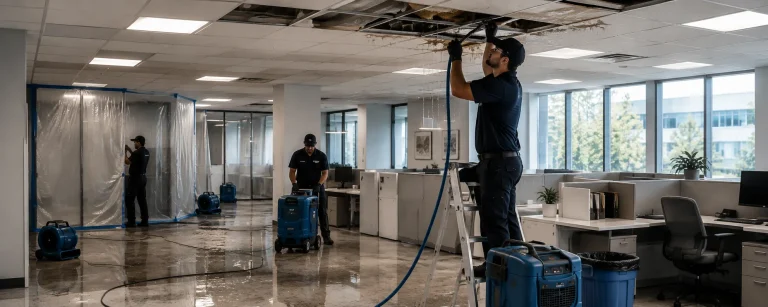
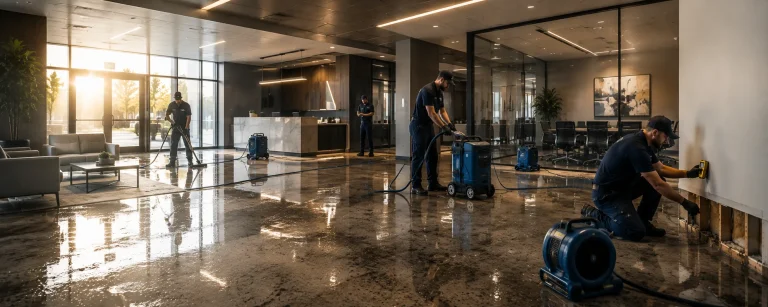
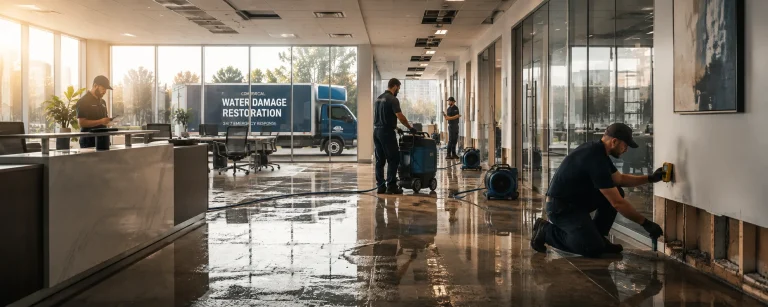
Call any hour. Crews mobilize for commercial losses, including nights and weekends.
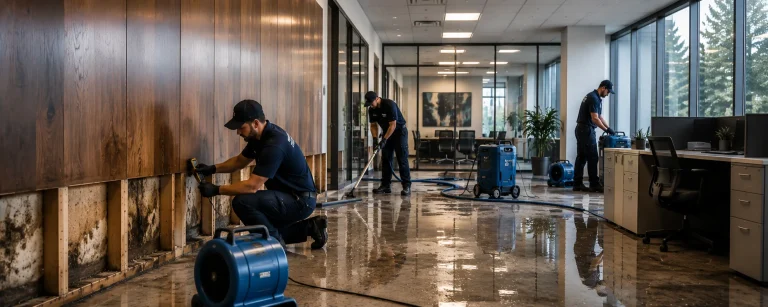
Extraction & drying
Standing water removed, then structural drying with monitored moisture readings.
Insurance-ready records
Readings, photos and scope notes documented for your carrier from day one.
Reno, NV — Service & Repair
Massive Warehouse Sprinkler Systems in a Climate That Freezes Is Northern Nevada’s Defining Fire Protection Challenge
Northern Nevada’s industrial expansion has produced an enormous amount of new sprinklered square footage. Distribution centers, fulfillment facilities, manufacturing plants, and data centers along the I-80 corridor and through the Tahoe Reno Industrial Center carry some of the most demanding fire protection designs in commercial construction — high-pile storage, ESFR systems, and in-rack sprinklers protecting enormous open volumes.
The complication is elevation. Reno sits at roughly 4,500 feet and experiences hard freezes through the winter. Large warehouse volumes are expensive to heat uniformly, and sprinkler piping in dock areas, mezzanines, and unheated zones is genuinely exposed to freeze risk.
Commercial Water Damage provides educational resources that help facility managers, property managers, building owners, developers, and commercial contractors better understand fire sprinkler system service, inspection, repair, and the water damage consequences of system failure throughout the Reno and Sparks metropolitan area.
What Commercial Fire Sprinkler Service Covers
✓ Inspection, testing, and maintenance programs
✓ Wet-pipe, dry-pipe, and pre-action system service
✓ ESFR and in-rack storage system servicing
✓ Fire pump testing and maintenance
✓ Backflow prevention testing and certification
✓ Control valve, alarm, and supervisory device checks
✓ Sprinkler head replacement and obstruction correction
✓ System modification following racking or layout changes
Why Sprinkler Systems Discharge When There Is No Fire
- Frozen piping rupturing in unheated warehouse and dock areas
- Mechanical impact from forklifts, reach trucks, and racking
- Damage during racking installation or reconfiguration
- Corrosion pinholes in aging steel pipe
- Air pressure loss in dry and pre-action systems
- Manufacturing defects and recalled head models
- Overheating near unit heaters and process equipment
- Damage during tenant improvement and construction work
Impact damage is disproportionately common in high-throughput distribution facilities. Heads and branch lines sit within reach of material handling equipment, and a single contact can release water directly onto racked inventory.
Warehouse Discharge Is an Inventory Problem First
In a large industrial building, the structure often survives a discharge with modest damage while the contents do not.
- Racked inventory and packaging saturated from above
- Conveyor, sortation, and automation equipment
- Electrical panels, motor controls, and drives
- Server rooms and warehouse management infrastructure
- Concrete slabs holding moisture beneath racking
- Mezzanine and office build-out areas
- Cold storage and temperature-controlled zones
- Insulated metal panel assemblies
Inventory salvage assessment and relocation frequently dominate the schedule, because drying cannot proceed effectively until the floor is clear.
Inspection, Testing, and Maintenance Requirements
NFPA 25 establishes the framework for inspection, testing, and maintenance of water-based fire protection systems, enforced locally by the authority having jurisdiction.
Typical intervals include:
- Weekly or monthly checks of gauges and control valves, depending on supervision
- Quarterly inspection of alarm devices and connections
- Annual inspection and testing of the overall system
- Five-year internal pipe inspection
- Five-year obstruction investigation
- Periodic sprinkler head testing or replacement based on type and age
- Fire pump testing on defined schedules
High-pile storage facilities carry an additional obligation that is easy to overlook: sprinkler design is matched to a specific commodity classification and storage height. Change what you store or how high you stack it, and the existing system may no longer be compliant. Requirements vary by system type and occupancy, so owners should confirm specifics with their local fire authority and licensed sprinkler contractor.
Northern Nevada Building Types That Depend on Sprinkler Systems
✓ Distribution and fulfillment centers
✓ High-pile storage and rack-supported warehouses
✓ Advanced manufacturing and battery production
✓ Data centers and technology facilities
✓ Cold storage and food distribution
✓ Downtown casino and hotel properties
✓ Healthcare campuses and medical offices
✓ Retail centers and parking structures
Repair Work Commonly Required
- Replacing frozen and ruptured pipe sections
- Replacing impact-damaged heads and branch lines
- Correcting corrosion and pinhole leaks
- Restoring air pressure on dry and pre-action systems
- Repairing or replacing control and check valves
- Fire pump and controller service
- Reconfiguring in-rack sprinklers after layout changes
- Recharging, testing, and returning the system to service
Questions Reno Facility Managers Frequently Ask
- Is our freeze protection adequate for this elevation?
- Should unheated zones convert to dry-pipe systems?
- How much inventory is salvageable after a discharge?
- Does our system still match our commodity classification?
- Can part of the facility keep operating during repairs?
- How quickly can the system be recertified?
- Would head guards have prevented this impact damage?
- Would zone isolation valves have limited the discharge area?
Reducing the Risk of Accidental Discharge
✓ Pre-winter freeze protection audits of all sprinkler zones
✓ Dry-pipe or antifreeze systems in unheated areas
✓ Heat trace and low-temperature alarms at vulnerable runs
✓ Head guards throughout material handling zones
✓ Forklift operator awareness and clearance training
✓ Zone isolation valves that limit discharge area
✓ Water flow alarms monitored across all shifts
✓ Sprinkler review before any racking or storage change
Why Commercial Water Damage Covers Fire Sprinkler Systems in Reno
Northern Nevada combines very large sprinklered industrial volumes with genuine winter freeze exposure, which is an unusual and demanding pairing. Most of the region’s large accidental water losses trace back to the fire protection system rather than to plumbing.
Commercial Water Damage provides educational resources that help facility managers, property managers, building owners, developers, and commercial contractors better understand sprinkler system types, inspection and testing obligations, discharge causes, water damage response, insurance coordination, and long-term building performance.
Whether responding to a frozen main at a Tahoe Reno Industrial Center warehouse, an impact discharge over racked inventory, a corrosion pinhole in a downtown hotel, or a system requiring recertification before operations resume, informed planning helps reduce downtime, preserve valuable assets, and support a faster, more efficient recovery.
Water Emergency?
Our commercial response team is available 24/7 for water extraction, structural drying and restoration.
Our Services
Talk To A Specialist
Need help with a water loss right now?
Call our commercial team for extraction, drying and restoration planning built around your building and your operations.