
Water emergency? Our commercial crews respond 24/7.
Home / Commercial Sewage Cleanup
Commercial Sewage Cleanup
- 24/7 Response
- Extraction
- Structural Drying
- Restoration
What happens when you call
24/7 dispatch
Call any hour. Crews mobilize for commercial losses, including nights and weekends.
Extraction & drying
Standing water removed, then structural drying with monitored moisture readings.
Insurance-ready records
Readings, photos and scope notes documented for your carrier from day one.
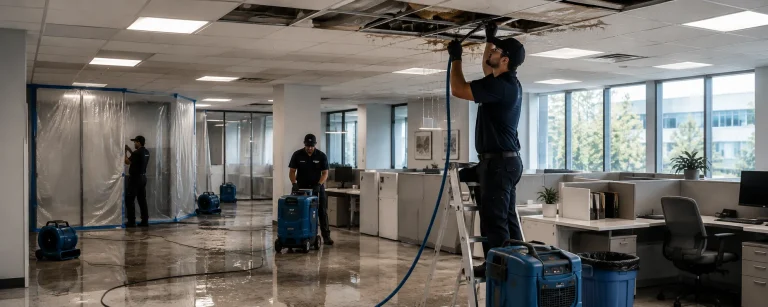
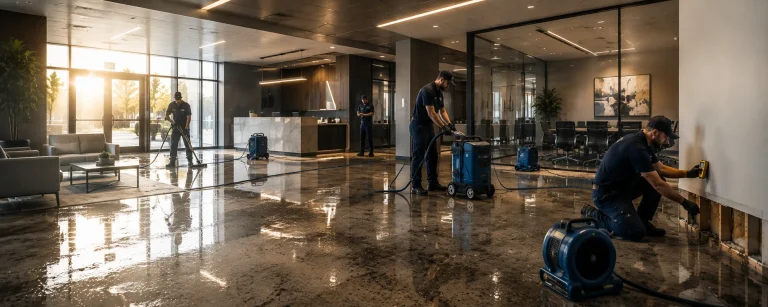
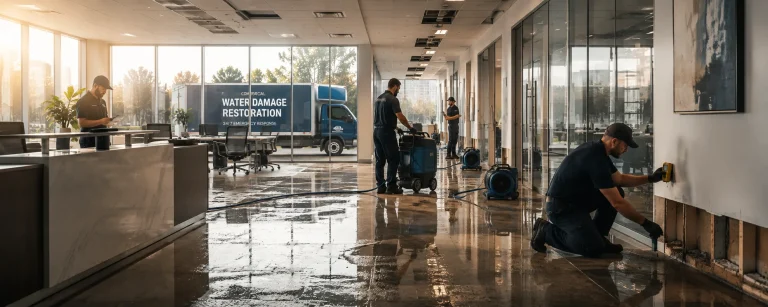
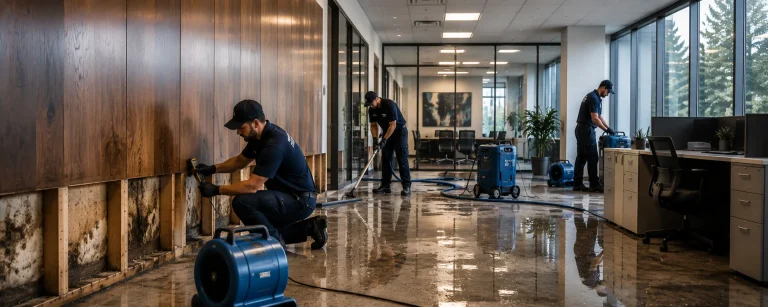
Commercial Sewage Cleanup Is About More Than Removing Standing Water
A sewage backup is a contamination event that happens to involve water.
Beyond saturated flooring or drywall, a backup may affect food service areas, restrooms, storage, occupied workspaces, and the air occupants breathe while the building is cleaned. Every decision made during recovery can influence occupant health, regulatory exposure, and how long a space stays closed.
Commercial Water Damage provides educational resources that help building owners, facility managers, property managers, restaurant and retail operators, and commercial contractors better understand commercial sewage cleanup and the planning required to return a contaminated space to safe use.
Sewage Losses Are Classified Differently From Clean Water Losses
Restoration professionals separate water losses by how contaminated the water is.
- Clean water from a supply line or a sanitary source
- Gray water carrying significant contamination, such as appliance discharge
- Black water that is grossly contaminated, which includes sewage
- Clean water that has degraded over time or traveled through contaminated materials
- Losses involving flood water from outside the building
- Losses affecting food preparation or food storage areas
- Losses in healthcare, childcare, or similarly sensitive environments
Sewage is treated as grossly contaminated, which changes what can be dried and saved versus what is removed and replaced.
Common Causes of Commercial Sewage Backups
Commercial drainage systems fail for reasons that are often building-specific.
- Main sewer line blockages and municipal backups
- Grease accumulation in restaurant drain lines
- Root intrusion in older lateral lines
- Collapsed or offset drain piping
- Lift station and ejector pump failures
- Floor drain and cleanout overflows
- Storm surcharge into combined sewer systems
- Improper items entering the drainage system
- Frozen or damaged vent and waste lines
Identifying the cause matters, because an unresolved blockage will produce the same loss again.
Contamination Can Travel Further Than the Visible Area
The cleaned floor is rarely the full extent of the affected area.
- Wall cavities and base materials wicking contaminated water
- Subfloor, floor assemblies, and expansion joints
- Under equipment, fixtures, and casework
- Carpet, pad, and porous floor coverings
- HVAC returns and ductwork near the floor
- Adjacent rooms connected by shared flooring
- Storage areas and inventory in contact with water
- Electrical and utility penetrations below the water line
The affected area should be defined before cleaning ends, not after.
Protecting Occupants, Employees, and the Public
A sewage cleanup in an operating building is a containment problem first.
- Restricting access to the affected area
- Containment barriers and negative air where appropriate
- Personal protective equipment for workers
- Clear signage and communication for occupants
- Protecting food preparation and storage areas
- Managing odors during the work
- Safe removal routes for contaminated materials
- Coordinating closures with building operations
Keeping occupants separated from contaminated areas is generally the first objective.
Porous Materials and Contents Require Additional Consideration
In a contamination event, not everything that is wet can be dried and kept.
- Carpet, pad, and textile floor coverings
- Drywall and insulation below the water line
- Ceiling tile and porous acoustic materials
- Particle board casework and fixtures
- Upholstered furnishings
- Paper records, packaging, and inventory
- Food products and food contact surfaces
- Porous stored contents in the affected area
Decisions about removal versus cleaning should be documented as they are made.
Coordinating a Sewage Cleanup in an Operating Building
These projects often involve parties who are not part of a typical water loss.
- Building ownership and property management
- Facility and maintenance staff
- Affected tenants and their employees
- Restoration professionals
- Plumbing contractors addressing the cause
- Insurance representatives
- Local health authorities for food service environments
- Waste disposal providers
Organized communication helps a building reopen without repeating the work.
Questions Facility Managers Should Ask
Every sewage loss has different exposure depending on the space it affected.
- What caused the backup, and has that cause been corrected?
- How was the affected area determined?
- Which materials are being removed and why?
- What cleaning and disinfection steps are being used?
- How are occupants being kept out of the work zone?
- Will food service or sensitive areas require additional steps?
- What documentation will be provided for the claim?
- How will it be verified that the area is safe to reoccupy?
- What can be done to prevent a repeat backup?
These discussions protect both occupants and the eventual claim.
Commercial Sewage Cleanup Happens in Phases
Contamination projects generally progress through several connected stages.
- Containment and access control
- Removal of contaminated water and solids
- Removal of affected porous materials
- Cleaning and disinfection of remaining surfaces
- Structural drying and moisture verification
- Odor control
- Repairs and interior reconstruction
- Final inspection before reoccupancy
Each phase supports a documented, verifiable return to safe use.
Looking Beyond the Immediate Cleanup
Many owners use a backup to address the condition that caused it.
- Scheduled drain line cleaning and jetting
- Grease trap and interceptor maintenance
- Camera inspection of lateral lines
- Backflow prevention where appropriate
- Lift station and ejector pump maintenance
- Floor drain and cleanout mapping
- Staff training on what may not enter the drainage system
- Emergency response planning
A proactive approach is usually far less expensive than a second closure.
Why Commercial Water Damage Focuses on Commercial Sewage Cleanup
Sewage losses require a different approach than clean water losses because contamination, not moisture alone, determines what is removed, what is cleaned, and when a space can reopen.
Commercial Water Damage provides educational resources that help building owners, facility managers, property managers, restaurant operators, and commercial contractors better understand contamination categories, cleanup planning, documentation, and insurance coordination and the planning required to reopen a contaminated space with confidence.
Whether addressing a restroom backup in a single tenant suite or coordinating a full closure after a main line failure, informed planning helps protect occupants, produce defensible documentation, and support a faster, safer return to operation.
Water Emergency?
Our commercial response team is available 24/7 for water extraction, structural drying and restoration.
Our Services
Talk To A Specialist
Need help with a water loss right now?
Call our commercial team for extraction, drying and restoration planning built around your building and your operations.