Water emergency? Our commercial crews respond 24/7.
Home / Water Sources / Equipment Failures
Equipment and Appliance Failures
- 24/7 Response
- Extraction
- Structural Drying
- Restoration
What happens when you call
24/7 dispatch
Call any hour. Crews mobilize for commercial losses, including nights and weekends.
Extraction & drying
Standing water removed, then structural drying with monitored moisture readings.
Insurance-ready records
Readings, photos and scope notes documented for your carrier from day one.
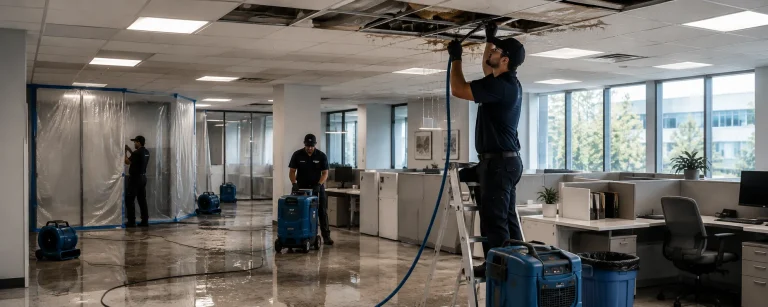
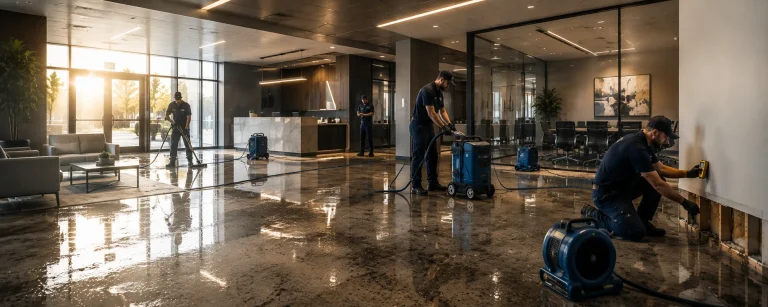
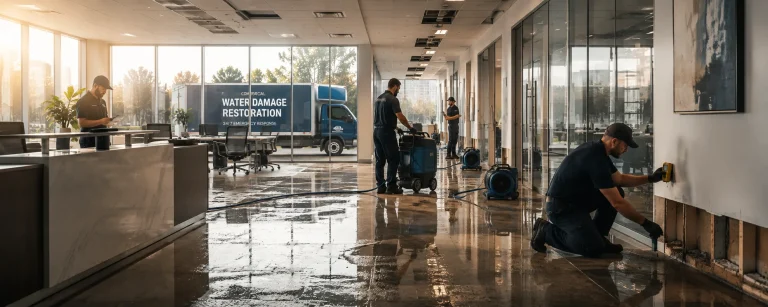
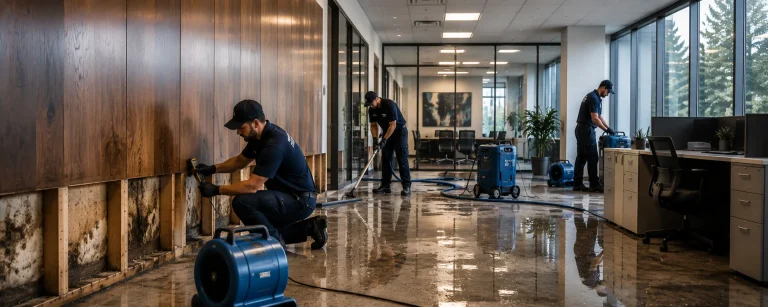
Commercial buildings contain a great deal of equipment that holds or uses water: water heaters, boilers, ice machines, dishwashers, laundry equipment, humidifiers, process machinery, and the supply and drain connections serving all of it.
Each piece is a potential water source, and most of them sit in places where a failure is not noticed quickly, such as mechanical rooms, back-of-house areas and equipment closets.
Equipment That Commonly Fails
- Water heaters, both tank and tankless, including their connections
- Boilers, and the relief valves and piping serving them
- Ice machines and their supply and drain lines
- Commercial dishwashers and warewashing equipment
- Laundry equipment in hospitality and healthcare buildings
- Humidifiers and their supply lines
- Reverse osmosis and water treatment equipment
- Process equipment that uses water for cooling or production
- Refrigeration equipment with water-cooled condensers
Water heaters are the most predictable item on that list. Tanks corrode from the inside on a known schedule, and a tank that fails does not drip. It releases its full contents and then continues to fill from the supply until the valve is closed.
Why Equipment Losses Get Big
Three factors tend to combine on these losses.
Continuous supply. Most of this equipment is connected to a pressurized line. When the vessel fails, the line keeps delivering water.
Unattended locations. Mechanical rooms and back-of-house spaces are not visited hourly, so failures run.
Neighboring equipment. Mechanical rooms concentrate electrical gear, controls and other systems in the same space, so the water reaches things that matter immediately.
A fourth factor applies in food service and healthcare: the equipment is directly tied to operations, so a failure interrupts the business even before the water damage is addressed.
Where the Water Goes
Equipment rooms are rarely designed as containment. Floor drains may exist but are frequently undersized for a full tank release, and housekeeping pads do not stop water from reaching the door.
From the room the water follows the slab, exits under the door, and moves into corridors and adjacent spaces. Where the room is above grade it finds penetrations, sleeves and slab edges and travels down. Kitchens and laundries add a further complication, because the water may carry grease, detergent or other residues.
What Gets Damaged
- Electrical panels, disconnects and controls in the equipment room
- The failed equipment and adjacent units
- Flooring and wall assemblies in and beyond the room
- Corridor and adjacent tenant finishes
- Ceilings and spaces on the level below
- Stored supplies, inventory and records in back-of-house areas
- Communications and data equipment sharing the space
The Response Sequence
Close the supply. Isolating the equipment stops the ongoing flow, which is often the difference between a room and a floor.
De-energize where appropriate. Equipment rooms combine water and electrical gear, so power is addressed by qualified personnel before anyone works in standing water.
Extract and assess the room. Standing water is removed and the affected equipment is evaluated by the appropriate trade rather than assumed serviceable.
Establish how far it traveled. Corridors, adjacent spaces and the level below are checked, since equipment rooms drain outward.
Dry the assemblies. Masonry, concrete and wall cavities in mechanical spaces hold moisture and are monitored rather than assumed dry.
Plan equipment replacement alongside restoration. Lead time on commercial equipment frequently controls when the space can return to normal use.
The Lead Time Problem
On many equipment losses the restoration finishes before the replacement equipment arrives. A commercial water heater, boiler component or specialized process machine can take weeks to source, and in the meantime the function that equipment served is unavailable.
That is worth identifying on the first day. If the replacement controls the schedule, ordering it is the most urgent task in the project, ahead of any drying or reconstruction decision. Temporary equipment may be able to bridge the gap for hot water, heating or critical process needs.
Early Warning Signs
- Rust, corrosion or mineral deposits at tank bases and connections
- Water in a drip pan or around a housekeeping pad
- Relief valves that weep or discharge intermittently
- Equipment past its expected service life
- Supply connectors that are aged, kinked or corroded
- Drain lines that are slow, blocked or disconnected
- Recurring small leaks treated as routine maintenance
Prevention
- Track equipment age and plan replacement before failure
- Install drip pans with drains under equipment above finished space
- Add leak detection and automatic shutoff at high-risk equipment
- Verify floor drains in equipment rooms are clear and adequately sized
- Replace supply connectors on a defined schedule
- Inspect relief valves and discharge piping
- Keep stored materials off the floor in equipment and back-of-house rooms
- Know where the isolation valve for each piece of equipment is
Automatic shutoff tied to leak detection is particularly effective for water heaters, because the failure mode is well understood and the equipment is almost always unattended when it happens.
Documentation
- The failed equipment, its age and service history
- Photographs of the equipment and room before cleanup
- Time of failure, discovery and isolation
- Affected areas beyond the room, including the level below
- Electrical and mechanical evaluations performed
- Moisture readings by location and date
- Replacement equipment ordered and expected lead time
Predictable Failures
Equipment failures are among the most predictable water sources in a commercial building. The units have known service lives, recognizable warning signs and well understood failure modes.
That makes them unusually responsive to planning. Tracking equipment age, adding detection and shutoff where the equipment sits above finished space, and knowing the isolation points in advance turns a category of loss that regularly floods multiple floors into one that is usually caught in the room where it started.
Water Emergency?
Our commercial response team is available 24/7 for water extraction, structural drying and restoration.
Our Services
Talk To A Specialist
Need help with a water loss right now?
Call our commercial team for extraction, drying and restoration planning built around your building and your operations.