Building water damage repair in a commercial property can range from a few ceiling tiles to a full floor rebuild. Two losses that look alike on day one can end up with very different repair bills. Owners often wonder why. The answer comes down to a handful of factors: what kind of water it was, how far it spread, which materials it touched, which building systems were affected, and what codes and insurance terms apply. This guide explains each factor, so you can understand your estimate and plan with fewer surprises.
Property owners, facility managers, and adjusters can use it to make sense of any repair scope.
What Scope of Work Means in Building Water Damage Repair
Put simply, the scope of work is the detailed list of tasks needed to return the building to its pre-loss condition. It covers removal, drying, cleaning, and rebuild. It also sets the budget and schedule for the whole job.
As a result, a clear scope protects everyone. Owners know what they are paying for. Contractors know what they must deliver. Meanwhile, insurers can compare the scope to the policy and the damage.
Factor 1: Water Category and Building Water Damage Repair
First, the type of water is often the biggest driver. For instance, water from a broken supply line starts out fairly clean. Overflow from a dishwasher or a toilet without waste counts as gray water. Sewage and outdoor floodwater, by contrast, are black water and carry the most risk.
As contamination rises, so does the scope. After a clean-water loss, crews can often dry and save many materials. After a black-water loss, however, they usually remove porous items like drywall, carpet, and insulation. Standards from the IICRC guide these decisions.
Factor 2: Time Before Response
Next, time changes the scope. Clean water left for days can become contaminated. Materials that would have dried easily can swell, delaminate, or grow mold. As a result, a slow response often leads to a much larger repair.
Factor 3: How Far the Water Spread
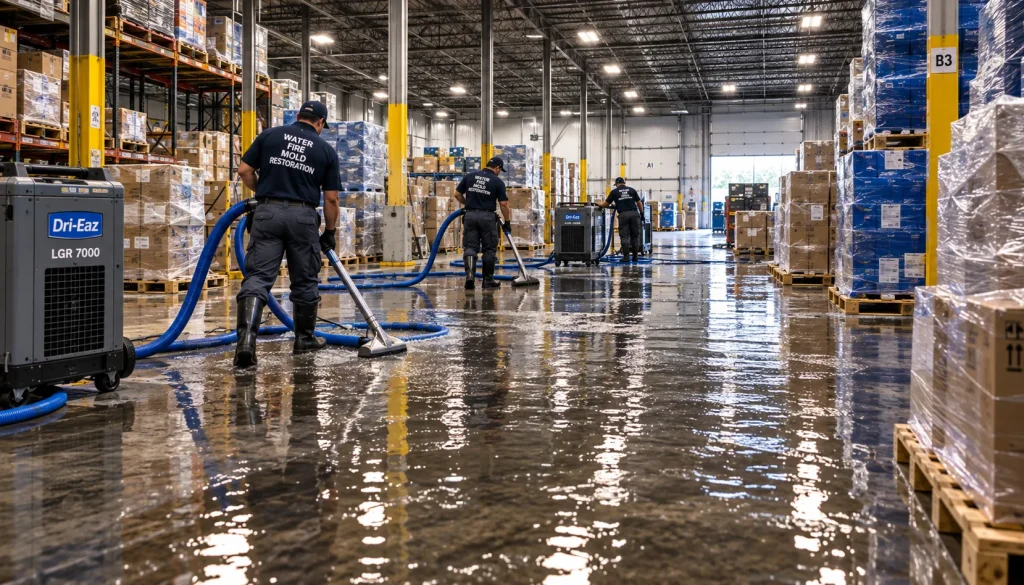
In addition, water moves in surprising ways. It can run along a floor, wick up walls, travel through ceiling cavities, and drip to lower floors. In multi-story buildings, a single leak can affect several suites.
Fortunately, moisture mapping shows the true spread. Without it, the scope may miss wet areas, which later cause mold or odor. Learn more on our moisture mapping page.
Factor 4: Materials That Drive Building Water Damage Repair
Meanwhile, different materials react differently to water:
- Concrete and masonry absorb water but usually dry well with time.
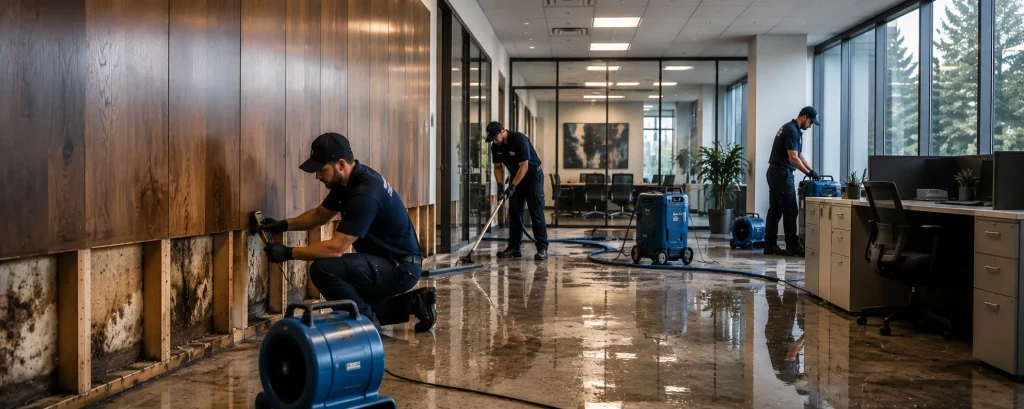
- Drywall wicks water and may crumble or grow mold if not dried quickly.
- Insulation holds water, so crews often replace it.
- Carpet and pad can dry after clean water, but contaminated water usually means new carpet.
- Wood and laminate can swell and warp.
- Ceiling tiles usually sag and stain, so crews typically swap them out.
The mix of materials shapes both drying time and rebuild costs.
Factor 5: Building Systems
Also, commercial buildings have complex systems. Water can damage electrical panels, fire alarms, elevators, HVAC units, and data cabling. Each system may need inspection, repair, or replacement by a licensed trade.
As a result, these systems can add significant cost and time to building water damage repair. For example, a flooded elevator pit may need specialized service before the elevator can run again.
Factor 6: Contents and Equipment
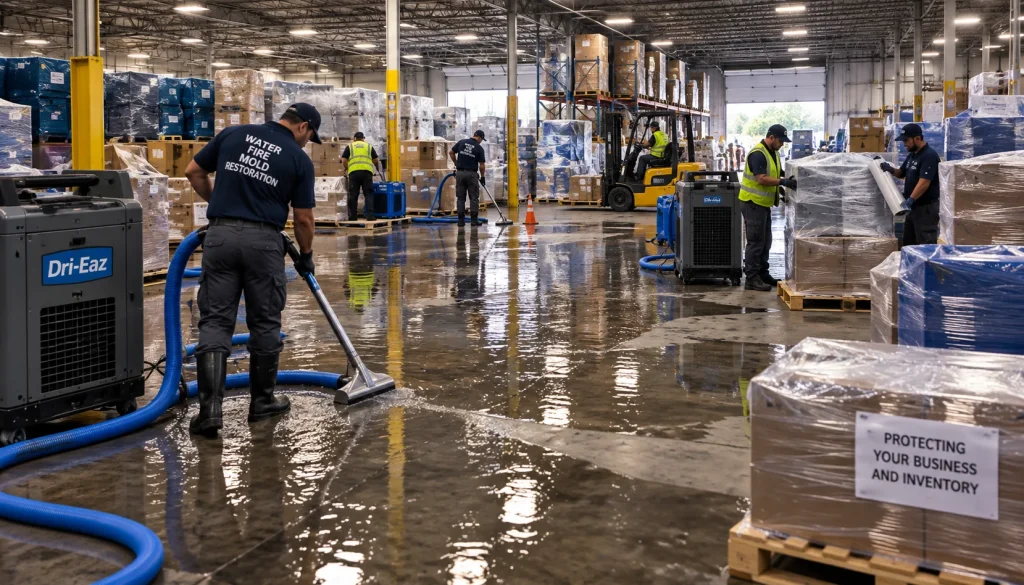
Beyond the building itself, inventory, furniture, computers, and equipment are often part of the loss. Some can be cleaned and restored. Others must be replaced. Contents work may be part of the same scope or handled separately, depending on the policy.
Factor 7: Codes, Permits, and Building Water Damage Repair
Furthermore, repairs must meet current building codes. When walls and ceilings open, inspectors may require upgrades, such as new electrical work or fire-rated assemblies. These code upgrades can expand the scope. Some insurance policies cover them, while others do not, so check your “ordinance or law” coverage.
Factor 8: Pre-Existing Conditions
Water losses sometimes reveal problems that existed before, such as old mold, rotted framing, or failing pipes. Insurers usually separate pre-existing damage from the new loss. Documenting conditions carefully helps sort this out. Our post on pre-loss building conditions covers this topic.
Factor 9: Insurance Terms
Finally, your policy shapes what gets paid. Deductibles, exclusions, limits, and coverage for business interruption all matter. Some policies exclude gradual leaks or flood. Read the policy early, and talk with your agent or adjuster. Our insurance process guide explains the steps.
How Contractors Scope Building Water Damage Repair
A good contractor builds the scope in stages. First, they assess the water category and spread. Next, they map moisture and identify materials. Then they list removal, drying, cleaning, and rebuild tasks. Finally, they price each line and share photos and readings to support it.
Many contractors use estimating software that insurers also use. That makes it easier to compare and approve the scope.
Why Scopes Change
Of course, scopes often change once work begins. Opening walls may reveal more damage. Drying may take longer than expected. Code inspectors may require upgrades. These changes are normal, yet they should be documented and approved before work continues. Read our post on restoration under uncertainty to learn more.
A Simple Example
Picture two offices on the same floor. In the first, a supply line bursts on a Friday afternoon. Crews arrive within an hour, extract the water, and dry the carpet and walls in place. The building water damage repair scope is small: a few baseboards, some paint, and a ceiling tile.
In the second office, a toilet overflows over a long weekend. By Monday, contaminated water has soaked carpet, wicked up drywall, and dripped into the suite below. Now the scope includes removing carpet and drywall, cleaning two floors, and rebuilding both suites. Same building, same floor, very different repair bills.
How to Keep the Scope Small
You cannot prevent every leak. Still, you can limit the damage. Install water sensors near risky equipment. Know where shutoff valves are. Keep a restoration company on call. Above all, act fast. A quick response is the single best way to keep building water damage repair small and affordable.
Questions to Ask About Your Estimate
- What water category did you assign, and why?
- How far did the moisture spread?
- Which materials will you dry, and which will you remove?
- Which building systems need a licensed trade?
- What happens if you find more damage?
Clear answers help you trust the scope and catch gaps early. They also show whether the contractor truly understands your building.
Tips for Owners
- Call for help quickly to limit the scope.
- Ask for moisture maps and photos with every estimate.
- Review the scope line by line.
- Ask how code upgrades will be handled.
- Get written approval for any changes.
FAQ on Building Water Damage Repair
Why is my repair scope bigger than expected?
Often because water spread further than it looked, or because it was contaminated.
Can I choose my own contractor?
Usually, yes. Most policies let owners choose, although the insurer must approve the scope.
Get a Clear Scope
Understanding the scope helps you plan and recover faster. Visit our repair services page, or request an assessment for your building.
Related Reading
- Commercial Water Damage Restoration — the full process from emergency response to final repairs.
- Commercial Moisture Mapping — finding water behind walls and under floors.
- The First 24 Hours of Cleanup — what happens on day one and why speed matters.
- Pre-Loss Building Conditions — establishing what existed before the damage.
- Commercial Restoration Documentation — why the evidence of the work matters as much as the work.
- Hidden Commercial Water Damage — why visible damage is rarely the full damage.