Guides on how commercial property losses actually unfold — what downtime costs, which building systems control the recovery, and when a property is genuinely ready to reoccupy.
Home/Blog/Frozen Pipes in Dallas Commercial Buildings: Lessons From the 2021 Winter Storm
Frozen Pipes in Dallas Commercial Buildings: Lessons From the 2021 Winter Storm
Published October 25, 2026 · Commercial Water Damage Restoration Team · Restoration Process & Sequencing
Retail cleanup has to protect merchandise and keep shoppers safe at the same time.
In February 2021, a winter storm brought days of below-freezing temperatures and widespread power outages to North Texas. Buildings that were designed for heat, not sustained cold, saw sprinkler lines, supply pipes and HVAC coils freeze and split. When temperatures rose, water poured into offices, stores, hotels and apartment buildings across Dallas-Fort Worth.
The next hard freeze may not be as severe, but it will come. This guide explains why commercial buildings in Dallas are vulnerable, how to prepare and what to do if pipes break.
Why Dallas Buildings Freeze
Most North Texas commercial buildings are built to keep heat out. Pipes run through exterior walls, attics, parking garages, loading docks and ceiling spaces that are not heated. That works fine most winters, but not during a long freeze or a power outage.
The most common failure points are:
Wet fire sprinkler lines in unheated spaces, canopies and attics
Dry sprinkler systems with water trapped in low points
Supply lines in exterior walls and ceiling spaces
Rooftop condensate lines and exposed plumbing
Irrigation backflow devices outside the building
HVAC coils and chilled water lines
The Biggest Risk Is the Thaw
A frozen pipe often does not leak until it thaws. That is why so many buildings in 2021 flooded days after the coldest weather, sometimes when no one was there to see it. A split sprinkler line can release a large volume of water in minutes.
Barriers and hidden equipment let parts of the store stay open during drying.
Preparing Your Building Before a Freeze
Know where every main water shutoff and sprinkler control valve is, and make sure staff can reach them after hours
Insulate or heat-trace pipes in unheated areas
Drain low points on dry sprinkler systems before winter
Seal gaps in exterior walls near pipes
Keep the heat on in vacant or partially occupied spaces
Check backup power for heat tape and critical systems
Have a restoration contractor’s number ready before the storm
When a Pipe Breaks
Stop the water. Shut off the main or the zone valve. For sprinkler lines, notify your fire alarm monitoring company and the fire marshal as required.
Protect people and power. Keep people away from wet electrical areas and turn off power to affected circuits if it is safe.
Document. Take photos and video of the break and the damage before cleanup.
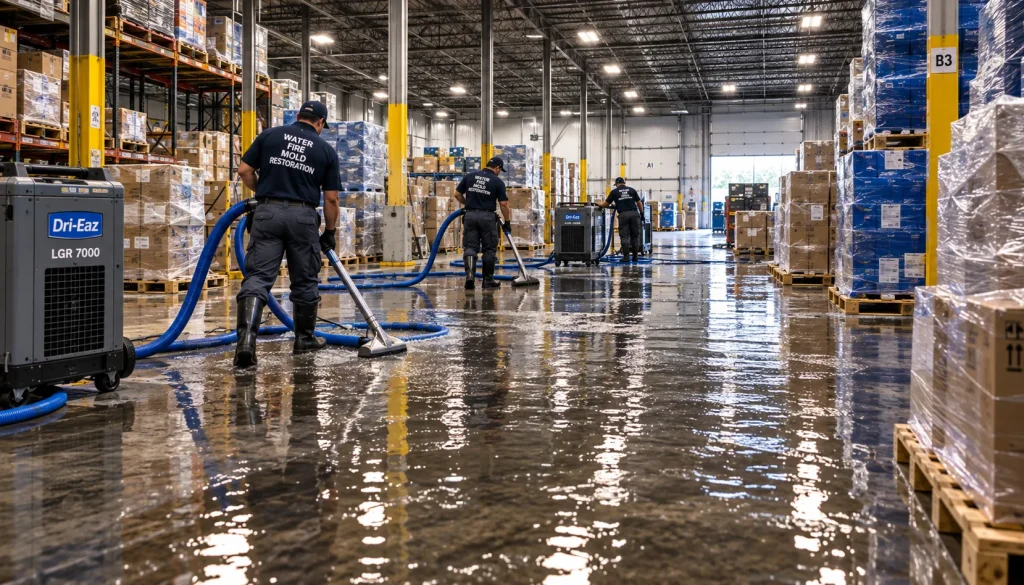
Call for extraction. The faster standing water is removed, the less damage spreads into walls and floors.
Fast, tidy recovery helps a store reopen and win back its customers.
Drying After a Freeze Event
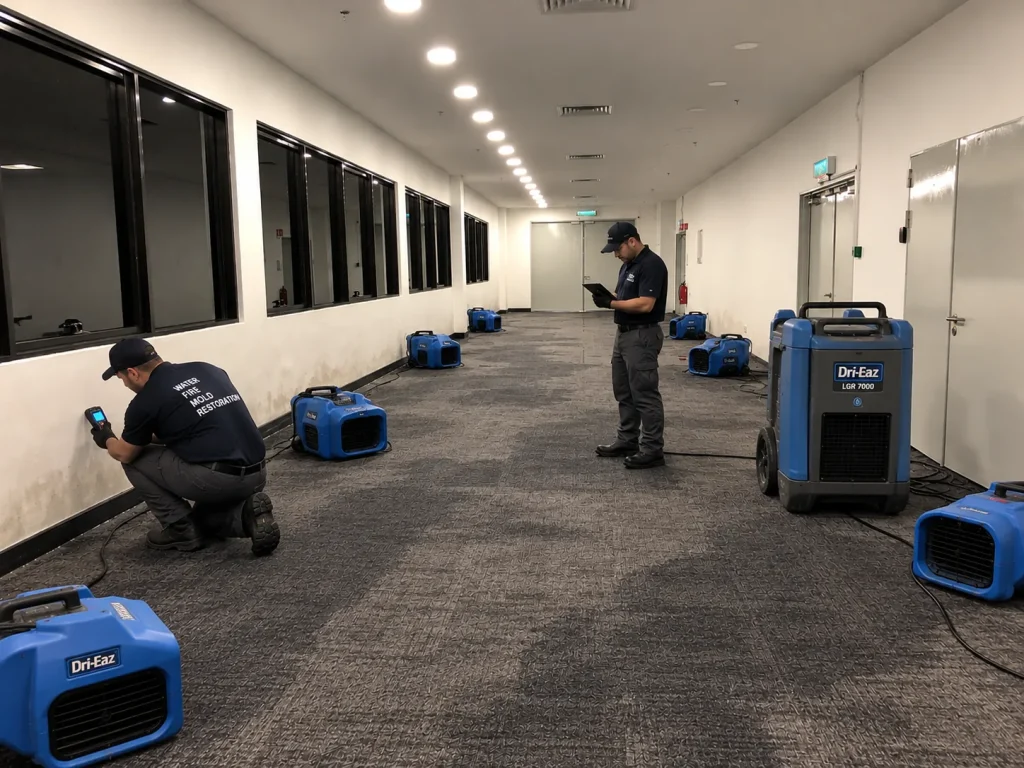
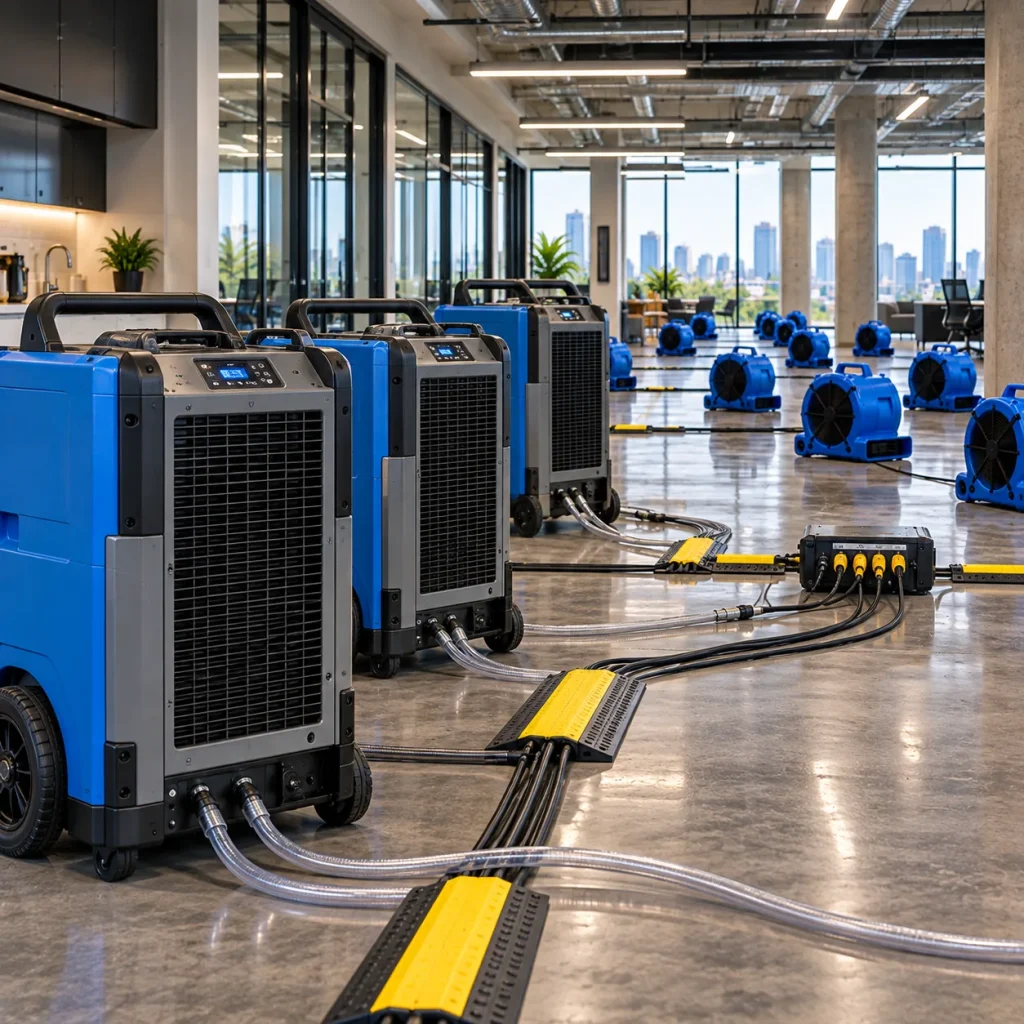
Water from a burst line spreads through walls, under flooring and into ceilings below. A proper response includes moisture mapping to find where the water went, removal of materials that cannot be saved, and drying with air movers and dehumidifiers until readings reach target levels. Documentation of each step supports the insurance claim.
Plan Now for Next Winter
Use the fall to walk the building with your maintenance team. Mark shutoff valves, identify pipes in cold spaces and decide who will check the building during a freeze. A little preparation can prevent a very expensive spring.