Guides on how commercial property losses actually unfold — what downtime costs, which building systems control the recovery, and when a property is genuinely ready to reoccupy.
Home/Blog/Warehouse Flooding in Grand Prairie: Protecting Inventory in the First 24 Hours
Warehouse Flooding in Grand Prairie: Protecting Inventory in the First 24 Hours
Published October 28, 2026 · Commercial Water Damage Restoration Team · Business Continuity & Downtime
Retail cleanup has to protect merchandise and keep shoppers safe at the same time.
Grand Prairie sits between Dallas and Fort Worth along Interstate 20, Interstate 30 and State Highway 360, and its warehouses and distribution centers move goods across the region every day. When water gets into one of those buildings, whether from a storm, a roof drain backup or a sprinkler failure, the clock starts immediately. Every hour of standing water means more wet pallets, more damaged stock and more missed shipments.
This guide covers what warehouse and distribution managers should do in the first 24 hours.
Hour One: Stop the Water and Protect People
Shut off the water source if it is internal, such as a sprinkler zone or supply line
Keep forklifts and people away from standing water near electrical equipment and charging stations
Call your fire alarm monitoring company if a sprinkler activated
Start photos and video of the water, the source and affected inventory
Hours One to Four: Triage the Inventory
Not everything is equally at risk. Move fast on:
Stock on the floor and lowest rack levels
Paper, cardboard and packaging, which absorb water quickly
Electronics and high-value goods
Anything that can be moved to a dry area of the building
Keep a written list of what was moved, what was wet and what was discarded. Your insurance carrier will ask for it.
Barriers and hidden equipment let parts of the store stay open during drying.
Hours Four to Twelve: Extraction
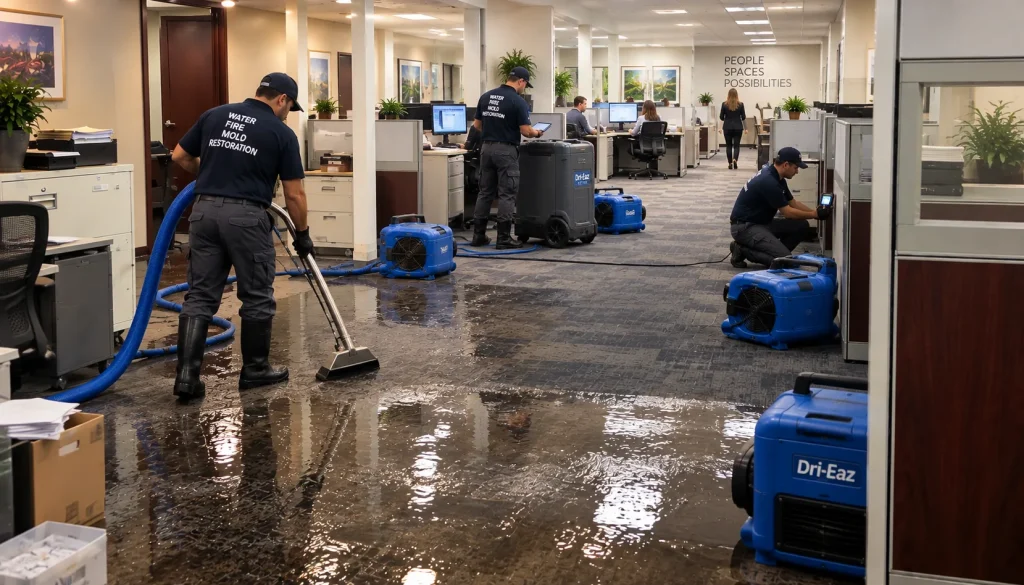
A commercial crew removes standing water with truck-mounted and portable extraction equipment. On a large slab, squeegees and pumps move water toward drains or extraction points. Dock areas and low spots are cleared first.
Is It Flood Water?
Water that came from outside the building, such as storm runoff or overflowing creeks, is treated as contaminated. Porous materials it touched may need to be discarded, and the floor and lower walls need cleaning and sanitizing. Water from a clean supply line is handled differently. Knowing the source changes the plan.
Fast, tidy recovery helps a store reopen and win back its customers.
Hours Twelve to Twenty-Four: Drying and Documentation
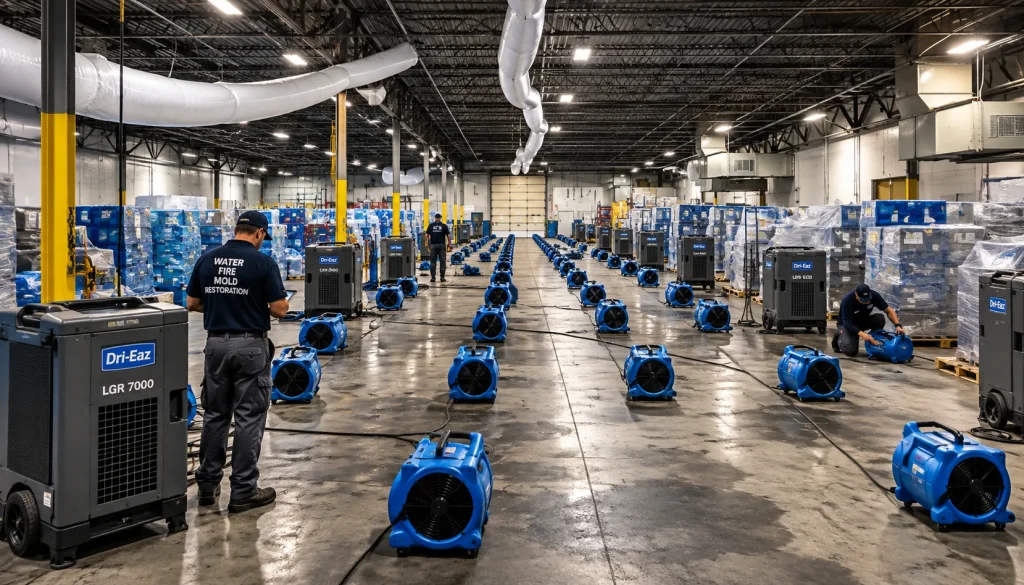
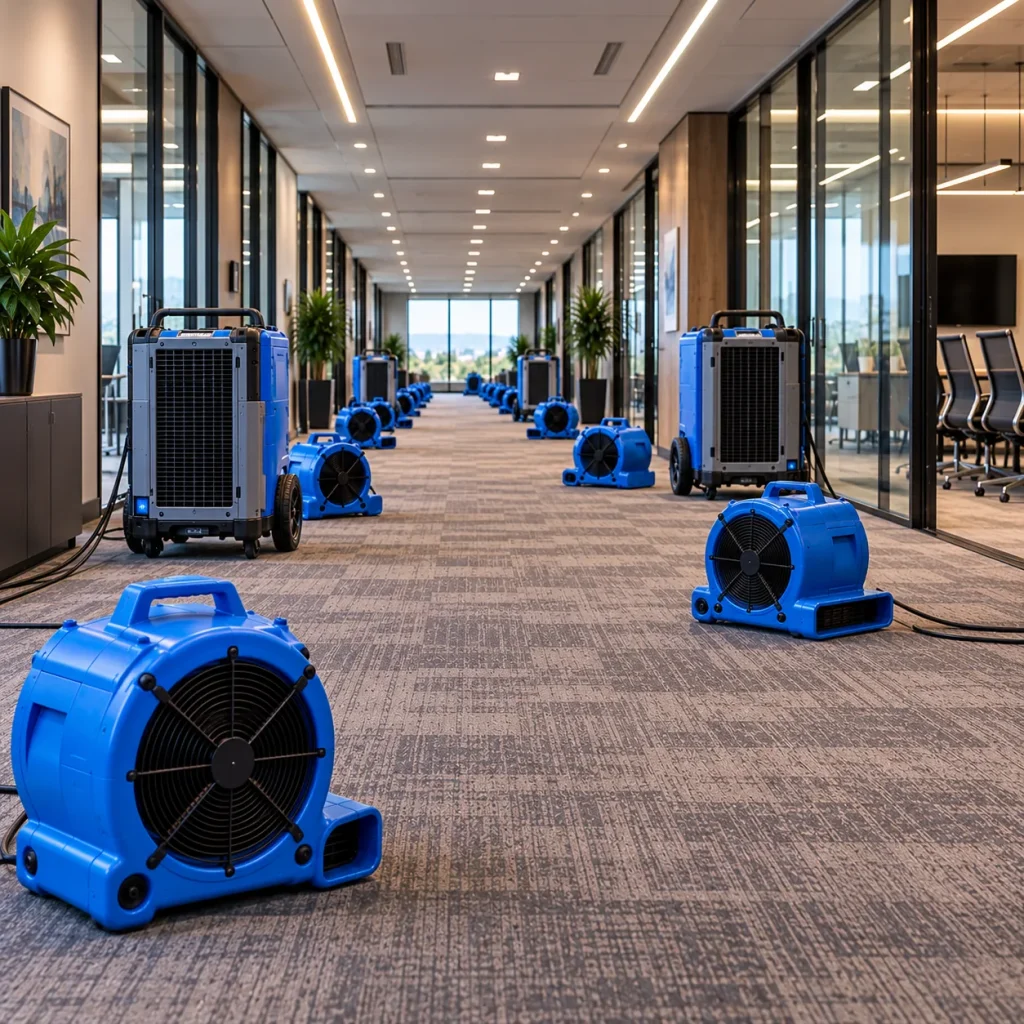
Once standing water is gone, the slab, wall bases and office areas are dried with air movers and dehumidifiers. Moisture readings are taken and logged daily. In a large building, drying can be zoned so shipping and receiving continue in unaffected areas.
Keep Shipping Moving
Section off the wet area and reroute forklift paths
Shift receiving to another dock if needed
Communicate realistic timelines to customers early
Schedule noisy drying equipment around shift changes
After the Event
Look at why the water got in. Clean roof drains, check dock door seals and grading, and inspect sprinkler lines in unheated areas. A few fixes now can prevent the next loss.