Guides on how commercial property losses actually unfold — what downtime costs, which building systems control the recovery, and when a property is genuinely ready to reoccupy.
Home/Blog/Multifamily Water Damage in Irving: Coordinating Units, Residents and Insurance
Multifamily Water Damage in Irving: Coordinating Units, Residents and Insurance
Published October 31, 2026 · Commercial Water Damage Restoration Team · Documentation & Insurance
Retail cleanup has to protect merchandise and keep shoppers safe at the same time.
Irving has a large and growing stock of apartment communities, from mid-rise buildings in Las Colinas to garden-style complexes across the city. In multifamily buildings, a water leak rarely stays in one unit. A failed water heater, a supply line under a sink or a sprinkler head can send water down through several floors and sideways into neighboring units before anyone notices.
This guide explains how property managers can coordinate the response, keep residents informed and build a clean insurance claim.
Find Every Affected Unit
The unit with the leak is only the start. Water follows framing, pipes and floor systems.
Check units directly below, even if ceilings look dry
Check units on both sides of the source
Look in shared walls, corridors and utility chases
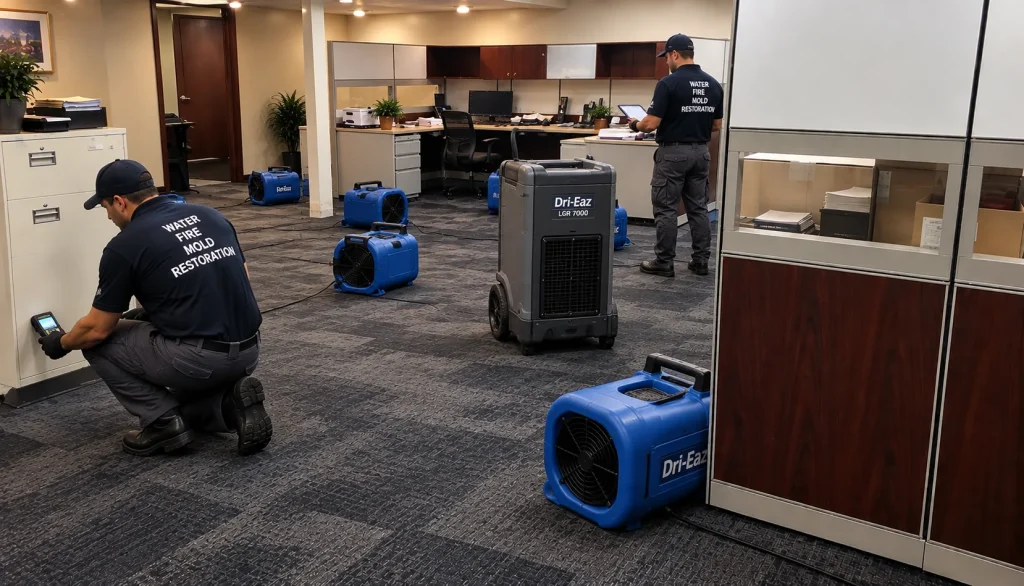
Use moisture meters, not just a visual check
A restoration crew can map moisture across units in a few hours and give you a clear picture of how far the water went.
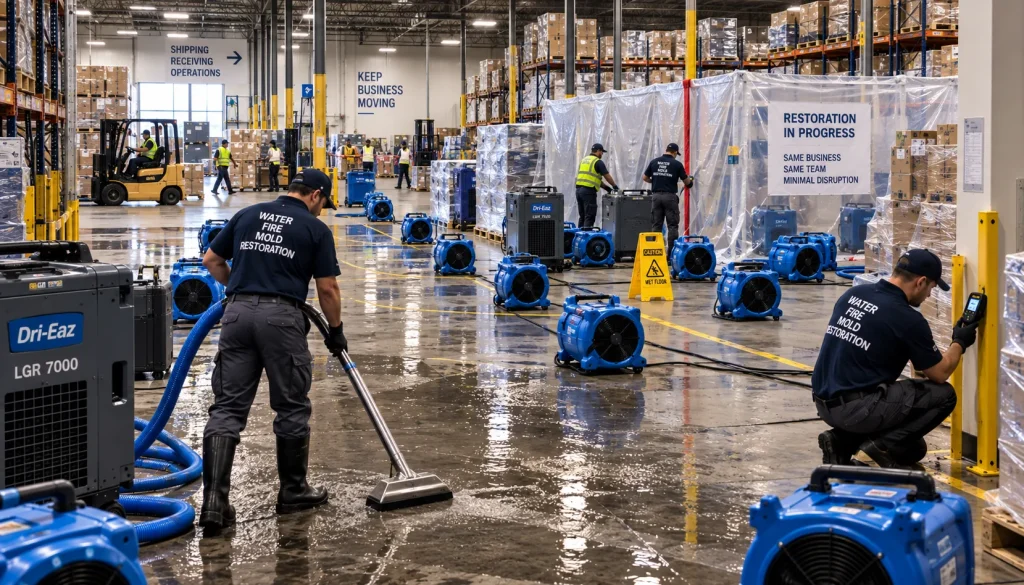
Barriers and hidden equipment let parts of the store stay open during drying.
Communicate With Residents
Tell affected residents what happened and what to expect
Explain that drying equipment will run continuously and may be loud
Coordinate access to units for extraction, inspection and drying
Decide early whether any residents need temporary housing
Remind residents to contact their renter’s insurance for personal belongings
Drying in Occupied Buildings
Drying apartments while people live in them takes planning. Equipment is placed to keep walkways clear, cords are managed, and work is scheduled around residents. Only materials that cannot be dried, such as saturated drywall, insulation or swollen flooring, are removed.
Fast, tidy recovery helps a store reopen and win back its customers.
Documentation for the Claim
Multifamily claims involve the property policy, sometimes the policy of the resident who caused the leak, and residents’ own renter’s policies. Good documentation keeps it straight:
Photos and video of the source and every affected unit
Moisture readings by unit and by day
A list of materials removed and why
A written scope and estimate for repairs in each unit
Prevent the Next Leak
Water heaters, washing machine hoses and sink supply lines cause many multifamily losses. Scheduled replacement of aging water heaters and braided supply lines, plus leak sensors in high-risk spots, can prevent many of them.