Guides on how commercial property losses actually unfold — what downtime costs, which building systems control the recovery, and when a property is genuinely ready to reoccupy.
Home/Blog/Commercial Water Damage in Garland Manufacturing Facilities: Keeping Production Running
Commercial Water Damage in Garland Manufacturing Facilities: Keeping Production Running
Published November 6, 2026 · Commercial Water Damage Restoration Team · Business Continuity & Downtime
Retail cleanup has to protect merchandise and keep shoppers safe at the same time.
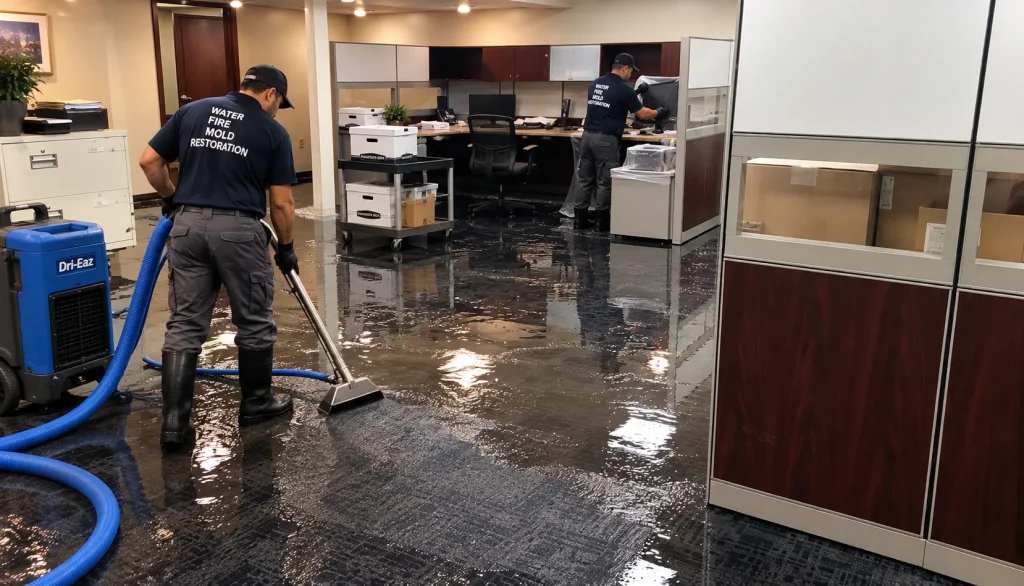
Garland is one of North Texas’ leading manufacturing communities, with plants that produce everything from electrical equipment to food products and building materials. In a manufacturing facility, water damage is not just a cleanup problem. A flooded production area, a wet electrical room or a soaked raw materials warehouse can stop the line and put orders at risk.
This guide explains how to respond to water damage in a plant while keeping as much of the operation running as possible.
Common Sources in Manufacturing Plants
Roof leaks over large production floors after storms
Process water and cooling system failures
Fire sprinkler discharges or frozen sprinkler lines
Broken supply and drain lines
Storm water entering at dock doors and low thresholds
First Steps
Stop the source and notify your safety team
Shut down equipment in the wet area if it is safe to do so
Keep people away from electrical equipment until it is checked
Document the damage before cleanup
Barriers and hidden equipment let parts of the store stay open during drying.
Isolate the Affected Area
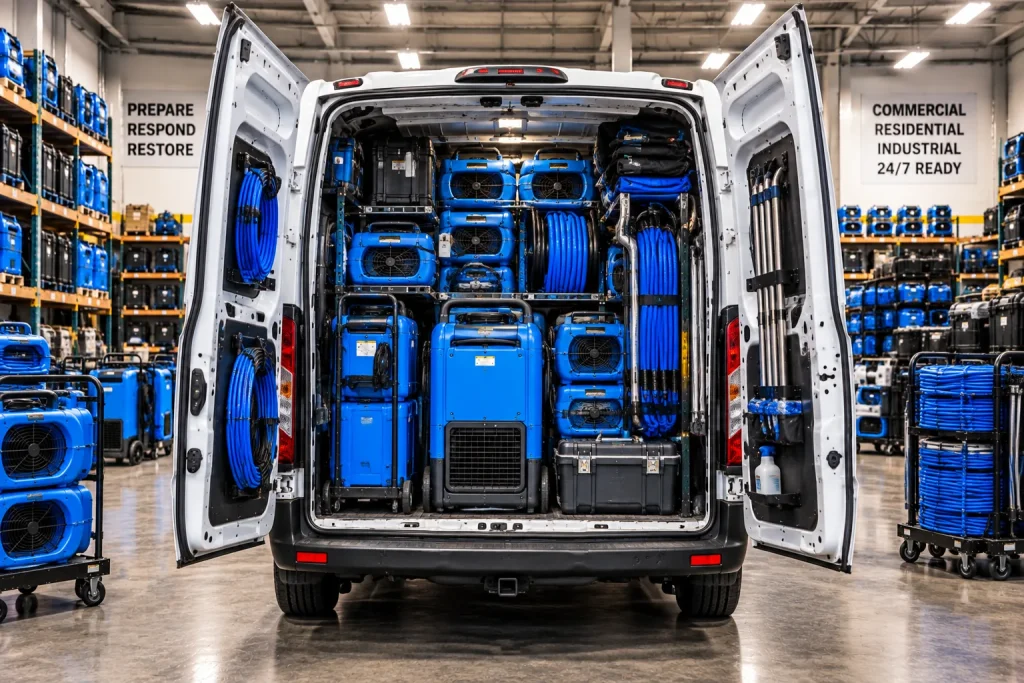
The goal is to keep unaffected production lines running. Restoration crews set up containment with plastic barriers, reroute foot and forklift traffic, and place drying equipment so it does not block exits or work cells. Air filtration can control dust and humidity near sensitive processes.
Protect Equipment and Materials
Move raw materials and finished goods off wet floors
Cover equipment near the leak with plastic
Have electrical equipment checked before restarting
Record any equipment exposed to water for the claim
Fast, tidy recovery helps a store reopen and win back its customers.
Phased Drying Around Shifts
Drying in a plant is usually done in phases. Areas that are needed first are dried first. Equipment can run overnight and on weekends, with daily moisture readings to track progress. The schedule is coordinated with production managers so work does not interfere with shifts.
Documentation for Insurance and Quality
Manufacturers often need documentation for both the insurance claim and internal quality or compliance records. Keep moisture logs, photos, equipment inspection reports and a record of any materials discarded.
Reduce the Risk
Regular roof inspections, sprinkler line protection in cold areas, and clear shutoff procedures for process water can prevent many plant water losses.